
9
Learn More
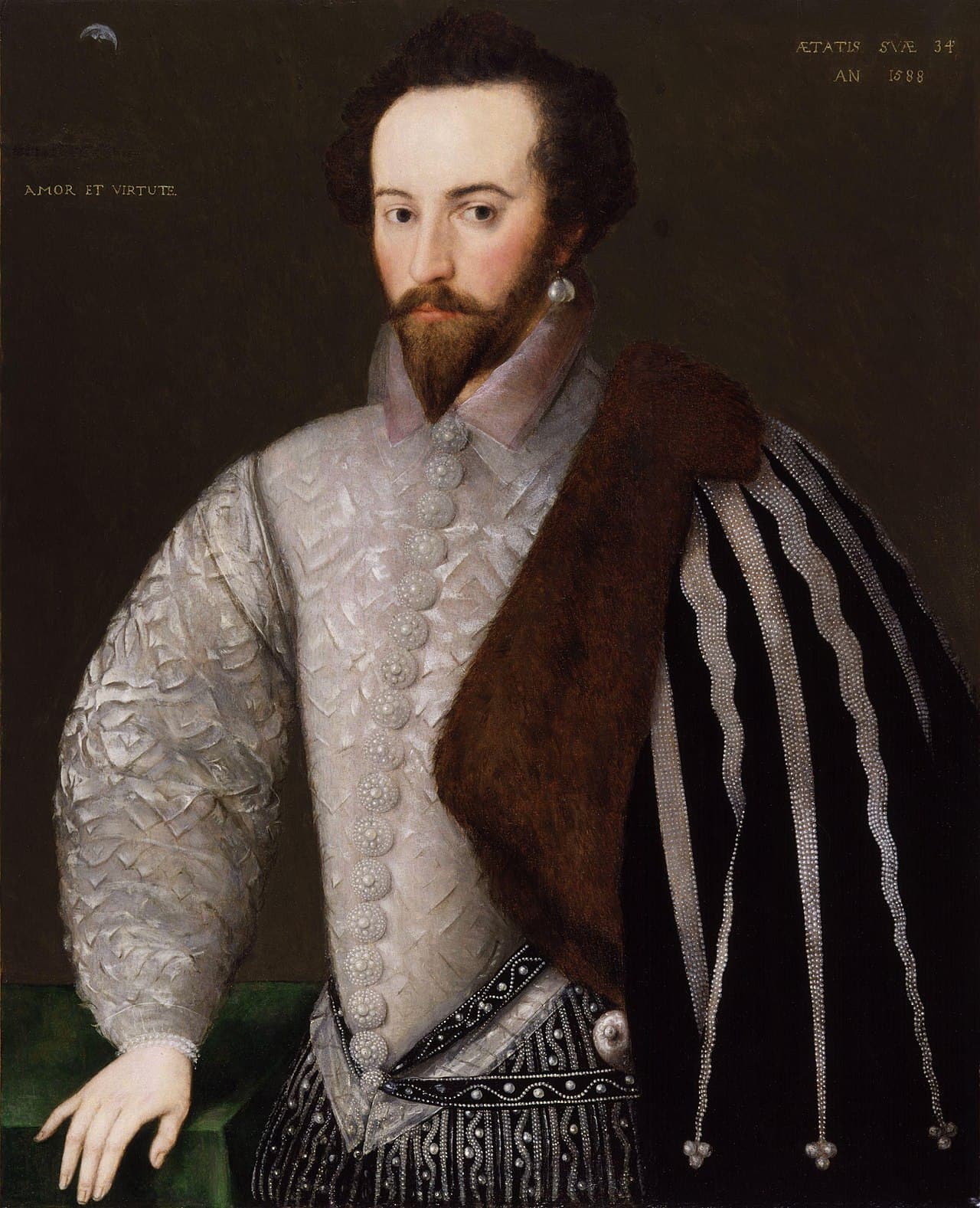
A prominent figure in the Elizabethan era, Sir Walter Raleigh was a true Renaissance man, known for his pursuits as an explorer, poet, and historian. His fortunes, however, shifted dramatically with the death of Queen Elizabeth I and the ascension of James I. In 1603, Raleigh was implicated in the "Main Plot," a conspiracy to remove King James from the throne. Despite the questionable nature of the evidence against him, which primarily relied on the written confession of a supposed co-conspirator, Raleigh was found guilty of treason and sentenced to death.
King James I, however, commuted the death sentence to life imprisonment in the Tower of London. During his long confinement, which lasted until 1616, Raleigh enjoyed relative comforts, including access to a library of 500 books. It was during this period that he penned his famous work, "The History of the World," a comprehensive account of ancient history intended for the education of Prince Henry. Although the work was banned by King James I for being too critical of monarchs, it was widely published and read.
In 1616, Raleigh was paroled, but not pardoned, to lead a second expedition to Guiana in search of the mythical city of gold, El Dorado. The expedition was a failure and, more significantly, Raleigh's men attacked a Spanish outpost, an act that violated the terms of his release and angered the Spanish. Upon his return to England, the original 1603 death sentence was reinstated to appease the Spanish, and Sir Walter Raleigh was beheaded in 1618.
This question is part of: Book and Literature trivia questions and answers, Hard trivia questions and answers
More People Trivia Questions
20
After the San Francisco earthquake and fire of 1906, architect Julia Morgan was called upon to rebuild the interior of which San Francisco hotel?
20Who was Madonna married to from 1985-1989?
20What are the first names of thumbs-up movie critics Siskel and Ebert?
20Can you name the twin sisters whose rival advice columns ran in hundreds of newspapers throughout the English speaking world?
20Which game is played on a marked board divided into two halves, each side containing 12 alternately colored points?
20This African-American botanist and agricultural chemist developed hundreds of uses for peanuts, soybeans, and sweet potatoes. Who was he?