
11
Learn More
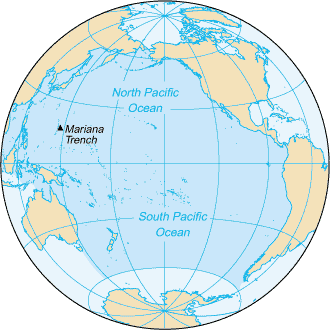
The sheer immensity of the Pacific Ocean is difficult to grasp. Encompassing approximately 165.25 million square kilometers (63.8 million square miles), this colossal body of water is not only the largest of Earth's oceanic divisions but also surpasses the combined area of all the planet's landmasses, which total around 148 million square kilometers (57 million square miles). It accounts for roughly 32% of the Earth's total surface area and holds more than half of the world's open water supply. Beyond its vast surface, the Pacific also claims the title of the deepest ocean, with an average depth of about 4,000 meters (13,000 feet).
The geological story of this ocean stretches back hundreds of millions of years. It evolved from an ancient superocean known as Panthalassa, which began forming when the supercontinent Rodinia broke apart approximately 750 million years ago. The modern Pacific plate itself started to take shape much later, around 160 to 190 million years ago. This dynamic geological activity continues today, with plate tectonics causing the Pacific to slowly shrink by roughly 2.5 centimeters (0.98 inches) annually on three sides. Within its immense depths lies the Challenger Deep in the Mariana Trench, the deepest known point on Earth, plunging to over 10,911 meters (35,797 feet) below sea level.
Early human interaction with this vast expanse dates back to Polynesian explorers who navigated its waters and settled numerous islands by 1200 CE. European encounters began in the early 16th century, with Spanish explorer Vasco Núñez de Balboa sighting it in 1513 and naming it *Mar del Sur*, or "Sea of the South". However, it was Ferdinand (Review) Magellan, the Portuguese navigator leading a Spanish expedition, who famously traversed it in 1520 and bestowed its enduring name, "Pacific," meaning "peaceful," due to the calm conditions he experienced during his historic voyage.
This immense body of water is more than just a geographical feature; it is a critical component of our planet's systems. Its sheer volume and depth play a significant role in regulating global climate and weather patterns, influencing everything from ocean currents to temperature fluctuations across the globe. The Pacific Ocean remains a realm of ongoing scientific discovery and a testament to the Earth's majestic scale.