
65
Learn More
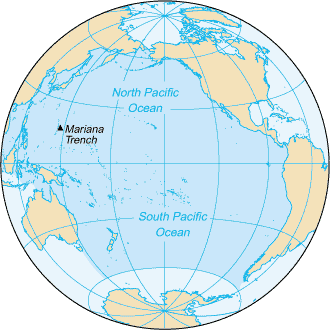
Many people envision our planet's oceans as permanent, unchanging features, vast bodies of water that have always been and always will be the same size and shape. This perception often leads to a misunderstanding about the dynamic nature of Earth's surface, making the idea of an ocean actively shrinking seem like a fantastical claim. However, geological evidence confirms that the world's largest ocean basin is indeed undergoing a slow, continuous transformation. The Pacific Ocean is currently shrinking by roughly 2.5 cm (1 inch) per year on three sides, averaging about 0.52 square kilometers (0.20 square miles) annually.
The scientific truth lies in the principles of plate tectonics, the theory that Earth's outer shell is broken into large plates that are constantly moving. Beneath the Pacific, a network of subduction zones, often called the "Ring of Fire," acts like a planetary drain. In these areas, oceanic plates are being forced beneath continental plates and sinking into the Earth's mantle, a process known as subduction. This recycling of old crust effectively reduces the overall size of the Pacific basin. In contrast, the Atlantic Ocean is expanding because new oceanic crust is continuously generated at the Mid-Atlantic Ridge, causing the continents on either side to move apart.
The reason this geological reality often comes as a surprise, or is even considered a myth, is primarily due to the immense timescales involved. These tectonic movements occur at rates of just a few centimeters (about 1.5 to 4 inches) per year, comparable to the speed at which fingernails grow. Such gradual changes are imperceptible in a human lifetime, making it difficult for individuals to directly observe or intuitively grasp the ongoing reshaping of our continents and oceans. It's a testament to the slow, powerful forces that have sculpted our planet over millions of years, a process that scientists predict will eventually lead to the complete closure of the Pacific Basin and the formation of a new supercontinent called Amasia in 200 to 300 million years.
Related Myths
81
81
80
79
79
77