
47
Learn More
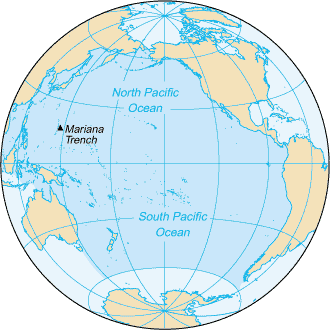
The largest ocean on Earth is a truly immense body of water, covering an astonishing amount of the planet's surface. Spanning over 63 million square miles (165 million square kilometers), it is larger than all the Earth's landmasses combined. This colossal ocean holds more than half of the free water on Earth and boasts a volume more than double that of the Atlantic Ocean, the next largest. Its name, "Pacifico," meaning peaceful, was bestowed by explorer Ferdinand Magellan in 1520, who encountered calm waters after navigating treacherous straits.
Beyond its sheer size, this ocean is also the deepest. Its average depth is around 13,000 feet (4,000 meters), but it plunges to an astounding 36,201 feet (11,034 meters) at the Mariana Trench's Challenger Deep, the lowest point on Earth. This vast basin is also famously home to the "Ring of Fire," a horseshoe-shaped zone of intense seismic activity. This region, encircling the ocean, contains over 75% of the world's active volcanoes and is responsible for about 90% of global earthquakes.
The ocean's expansive waters stretch from the Arctic in the north to the Southern Ocean in the south, bordered by Asia and Australia to the west and the Americas to the east. It contains more than 25,000 islands, including iconic archipelagos like Hawaii and the world's largest coral (Deals) reef system, the Great Barrier Reef. This immense body of water is a critical component of global climate and weather patterns, and its incredible biodiversity supports a vast array of marine life.