
34
Learn More
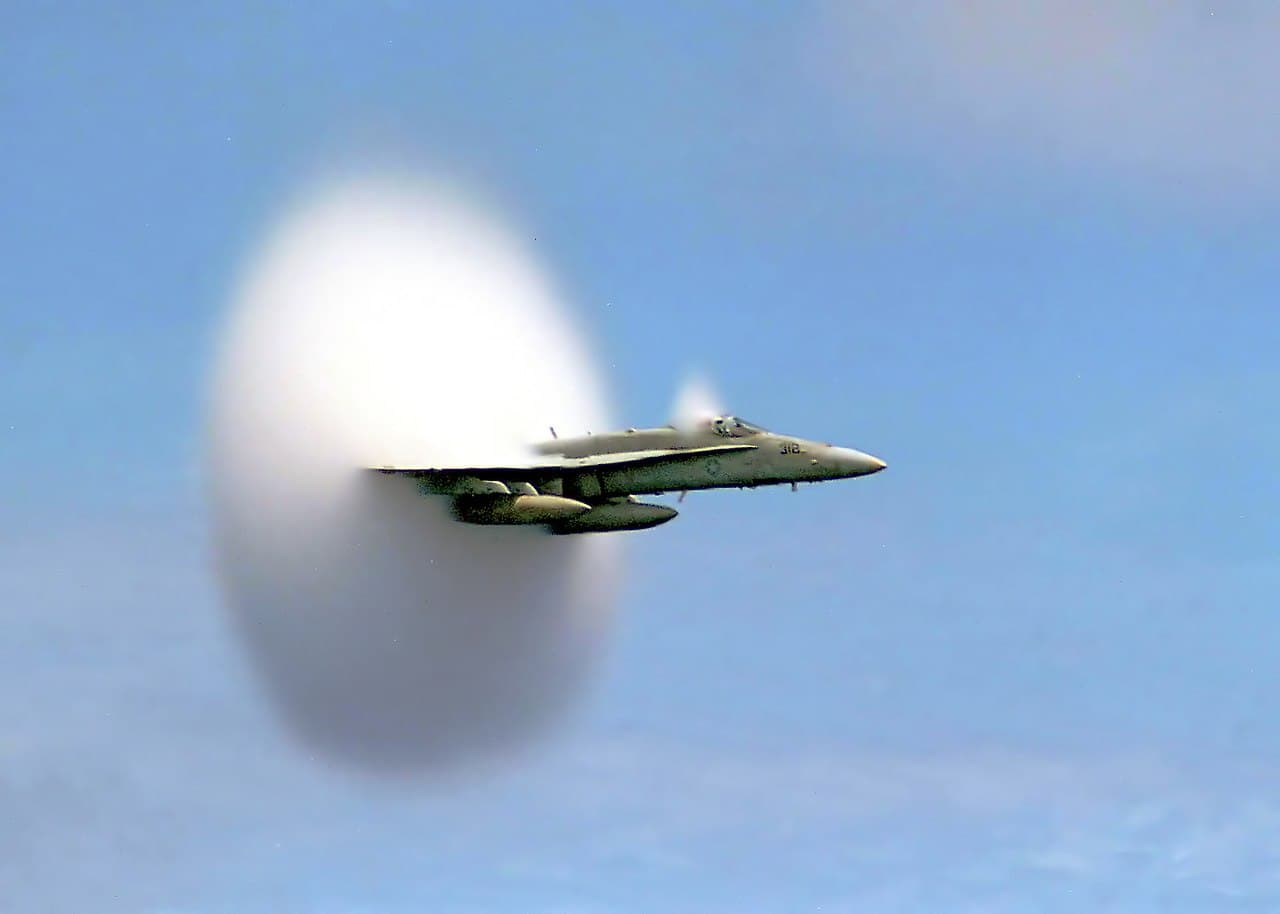
For decades, pilots and engineers faced what was known as the "sound barrier," a seemingly impenetrable wall of aerodynamic forces that made flight at supersonic speeds extremely difficult and dangerous. As aircraft approached the speed of sound, they encountered severe turbulence (Review), massive increases in drag, and loss of control, often leading to structural failure. Many believed that crossing this threshold safely was impossible, and early attempts frequently resulted in crashes. The very term "sound barrier" described both the physical challenges and the psychological hurdles faced by those attempting to exceed Mach 1.
The Bell X-1, a rocket-powered experimental aircraft, was specifically designed to overcome these obstacles. Its unique bullet-shaped fuselage was inspired by the stability of a .50 caliber bullet at supersonic speeds, and its thin, straight wings were engineered to delay shock formation and reduce drag. Crucially, it featured an all-moving tailplane, a revolutionary innovation that allowed for pitch control even when conventional elevators became ineffective near Mach 1. On that historic day, the X-1, nicknamed "Glamorous Glennis," was air-launched from the bomb bay of a B-29 bomber at an altitude of 23,000 feet.
Once released, the X-1's XLR-11 rocket engine ignited, propelling the aircraft towards the speed of sound. As it reached Mach 1.06 (approximately 700 miles per hour) at 43,000 feet, a loud sonic boom echoed across the Mojave Desert, signaling the momentous achievement. This breakthrough not only proved that supersonic flight was possible, but also provided invaluable data that directly influenced the design of future high-performance military aircraft. The lessons learned from the X-1 program paved the way for decades of advancements in aviation, profoundly changing our understanding of aerodynamics and ushering in the age of supersonic flight.