
47
Learn More
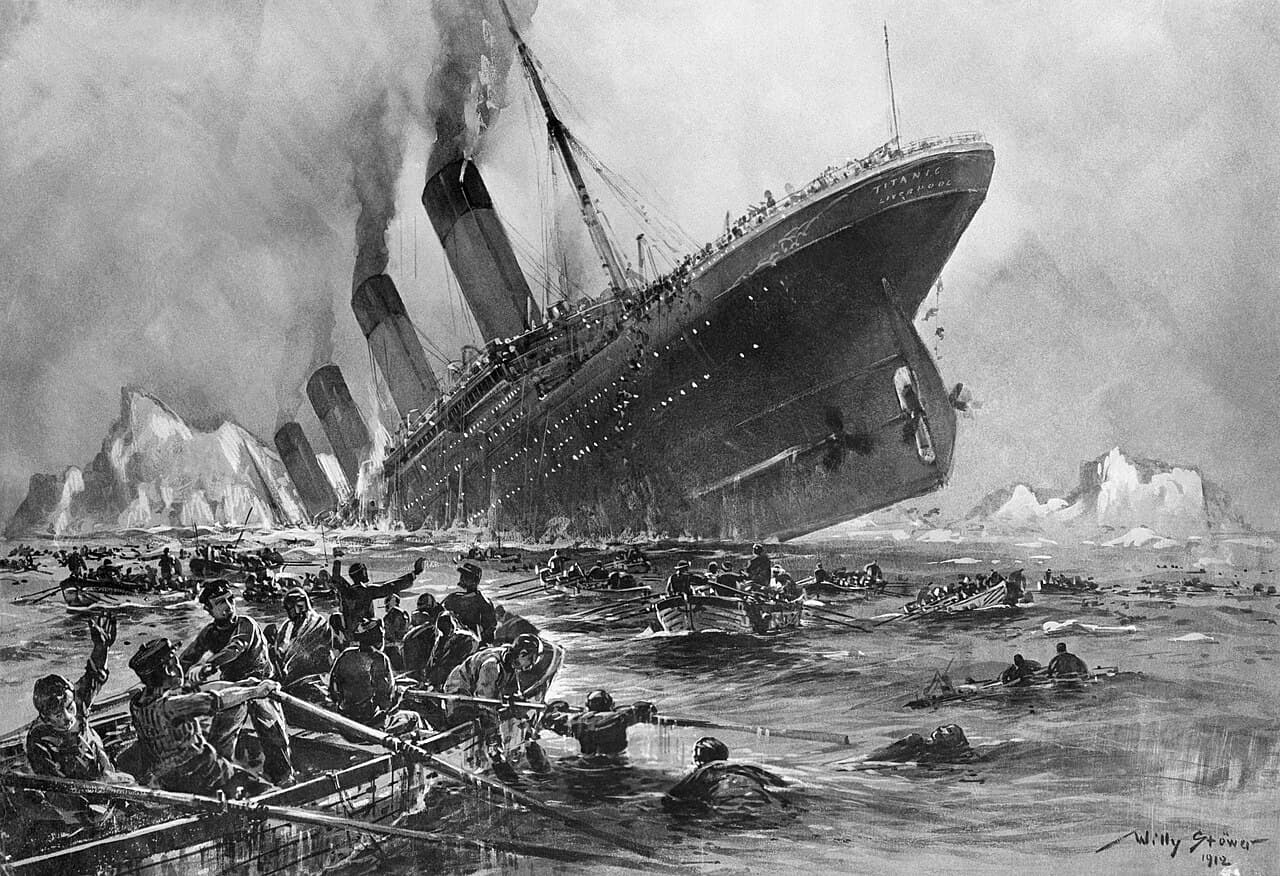
The RMS Titanic, a British luxury passenger liner, tragically sank in the early hours of April 15, 1912. This occurred during its maiden voyage across the Atlantic Ocean, en route from Southampton, England, to New York City. The ship, which was the largest ocean liner in service at the time, struck an iceberg late on the night of April 14, leading to its demise just hours later.
The Titanic was widely publicized as "unsinkable" due to its advanced design, including a series of watertight compartments. However, the collision with the iceberg caused damage to at least five of these compartments, which was more than the ship was designed to withstand. This catastrophic breach allowed water to flood into the vessel, leading to its eventual sinking.
The disaster resulted in the deaths of approximately 1,500 people out of the estimated 2,224 passengers and crew on board, making it one of the deadliest peacetime maritime tragedies in history. A significant factor contributing to the high loss of life was the insufficient number of lifeboats, which could only accommodate about a third of the ship's total capacity. The sinking of the Titanic had a profound and lasting impact, leading to major changes in maritime safety regulations, including the adoption of the first International Convention for the Safety of Life at Sea (SOLAS) in 1914.