
36
Learn More
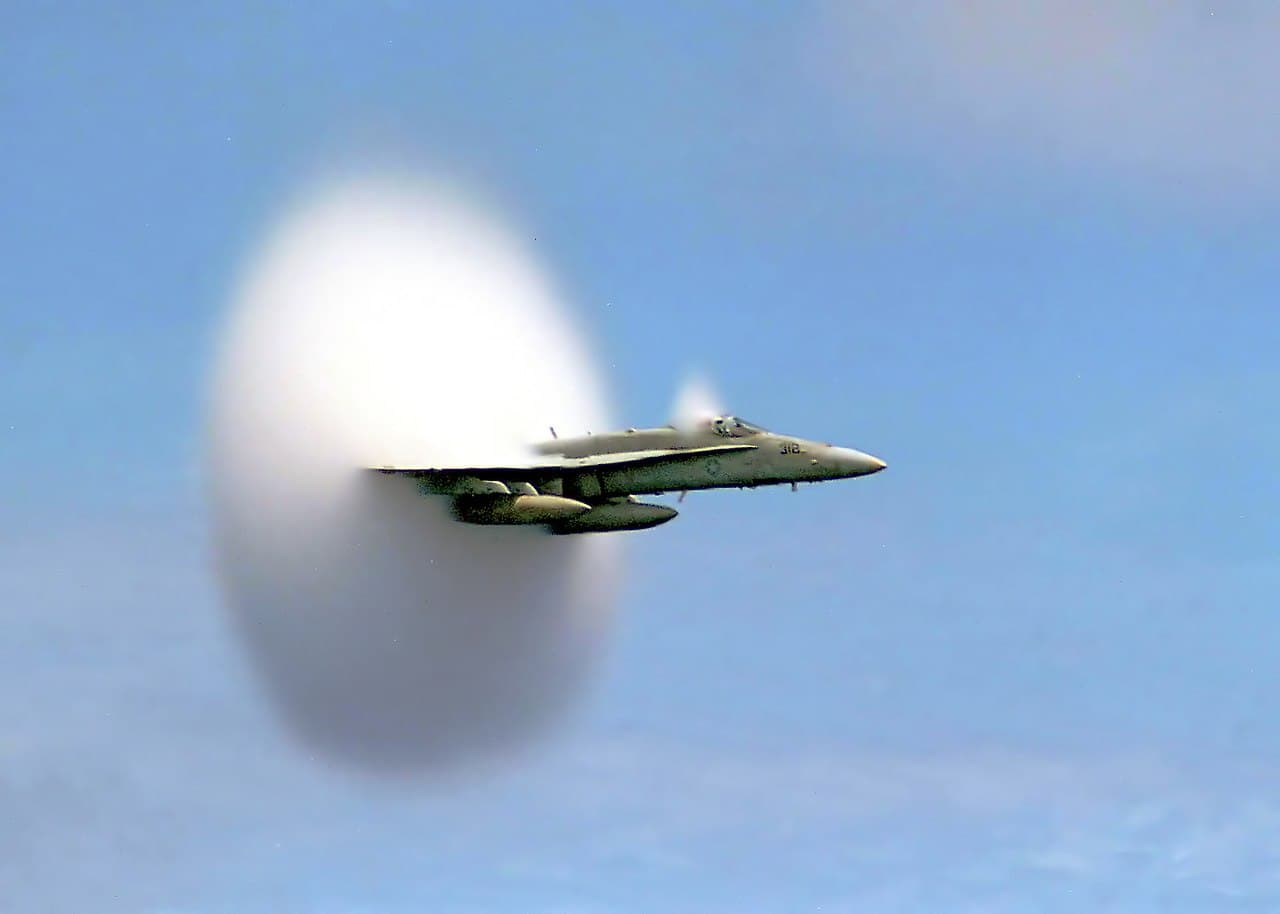
Sound, a form of energy, moves through a medium by causing its particles to vibrate and transmit that energy onward. In gases like air, molecules are relatively far apart, requiring more time for these vibrations to transfer from one particle to the next. This loose arrangement means sound travels at approximately 343 meters per second in air at 20 degrees Celsius.
Water, being significantly denser than air—around 800 times more so—has its molecules packed much closer together. This tight molecular structure allows sound waves, which are essentially compressional waves, to propagate with remarkable efficiency. Vibrations are rapidly passed between adjacent water molecules, enabling sound to travel nearly four times faster than in air, averaging around 1481 to 1531 meters per second in fresh or seawater at similar temperatures. Additionally, water's higher resistance to compression, known as its bulk modulus, further enhances its ability to transmit pressure changes swiftly.
The unique properties of sound in water have fascinated observers for centuries. As early as 1490, Leonardo da Vinci noted that placing a tube into water and to an ear allowed one to hear distant ships. This understanding was quantified in 1826 by Daniel Colladon and Charles Sturm, who conducted the first successful measurement of sound speed in water on Lake Geneva. Today, this principle is vital for various applications, from marine animals like dolphins using echolocation for navigation and communication, to human technologies such as sonar for underwater mapping, submarine communication, and studying ocean ecosystems.