
13
Learn More
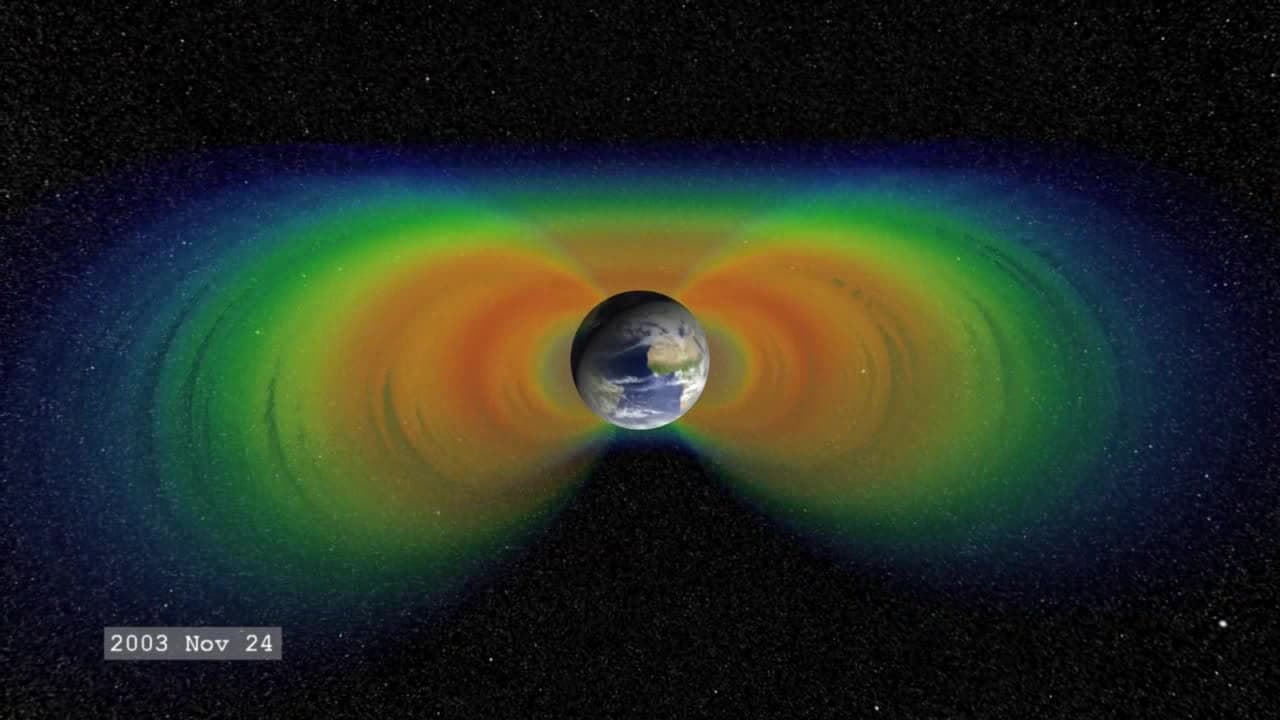
Surrounding our planet are massive, invisible rings of charged particles, not in a hockey (Deals) rink or an automobile, but in the vastness of space. These are the Van Allen radiation belts, two main donut-shaped zones held in place by Earth's magnetic field. The inner belt, composed mainly of high-energy protons, extends from about 640 to 12,000 kilometers above the surface, while the outer belt, filled with energetic electrons, is even farther out. These belts are a critical component of Earth's magnetosphere, the region of space dominated by our planet's magnetic field.
The Van Allen belts serve as a vital protective shield, safeguarding Earth from the constant stream of harmful solar radiation. They trap the most energetic particles from the solar wind and cosmic rays, preventing them from reaching our atmosphere and surface where they could damage biological life and technology. This trapping mechanism deflects the dangerous particles, essentially creating a barrier that protects our planet from the harsh space environment. Without these belts, Earth would be far more exposed to destructive solar storms.
This incredible natural shield was one of the first major discoveries of the Space Age. In 1958, data from instruments designed by physicist James Van Allen aboard the first U.S. satellite, Explorer 1, revealed these unexpected zones of intense radiation. While the belts are essential for protecting life on Earth, the radiation they contain is a significant hazard for satellites and astronauts. Spacecraft must be specially shielded, and missions traveling beyond the belts, like the Apollo flights to the Moon, had to pass through them quickly to minimize radiation exposure for the crew.
More Science Trivia Questions
70
What famous catalog of deep-sky objects, compiled by a French astronomer in the 1700s, contains 110 entries?
69What type of coral does not rely on photosynthetic algae and must be fed directly?
61What is the approximate diameter of the largest known star, UY Scuti, compared to our Sun?
59What phenomenon causes stars to appear to twinkle when viewed from Earth's surface?
56What type of filtration uses live rock and sand beds to naturally process waste in a marine aquarium?
53What is the nitrogen cycle process called that must occur before adding fish to a new saltwater tank?