
6
Learn More
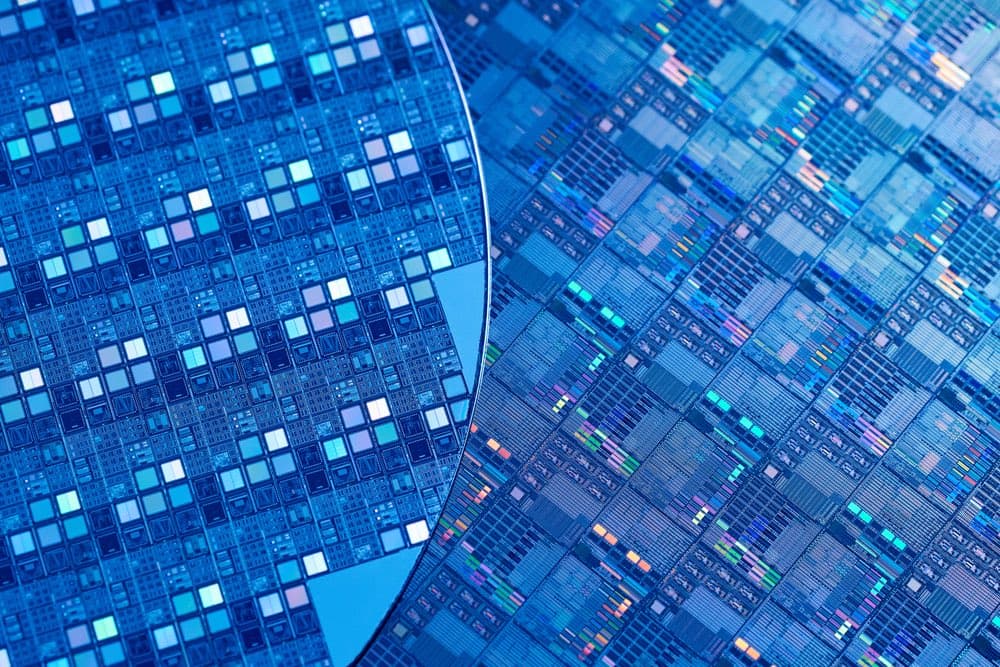
The vast majority of modern electronics rely on a material that is neither a great conductor, like copper, nor a great insulator, like rubber. This unique middle-ground property belongs to semiconductors, and the undisputed king of these materials is silicon. With four electrons in its outer atomic shell, silicon atoms bond together in a stable, orderly crystal lattice. In this pure state, electrons are held tightly in place, making it a poor conductor of electricity. This foundational stability, combined with its incredible abundance as the primary component of sand, makes it the perfect starting block for electronic components.
The true magic happens through a process called "doping," where scientists intentionally introduce tiny impurities into the silicon crystal. Adding elements with five outer electrons creates a surplus of free-roaming electrons, while adding elements with only three creates electron "holes," which act like positive charges. By carefully arranging these doped regions, engineers can create microscopic switches, known as transistors, that can be turned on or off with a small electrical signal.
This ability to precisely control the flow of electricity is the basis for every microchip, processor, and memory cell in your computer and smartphone. While other elements like germanium were used in the earliest transistors, silicon proved to be more stable at higher temperatures and far cheaper to produce on a massive scale. Its dominance is so complete that the world’s foremost technology hub earned the nickname "Silicon Valley," a testament to this remarkable element's role in building our digital world.
This question is part of: Chemistry trivia questions and answers
More Science Trivia Questions
70
What famous catalog of deep-sky objects, compiled by a French astronomer in the 1700s, contains 110 entries?
69What type of coral does not rely on photosynthetic algae and must be fed directly?
61The red supergiant UY Scuti is one of the largest known stars. By current estimates, its radius is roughly how many times the Sun's?
59What phenomenon causes stars to appear to twinkle when viewed from Earth's surface?
56What type of filtration uses live rock and sand beds to naturally process waste in a marine aquarium?
53What is the nitrogen cycle process called that must occur before adding fish to a new saltwater tank?