
9
Learn More
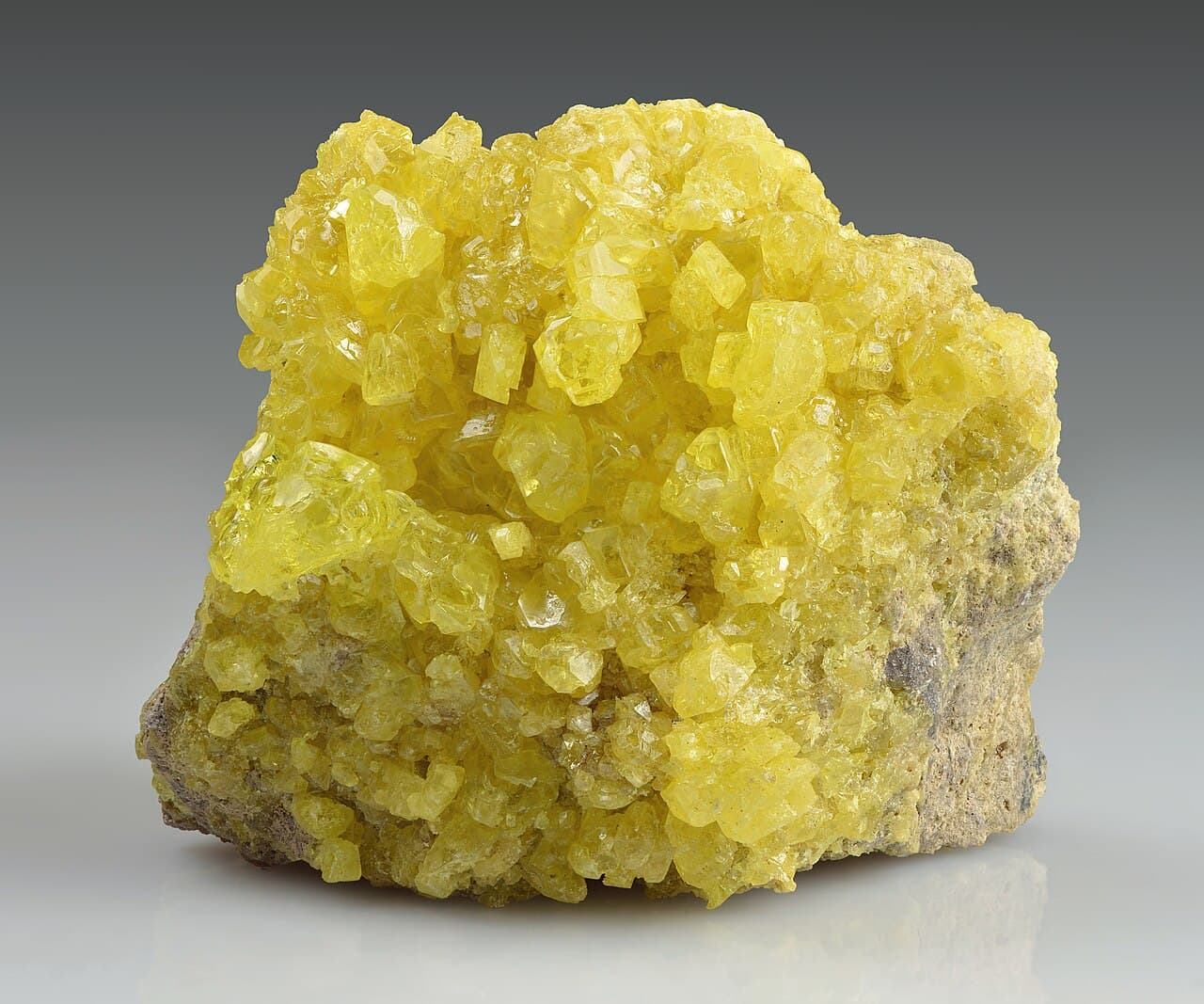
The chemical element known to the ancients and famously referenced as "brimstone" in religious texts is sulfur. Its distinctive bright yellow crystalline form and the pungent, choking smell it produces when burned made it easily recognizable and somewhat mysterious to early observers. This unique combination of properties led to its prominent role in ancient lore and early chemical understanding.
Sulfur is abundant in nature, often found near volcanic vents and hot springs, where it crystallizes into its characteristic solid form. The term "brimstone" literally means "burning stone," a fitting description for a substance that ignites readily and was used historically in various mixtures, including early forms of gunpowder and fumigants. Its presence in areas associated with fire and geological activity likely contributed to its symbolic association with divine judgment and hellfire in ancient religious narratives.
Beyond its ancient and biblical connections, sulfur remains a crucial element in modern industry. It is a key ingredient in sulfuric acid, one of the most widely produced chemicals globally, essential for fertilizers, petroleum refining, and countless other manufacturing processes. From its ancient recognition as a "burning stone" to its indispensable role in contemporary chemistry, sulfur continues to be a fascinating and vital element.
More Science Trivia Questions
79
What colorful marine invertebrate is known for its ability to split light into rainbow patterns and is popular in reef tanks?
70What famous catalog of deep-sky objects, compiled by a French astronomer in the 1700s, contains 110 entries?
69What type of coral does not rely on photosynthetic algae and must be fed directly?
61What is the approximate diameter of the largest known star, UY Scuti, compared to our Sun?
59What phenomenon causes stars to appear to twinkle when viewed from Earth's surface?
56What type of filtration uses live rock and sand beds to naturally process waste in a marine aquarium?