
2
Learn More
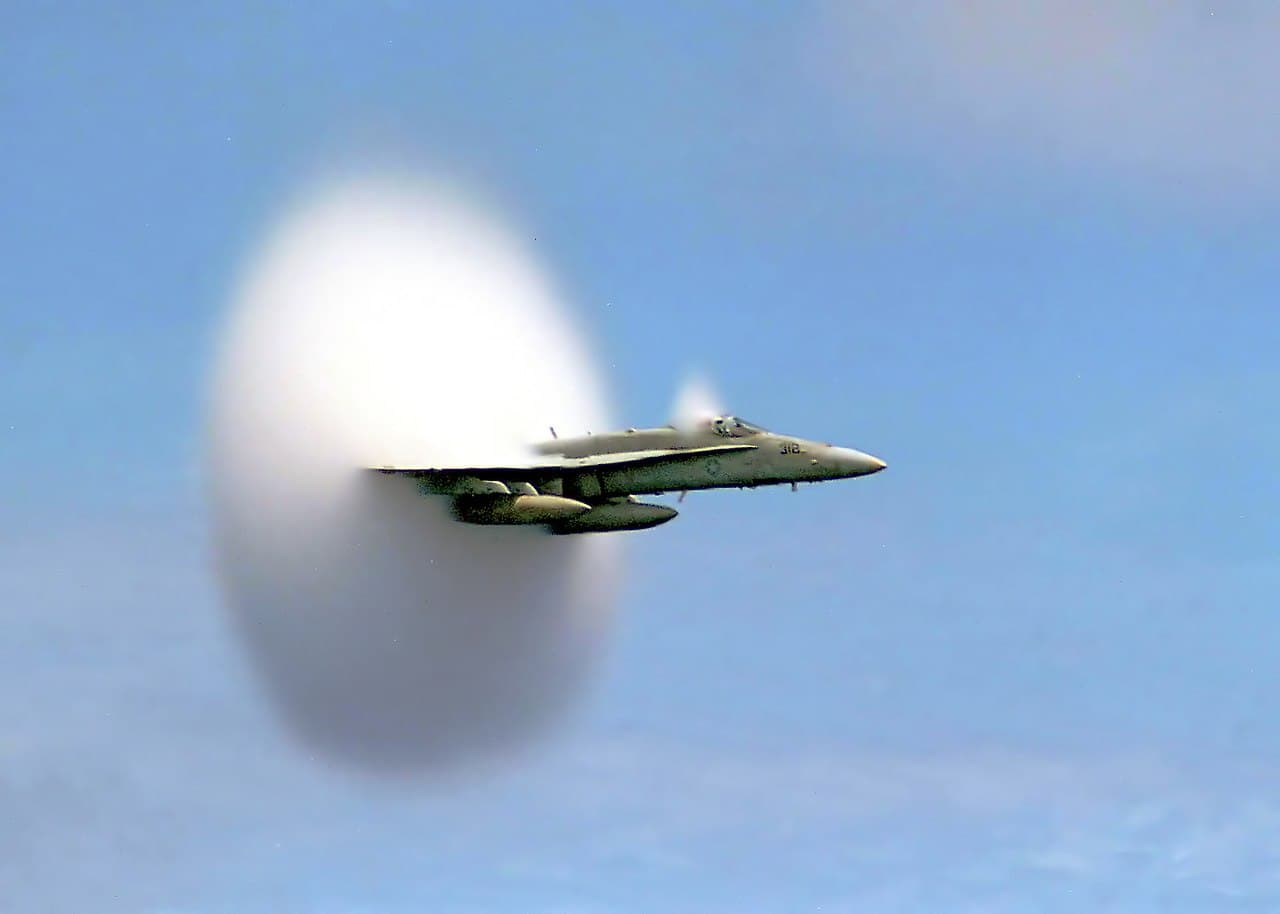
When discussing aviation, Mach 1 refers to an object traveling at the speed of sound. This isn't a fixed speed like miles per hour, but rather a ratio that compares an object's velocity to the speed of sound in the specific medium it's moving through. The speed of sound changes depending on factors like temperature and the density of the air, which means Mach 1 will be a different absolute speed at sea level compared to high altitudes. For instance, at 20 degrees Celsius (68 degrees Fahrenheit) at sea level, the speed of sound in dry air is approximately 343 meters per second, or about 767 miles per hour.
The term "Mach" is named after Ernst Mach, an Austrian physicist and philosopher who made significant contributions to the study of shock waves and supersonic motion in the late 19th century. He was the first to systematically study and photograph the effects of objects moving faster than sound, laying the groundwork for understanding what happens when an aircraft "breaks the sound barrier."
When an object, such as a jet aircraft, reaches and surpasses Mach 1, it creates a phenomenon known as a sonic boom. This loud, explosive sound occurs because the object is moving faster than the sound waves it generates, causing these waves to pile up and form shock waves. These shock waves then spread out in a cone shape behind the object, and an observer on the ground hears a "boom" as this pressure wave passes over them. The ability to achieve and exceed Mach 1 revolutionized aviation, enabling faster travel and advanced aerospace capabilities.
More Science Trivia Questions
70
What famous catalog of deep-sky objects, compiled by a French astronomer in the 1700s, contains 110 entries?
69What type of coral does not rely on photosynthetic algae and must be fed directly?
61What is the approximate diameter of the largest known star, UY Scuti, compared to our Sun?
59What phenomenon causes stars to appear to twinkle when viewed from Earth's surface?
56What type of filtration uses live rock and sand beds to naturally process waste in a marine aquarium?
53What is the nitrogen cycle process called that must occur before adding fish to a new saltwater tank?