
9
Learn More
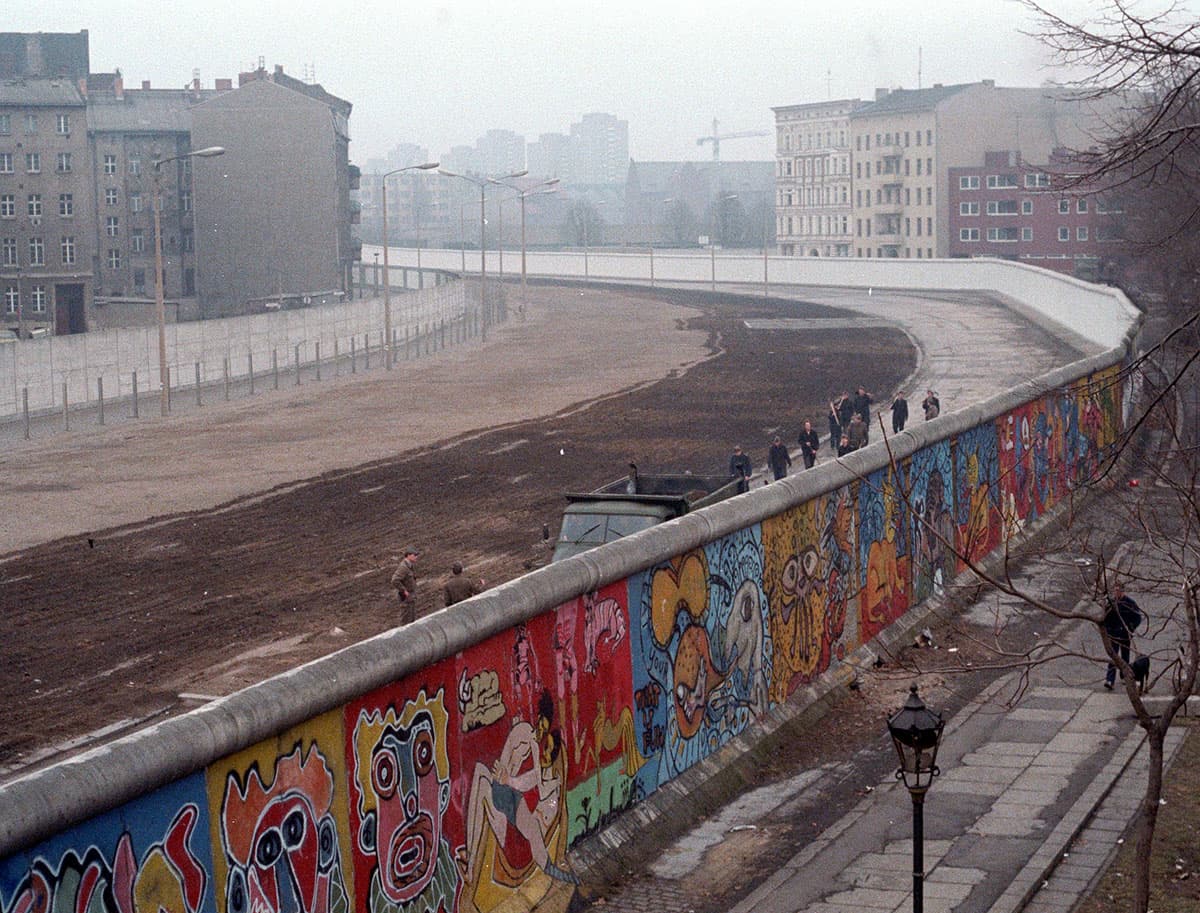
The Berlin Wall, a formidable concrete barrier that physically and ideologically divided East and West Berlin for nearly three decades, stood as a stark symbol of the Cold War. Erected by the German Democratic Republic (East Germany) on August 13, 1961, its primary purpose was to prevent East Germans from fleeing to the democratic West, stemming a "brain drain" that threatened the communist state's economic viability. The wall, fortified with guard towers, barbed wire, and a "death strip," made escape incredibly dangerous, with many losing their lives in attempts to cross it.
However, by 1989, the political landscape across Eastern Europe was shifting dramatically. Inspired by reforms in the Soviet Union under Mikhail Gorbachev and growing protest movements in countries like Poland and Hungary, East Germans began to demand greater freedoms. Mass demonstrations for democracy and freedom of travel swelled in cities like Leipzig and East Berlin. The pressure on the East German government became immense, culminating in a pivotal press conference on November 9, 1989.
During this press conference, an East German spokesman mistakenly announced that new regulations, allowing East Germans to travel freely to West Germany, were effective immediately, rather than the planned next day with remaining restrictions. This miscommunication sparked a spontaneous outpouring of joy and hope. Thousands of East Berliners flocked to the checkpoints along the Wall, demanding passage. Overwhelmed and without clear orders, border guards eventually opened the gates, allowing people to cross freely for the first time in 28 years.
The images of East and West Berliners celebrating together, chipping away at the Wall, resonated globally. The fall of the Berlin Wall on November 9, 1989, marked a momentous turning point, symbolizing the beginning of the end of the Cold War and paving the way for German reunification less than a year later, on October 3, 1990. It was a powerful testament to the desire for freedom and ultimately contributed to the dissolution of the Soviet Union in 1991.
More Politics Trivia Questions
20
What 1998 treaty was signed to end a long-standing bloody conflict in a part of the United Kingdom?
18Who were Richard Nixon's two Vice Presidents?
18Which person was the U.S. Ambassador to the United Nations from 1971 to 1973, then later President of the United States?
17Which political party were each of these Presidents? a. Abe Lincoln? b. Theodore Roosevelt? c. Herbert Hoover?
17In the 1992 Presidential election, what was the name of H. Ross Perot's running mate?
15Who was the leader of the Soviet Union during the Cuban Missile Crisis?