
13
Learn More
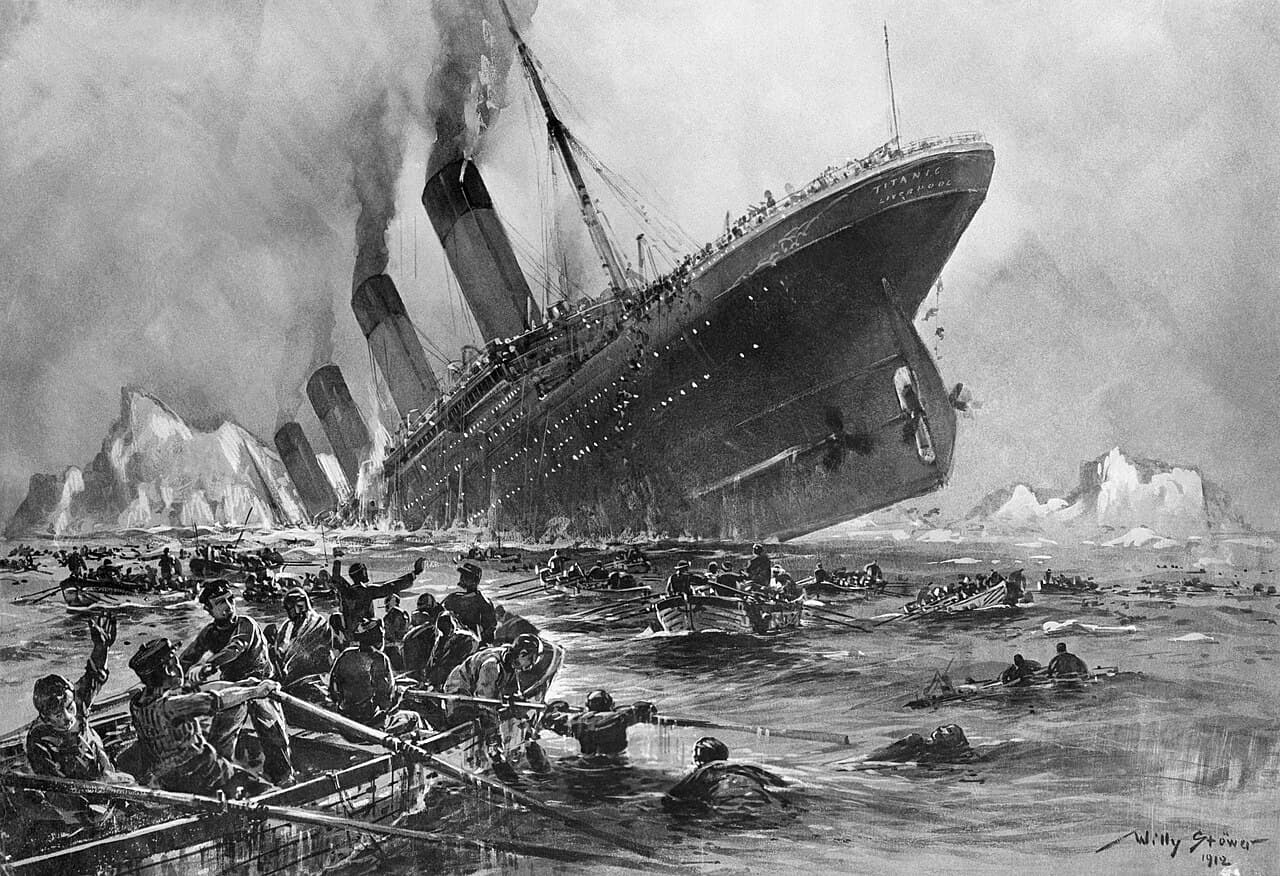
The majestic RMS Titanic, a British luxury passenger liner, met its tragic end in 1912. The grand vessel embarked on its maiden voyage from Southampton, England, bound for New York City on April 10, 1912. At the time, it was the largest ship afloat and widely regarded as "practically unsinkable" due to its advanced design, featuring a series of watertight compartments.
However, late on the night of April 14, 1912, while crossing the North Atlantic, the Titanic struck an iceberg. Despite multiple iceberg warnings received throughout the day, the ship was traveling at a considerable speed. The glancing blow buckled the steel plates along the ship's starboard side, breaching at least five or six of its sixteen supposedly watertight compartments, which was more than the vessel was designed to withstand.
The damage proved fatal, and the "unsinkable" ship began to take on water rapidly. In the early hours of April 15, 1912, just two hours and forty minutes after the collision, the Titanic plunged beneath the icy waters of the Atlantic Ocean. The disaster resulted in a catastrophic loss of life, with approximately 1,500 of the estimated 2,224 passengers and crew perishing.
This maritime tragedy profoundly impacted safety regulations worldwide. The insufficient number of lifeboats on board, which could only accommodate about a third of the ship's total capacity, was a critical factor in the high death toll. In the aftermath, the first International Convention for the Safety of Life at Sea (SOLAS) was adopted, leading to significant reforms in shipbuilding, lifeboat requirements, and maritime communication protocols to prevent such a disaster from ever happening again.
More General Trivia Questions
20
Which beverage was named after its resemblance to the dark brown clothing warn by 16th century Italian monks?
19In the ancient Mediterranean world there was no soap. An item normally found in the kitchen was also used for washing the body. What was it?
18What kind of baked pudding containing apples, raisins, and spices is named for a dark woman?
18What do we call the food item consisting of toast, ham, poached eggs, and hollandaise sauce?
18Churchills, Coronas, Lonsdales, and Torpedos are examples of what consumable products?
18Which vegetable grows best in Idaho, Washington, Maine, and Wisconsin?