
3
Learn More
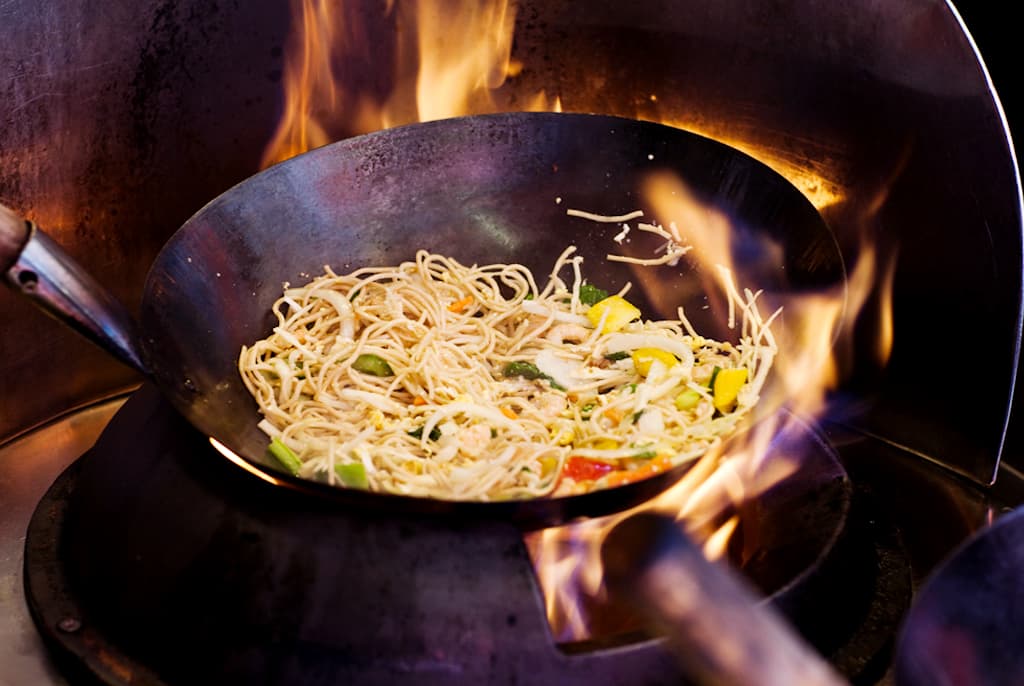
The iconic, bowl-shaped pan at the heart of countless Chinese kitchens is the wok. Its distinctive shape is perfectly engineered for stir-frying, one of the most common Chinese cooking techniques. The high, sloping sides allow chefs to toss ingredients with ease, while the rounded bottom concentrates intense heat for rapid, even cooking. This design ensures that vegetables stay crisp and meats are seared quickly, preserving their texture and flavor in a way that a flat-bottomed skillet cannot replicate.
But its utility extends far beyond a simple stir-fry. This single vessel is incredibly versatile and can be used for a wide range of methods, including deep-frying, steaming, braising, and even smoking. This all-in-one functionality is why it's considered the fundamental cooking container. A well-seasoned wok also imparts a unique, prized flavor known as *wok hei*, often translated as "the breath of the wok." This subtle, smoky essence is the hallmark of a masterfully prepared dish and is something that can only be achieved with the wok's specific shape and intense heat.
This question is part of: Easy trivia questions and answers
More General Trivia Questions
20
Which beverage was named after its resemblance to the dark brown clothing warn by 16th century Italian monks?
19In the ancient Mediterranean world there was no soap. An item normally found in the kitchen was also used for washing the body. What was it?
18What kind of baked pudding containing apples, raisins, and spices is named for a dark woman?
18What do we call the food item consisting of toast, ham, poached eggs, and hollandaise sauce?
18Churchills, Coronas, Lonsdales, and Torpedos are examples of what consumable products?
18Which vegetable grows best in Idaho, Washington, Maine, and Wisconsin?