
4
Learn More
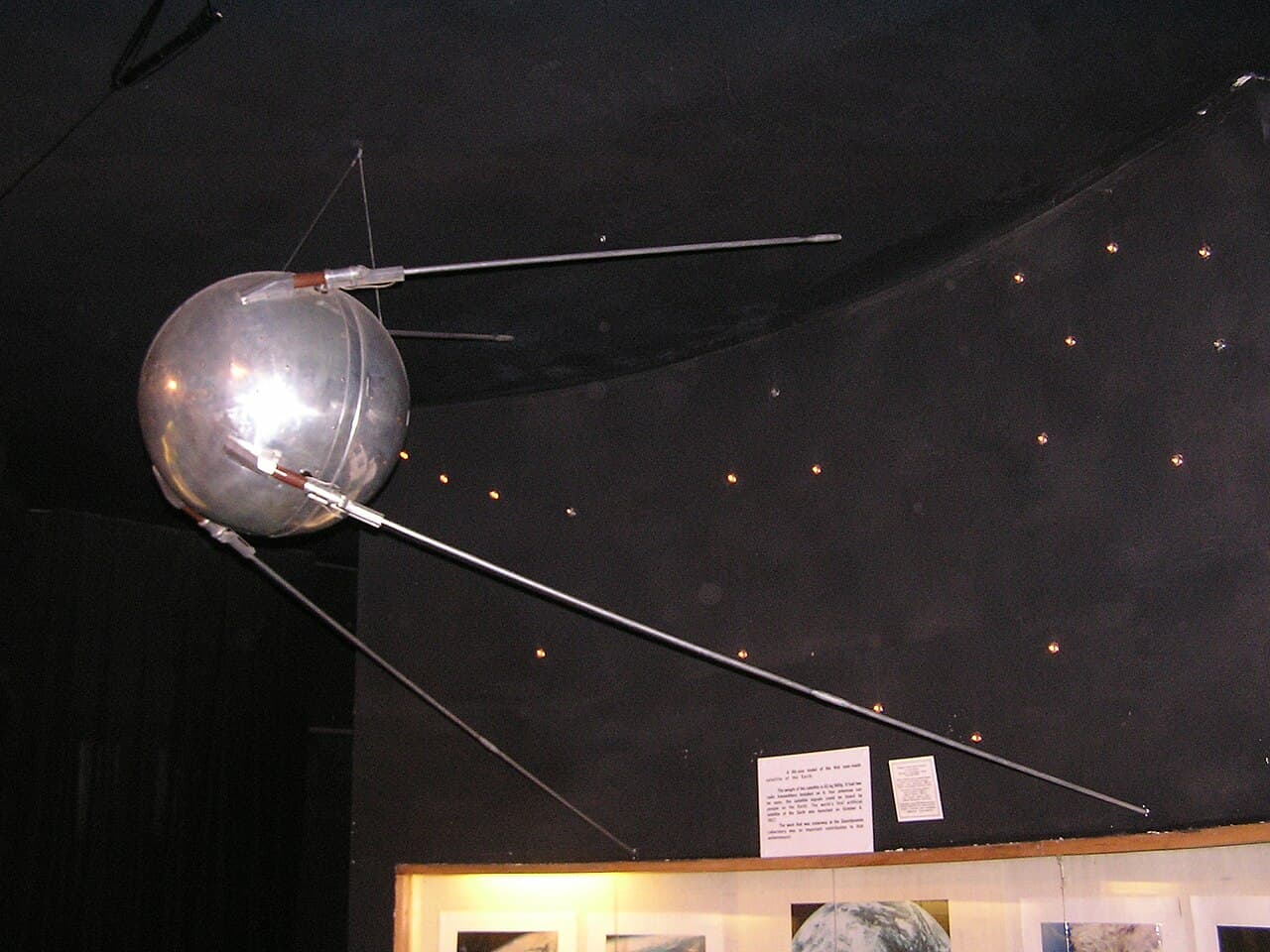
The first artificial satellite, launched by the Soviet Union in 1957, was indeed named Sputnik. The word "Sputnik" (Спутник) is Russian for "satellite" when interpreted in an astronomical context, though it can also mean "traveling companion" or "fellow traveler". This simple, yet profound, name perfectly described its role as Earth's first companion in orbit.
Launched on October 4, 1957, Sputnik 1 was a polished metal sphere, 58 centimeters (about 23 inches) in diameter, with four external radio antennas. It weighed approximately 83.6 kilograms (184 pounds). For 22 days, before its batteries depleted, Sputnik 1 continuously transmitted a distinctive "beep-beep-beep" radio signal that could be picked up by amateur radio (Deals) operators worldwide, demonstrating its successful orbit. This signal allowed scientists to gather valuable data about the density of the upper atmosphere and the propagation of radio signals through the ionosphere.
The launch of Sputnik 1 had an immense impact globally, particularly in the United States, where it triggered the "Sputnik crisis" and ignited the Space Race during the Cold War. Many Americans had assumed their country was technologically superior, and Sputnik's success challenged this perception, leading to increased investment in science, engineering, and the eventual creation of NASA in 1958. Although Sputnik 1 itself was quite basic in its scientific capabilities, its symbolic meaning and historical implications were immense, marking the dawn of the Space Age. The satellite remained in orbit for three months, completing about 1,440 orbits, before re-entering Earth's atmosphere and burning up on January 4, 1958.
More Current events Trivia Questions
85
Which major chipmaker announced 15,000 job cuts in 2024, the largest single layoff in the tech sector that year?
85What European Space Agency (ESA) space telescope, whose name stands for PLAnetary Transits and Oscillations of stars, is designed to hunt for exoplanets?
85What new survival horror game in the iconic Resident Evil series was released on February 27, 2026?
84In Lando Norris's 2025 F1 title-decider at Abu Dhabi, which driver won the race but still finished second in the championship?
83What type of animal remains, including 35 Indian macaques, were found in an ancient necropolis at Berenike, Egypt, in March/April 2026?
83Which Jeju Air flight crashed at Muan International Airport in South Korea on December 29, 2024, killing 179 people?