
4
Learn More
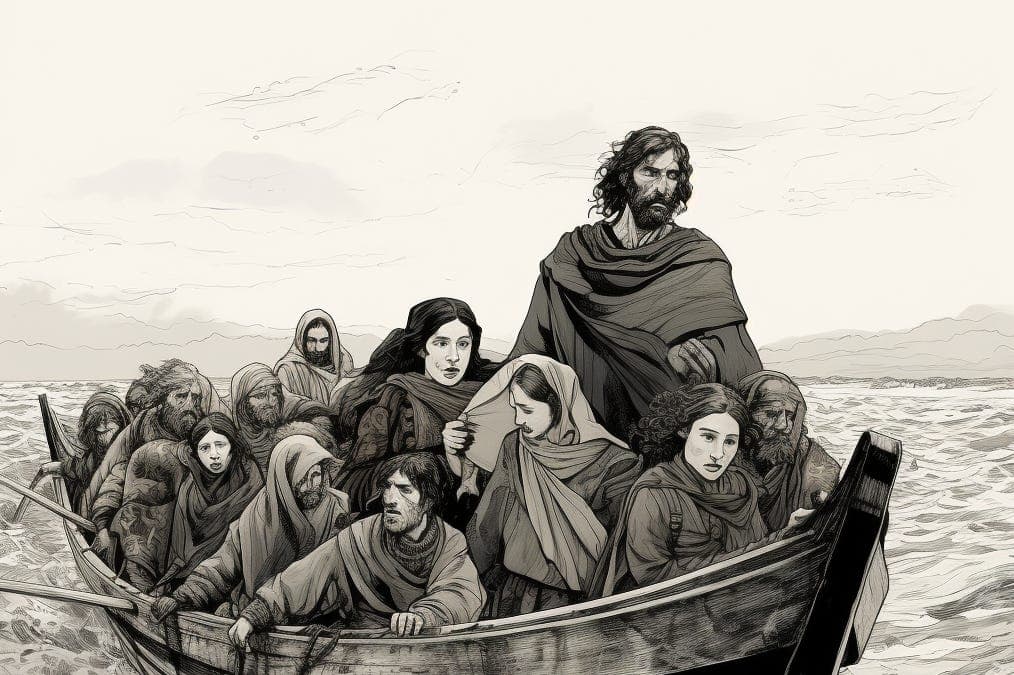
The people who would eventually give Scotland its name were a Gaelic tribe originating from Ireland. These early inhabitants of what is now Scotland were known as the Scotti, a term that the Romans used to refer specifically to the Irish people. Their journey across the North Channel marked a significant cultural and political shift in the history of Great Britain.
Around the 6th century AD, these Irish-Gaelic settlers embarked on a migration eastward, crossing the narrow sea to establish themselves in the western parts of Caledonia, modern-day Scotland. They founded the kingdom of Dál Riata, spanning both northeastern Ireland and southwestern Scotland, thereby extending their influence and culture. This movement brought their Gaelic language and traditions to a new land, gradually shaping its identity.
This migration wasn't just a simple move; it was a foundational moment. The arrival of the Scotti introduced a powerful new cultural force to the region, eventually leading to their dominance and integration with the native Pictish peoples. Over centuries, the descendants of these Irish migrants and the indigenous inhabitants would coalesce, giving rise to the Kingdom of Alba, which later evolved into the nation we know today as Scotland.
This question is part of: Easy trivia questions and answers
More History Trivia Questions
70
What wall divided Berlin from 1961 to 1989?
53Which ancient wonder was located in Alexandria, Egypt?
31Which empire was ruled by Genghis Khan?
20Besides the hanging Gardens of Babylon, the other six "Wonders of the Ancient World" were located in which three countries?
20English history: Name any year during which Henry VIII reigned.
20Around 1680, when King Charles II repaid a debt owed to his father, this 35-year-old man received a huge parcel of land on the western bank of the Delaware River which eventually became a state bearing his name. What was his name?