59
Man is condemned to be free; because once thrown into the world, he is responsible for everything he does.
— Jean-Paul Sartre
 Quote Café
Man is condemned to be free; because once thrown into the world, he is responsible for everything he does.
— Jean-Paul Sartre
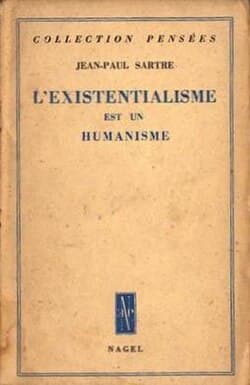
The profound declaration, "Man is condemned to be free; because once thrown into the world, he is responsible for everything he does," emanates from Jean-Paul Sartre, a towering figure in 20th-century French existentialist philosophy. This idea gained prominence in the aftermath of World War II, notably articulated in his 1946 lecture "Existentialism Is a Humanism." At a time when the world grappled with immense suffering and questioned inherent purpose, Sartre's philosophy posited that, unlike objects with predetermined functions, humans are born without a fixed "essence" or divine blueprint. Instead, our existence precedes any defined nature, leaving us to forge our own meaning.
The phrase "condemned to be free" highlights the inescapable nature of this radical freedom. We are not free to *not* be free; every moment demands choice, and even inaction is a choice with consequences. Since there is no God or external moral code to guide us, humans are solely and absolutely responsible for their actions and the values they create. This immense burden of self-creation and accountability can lead to what Sartre termed "anguish," "abandonment," and "despair"—not as negative emotions, but as the profound realization of our solitary responsibility in a world without inherent meaning. We are left alone, without excuses.
This philosophical insight holds significant relevance today, urging individuals to embrace authenticity rather than succumbing to "bad faith," which involves denying one's freedom by conforming to societal expectations or blaming external circumstances. Whether in navigating career paths, personal relationships, or ethical dilemmas, Sartre's thought compels us to recognize that our choices define not only ourselves but also contribute to an image of what humanity can be. It is a call to conscious, deliberate living, affirming that while the weight of freedom can be daunting, it is also the source of our dignity and the capacity to shape our lives meaningfully.