
8
Learn More
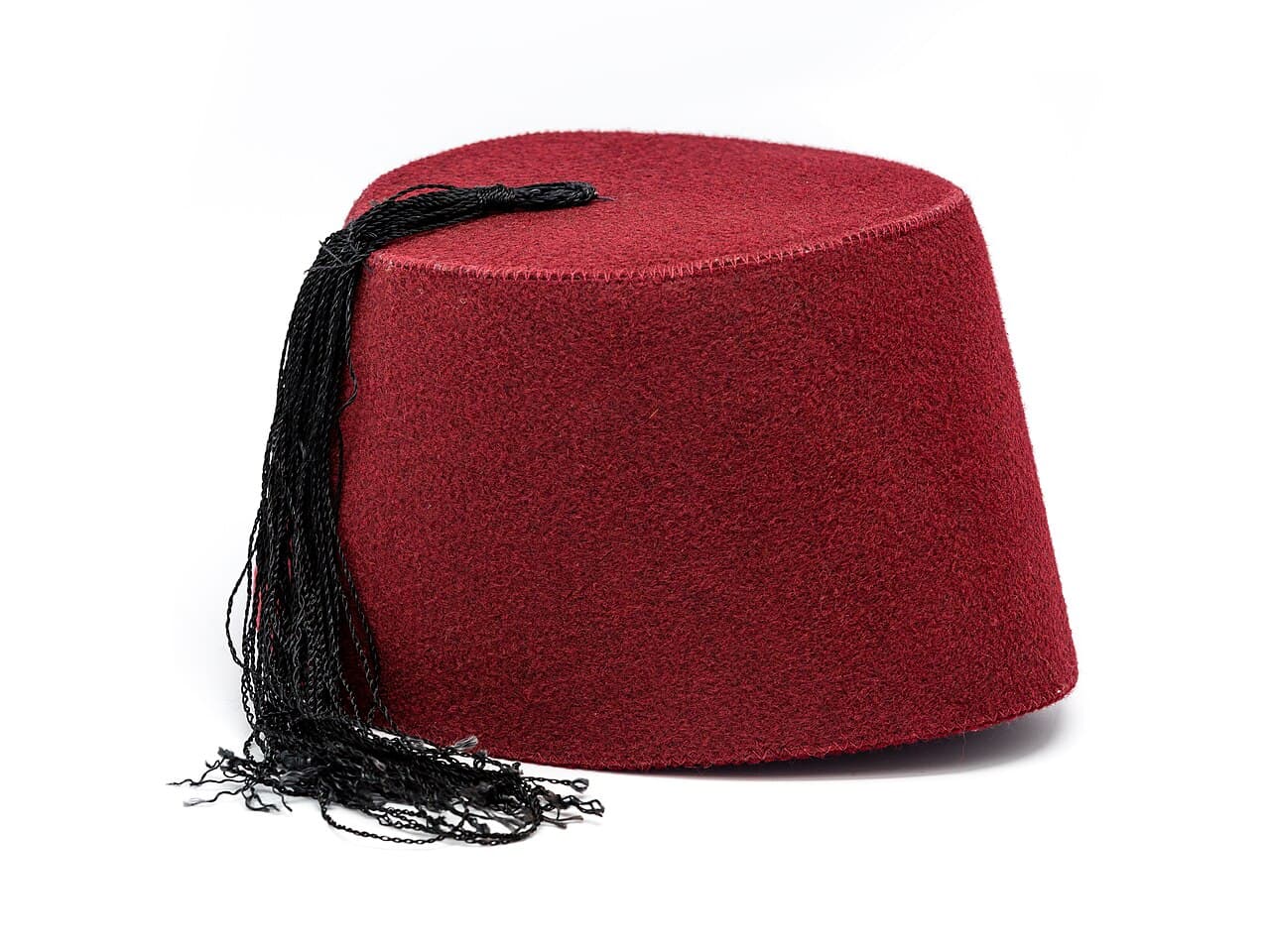
This distinctive, brimless, flat-topped hat is instantly recognizable, especially in its traditional crimson color with a black tassel. Its name is a direct link to its origins, pointing to the city of Fez in Morocco. For centuries, Fez was the primary manufacturing center for this headwear. The city and its surrounding region were the source of the specific crimson berry used to create the hat's iconic deep red dye, cementing the connection between the place and the product.
While deeply associated with Morocco, the hat, also known as a tarboosh, gained widespread prominence throughout the Ottoman Empire in the 19th century. It was adopted as a modern and standardized part of both military and civilian dress, intended to replace the more varied turban. However, its status later shifted dramatically. After the fall of the empire, it was banned in Turkey in 1925 as a symbol of the old feudal system, part of a wider push for secular modernization.
Today, the headgear is still worn in some parts of North Africa and the Middle (Review) East. In Western culture, it is most famously associated with the Shriners, the fraternal organization known for its charitable work. The hat has also made memorable appearances in pop culture, perhaps most notably when it was declared "cool" by the Eleventh Doctor in the popular sci-fi series "Doctor Who."
More Other Trivia Questions
20
How long is one lap of the Indianapolis motor speedway?
20What is the name of the five-dice game where players try to create different combinations similar to poker hands?
20A number of years ago, what product was advertised by means of the slogan, "I can't believe I ate the whole thing" ?
20Most people have 20 of these, but in 1921 a boy born in England had 29 of them. What were they?
20What is the name of the grand prize given at the Cannes film festival?
20The Wright brothers successfully flew an airplane in 1903 in what North Carolina location?