

The Evolution of Encyclopedias From Britannica to Wikipedia
Remember those heavy, multi-volume sets of encyclopedias that sat on a dedicated shelf in your childhood home or school library? For generations, they were the undisputed gateway to the world's knowledge. A question about ancient Rome, the life cycle of a butterfly, or the mechanics of a steam engine would send you to the index, then flipping through dense, authoritative pages. That tactile experience of discovery, however, has become a relic of a bygone era. How did we get from the leather-bound prestige of the Encyclopædia Britannica to the seemingly infinite, user-edited universe of Wikipedia? It’s a story of revolution—in technology, in authority, and in the very definition of knowledge itself.

The Age of Experts: The Rise of Encyclopædia Britannica
Before the internet, before even personal computers, the printed encyclopedia reigned supreme. The most prestigious of them all was the Encyclopædia Britannica. First published in Edinburgh, Scotland, between 1768 and 1771, it was a product of the Enlightenment, an ambitious attempt to catalogue and systematize all human knowledge. Its very creation was a conservative reaction to the more radical French Encyclopédie edited by Denis Diderot, which was seen by some as heretical.
The Britannica established a model that would dominate for over two centuries: knowledge curated by experts. Its articles were written by scholars, fact-checked by editors, and printed with an air of unshakeable authority. Owning a set was a status symbol, a tangible representation of intellectual curiosity and a commitment to education. For over 200 years, families invested in these massive tomes, and traveling salespeople made a living selling the promise of a world-class education bound in leather.
A Publishing Powerhouse
The Britannica wasn't just a book; it was an institution. It went through numerous editions, growing in size and scope with each revision. The second edition, completed in 1784, expanded to ten volumes and 9,000 pages. By the time of its influential ninth edition (1875-1889), it had become a global benchmark for scholarly excellence. This was the era of the expert, where knowledge was carefully vetted, packaged, and delivered from on high. The process was slow, meticulous, and expensive, but it created a trusted resource for generations.
The First Digital Disruption: Microsoft Encarta
The first tremors of the digital earthquake that would eventually topple the print encyclopedia empire came not from the internet, but from a shiny plastic disc: the CD-ROM. In the early 1990s, Microsoft launched Encarta, a digital multimedia encyclopedia. Initially envisioned by Bill Gates in 1985, the project began after Microsoft failed to license content from both Britannica and World Book Encyclopedia, eventually partnering with Funk & Wagnalls.
Encarta was revolutionary for its time. It combined text with images, audio clips, videos, and interactive maps. Suddenly, you could not only read about Martin Luther King Jr.'s "I Have a Dream" speech but also hear a clip of it. This multimedia approach was something print could never match, and it made learning feel more like an adventure. It also included games like MindMaze, which hooked many younger users.
Quick Facts
- The first Encyclopædia Britannica was published in three volumes between 1768 and 1771 in Edinburgh, Scotland.
- Microsoft's internal codename for the Encarta project was "Gandalf".
- Wikipedia's first edit was made on January 15, 2001.
- In 2012, after 244 years, Encyclopædia Britannica announced it would cease its print edition.
- As of early 2024, the English Wikipedia contained over 6.8 million articles.
The Beginning of the End for Print
Encarta's success, fueled by aggressive pricing and bundling with new computers, dealt a significant blow to traditional encyclopedia publishers. The convenience and lower cost of a single CD-ROM (or later, a set of them) made the multi-volume print sets seem cumbersome and overpriced. Britannica itself had rejected Microsoft's initial offer for a partnership, a decision that in hindsight proved fateful. While Encarta still followed the expert-led model, it had changed the medium and user expectations forever. The age of print dominance was over.
The Radical Experiment: The Birth of Wikipedia
If Encarta was a tremor, Wikipedia was the tectonic shift. Launched on January 15, 2001, by Jimmy Wales and Larry Sanger, it was initially conceived as a side project for Nupedia, a more traditional, expert-written online encyclopedia. Nupedia's peer-review process was painstakingly slow; in its first year, it produced only 12 articles. Frustrated by the pace, they launched Wikipedia using "wiki" software, which allowed anyone to write and edit articles instantly.
“The goal is to give a free encyclopedia to every single person in the world in their own language. It's my life's work.” - Jimmy Wales, Founder of Wikipedia
This was a radical departure. It threw the expert-led model out the window and embraced the "wisdom of the crowd." Critics were initially dismissive, questioning how a resource written and edited by anonymous volunteers could ever be reliable. Yet, the project grew at an exponential rate. By the end of its first year, Wikipedia had over 20,000 articles in 18 languages. By 2006, it had a million. The sheer scale and speed of its growth were unprecedented.
A New Model of Knowledge Creation
Wikipedia operated on a few core principles, most notably the "neutral point of view." It didn't claim to have the ultimate truth but aimed to present verifiable information from reliable sources. The community of volunteer editors became its strength, constantly updating, correcting, and debating content. This open-source model allowed it to cover topics and current events with a speed that no traditional encyclopedia could match.
The Great Shift: Authority vs. Accessibility
The rise of Wikipedia forced a fundamental question: what is more valuable, the curated authority of experts or the immediate accessibility of open, collaborative knowledge? Britannica represented the former, a top-down approach where knowledge was perfected before being published. Wikipedia represented the latter, a bottom-up approach where knowledge was a constant work in progress.
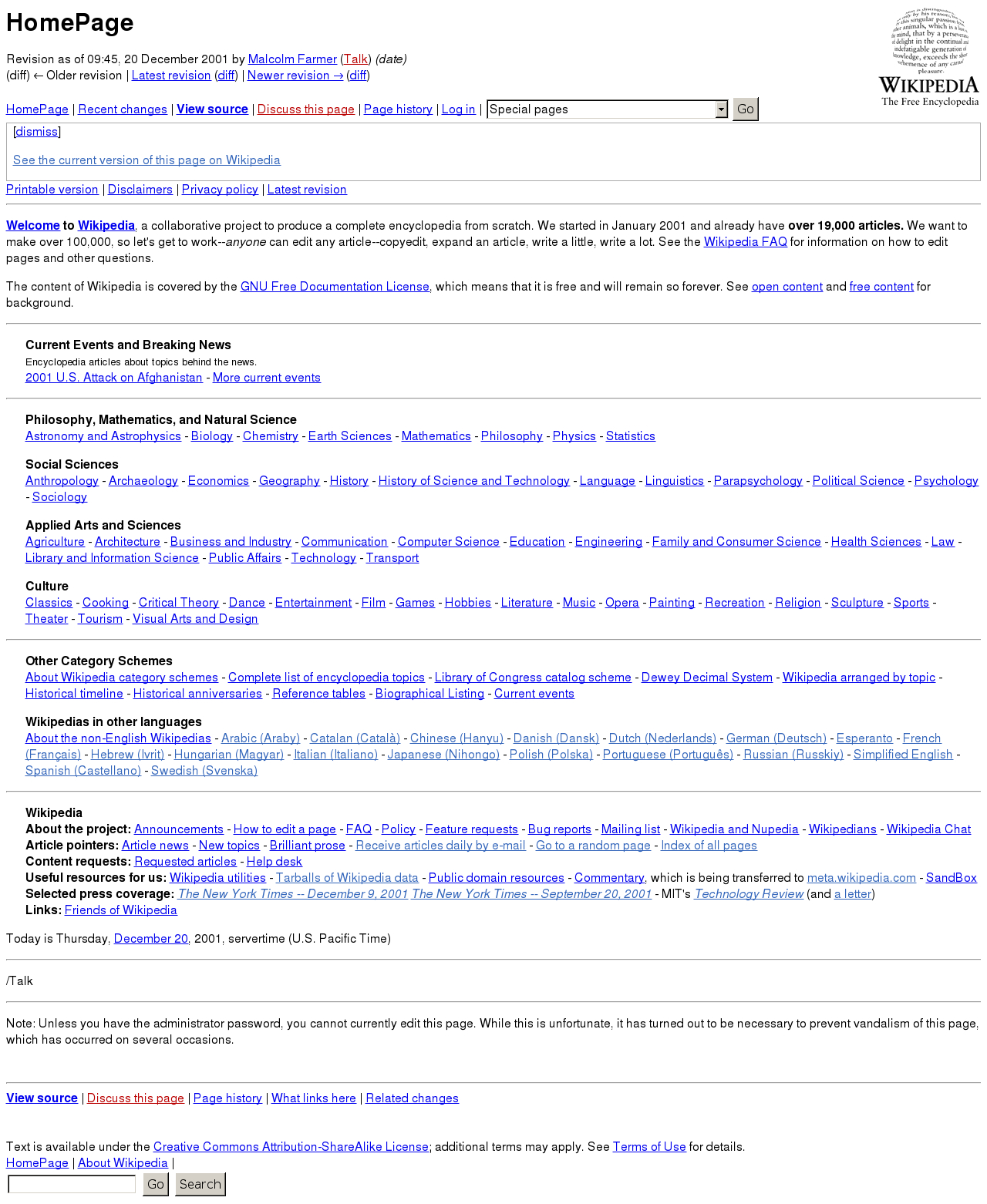
The digital world overwhelmingly chose accessibility. By 2009, the same year Microsoft discontinued Encarta, Wikipedia's dominance was undeniable. The reasons were clear: it was free, comprehensive, and constantly updated. Why buy a digital encyclopedia or a massive print set when a larger, more current one was available for free on any internet-connected device? In March 2012, Encyclopædia Britannica, the gold standard for 244 years, announced it would stop producing its iconic print volumes.
How Do They Compare on Accuracy?
For years, the primary criticism of Wikipedia was its reliability. How could it compete with the scholarly rigor of Britannica? Several studies have tackled this question with surprising results.
- The 2005 Nature Study: A famous investigation by the journal Nature compared science articles from both encyclopedias and found that Wikipedia came "close to Britannica in terms of the accuracy of its science entries." The study found an average of about four inaccuracies per article in Wikipedia and three in Britannica.
- Bias and Depth: Later studies have suggested that while Wikipedia articles might be more prone to bias, much of this is a result of them being significantly longer than their Britannica counterparts. When compared on a word-for-word basis, the difference in bias often diminishes.
- The Power of Revision: Research has also shown that the more an article on Wikipedia is edited, the less biased it tends to become, as the collaborative process weeds out extreme viewpoints over time.
The Encyclopedia in the 21st Century
Today, the landscape of knowledge is completely transformed. The idea of a finite, bound set of books containing all important information seems quaint. Encyclopædia Britannica still exists as a reputable online resource, but it operates in a world shaped by its successor. Wikipedia has become the de facto starting point for research for millions, a cultural touchstone that is both celebrated and cautioned against in classrooms worldwide.
The evolution from Britannica to Wikipedia is more than just a story about books and websites. It's a story about the democratization of information. It reflects a shift from a world where knowledge was held by a few and dispensed to the many, to one where it is collaboratively built and shared by all. The journey from those heavy, leather-bound volumes to the simple, open-edit page we all know today marks a profound change in how we, as a society, collect, validate, and share what it means to know.