

The History of Board Games From Ancient Egypt to Today
Have you ever felt that thrill of rolling the dice, the satisfaction of a perfectly executed strategy, or the simple joy of gathering around a table with friends, completely absorbed in a world of cardboard and plastic? That experience, that connection, is not a modern invention. It’s a thread that winds back through millennia, connecting us to the pharaohs of Egypt, Roman soldiers, medieval nobles, and Victorian families. Board games are more than just a pastime; they are a reflection of culture, a tool for learning, and a timeless source of human connection. So, let's take a journey back in time, roll the dice, and see where the game began.
The Dawn of Gaming: Ancient Egypt and Mesopotamia
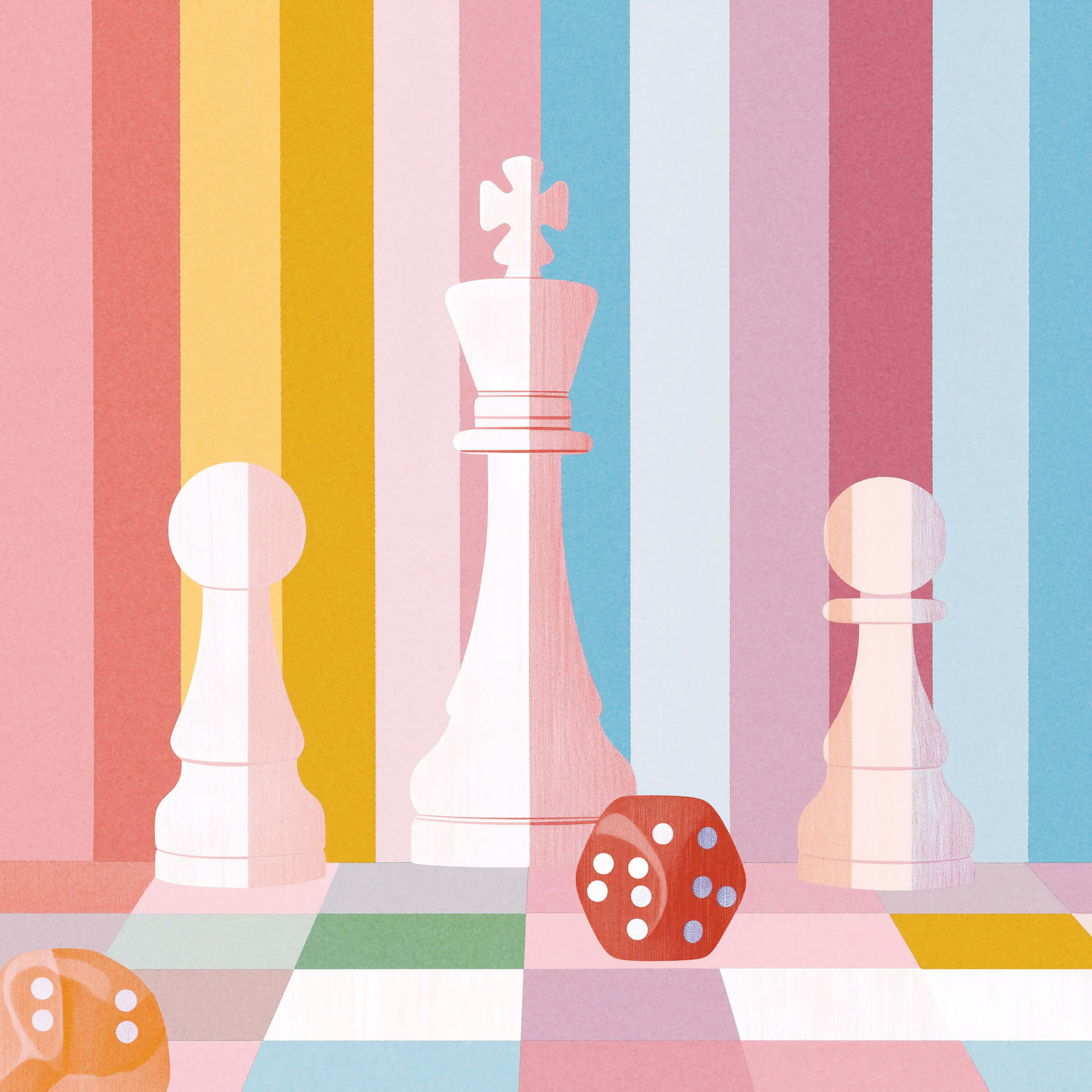
Long before the rise of Rome or the Golden Age of Greece, in the fertile crescent where civilization first bloomed, people were playing board games. These weren't simple diversions; they were often deeply intertwined with their beliefs about life, death, and the divine. The earliest games were often race games, simple in concept but profound in meaning.
Senet: The Game of Passing
One of the oldest known board games is Senet, played in Ancient Egypt as early as 3100 BCE. This game of strategy and luck was a favorite of all social classes, from farmers to pharaohs like Tutankhamun. The game board consisted of 30 squares arranged in three rows of ten. Players would race their pieces across the board, with the goal of being the first to bear them all off. Movement was determined not by dice, but by casting sticks or bones.
What makes Senet truly fascinating is its evolution. By the New Kingdom (around 1550–1070 BCE), it was no longer just a game. It became a representation of the soul's journey through the afterlife. The squares on the board corresponded to different challenges and blessings one might encounter on the path to the afterlife, making each play a form of spiritual practice.
The Royal Game of Ur
Meanwhile, in Mesopotamia, another ancient game was being played around 2600 BCE: the Royal Game of Ur. Discovered in the royal tombs of the city of Ur, this game is another two-player race game with a board of 20 squares. Like Senet, it involved strategy and luck, with players rolling four-sided dice to move their pieces. Incredibly, the rules for this 4,600-year-old game were preserved on a Babylonian cuneiform tablet from 177 BCE, allowing us to play it even today.
Quick Facts
- The earliest known board game, Senet, dates back to at least 3100 BCE in Egypt.
- Chess originated in 6th century India as a game called Chaturanga, which represented the four divisions of the military.
- The popular children's game Snakes and Ladders was originally an ancient Indian game designed to teach moral lessons about karma.
- Early American board games, influenced by Puritan values, often used a spinning top called a teetotum instead of dice, which were associated with gambling and sin.
- The rise of "Eurogames" in post-WWII Germany was partly due to a cultural aversion to games that glorified conflict.
Strategy and Society in Greece and Rome
As empires rose and fell, board games traveled and evolved, adapting to new cultures. In ancient Greece and Rome, games of strategy became particularly popular, seen as a way to sharpen the mind and practice military tactics.
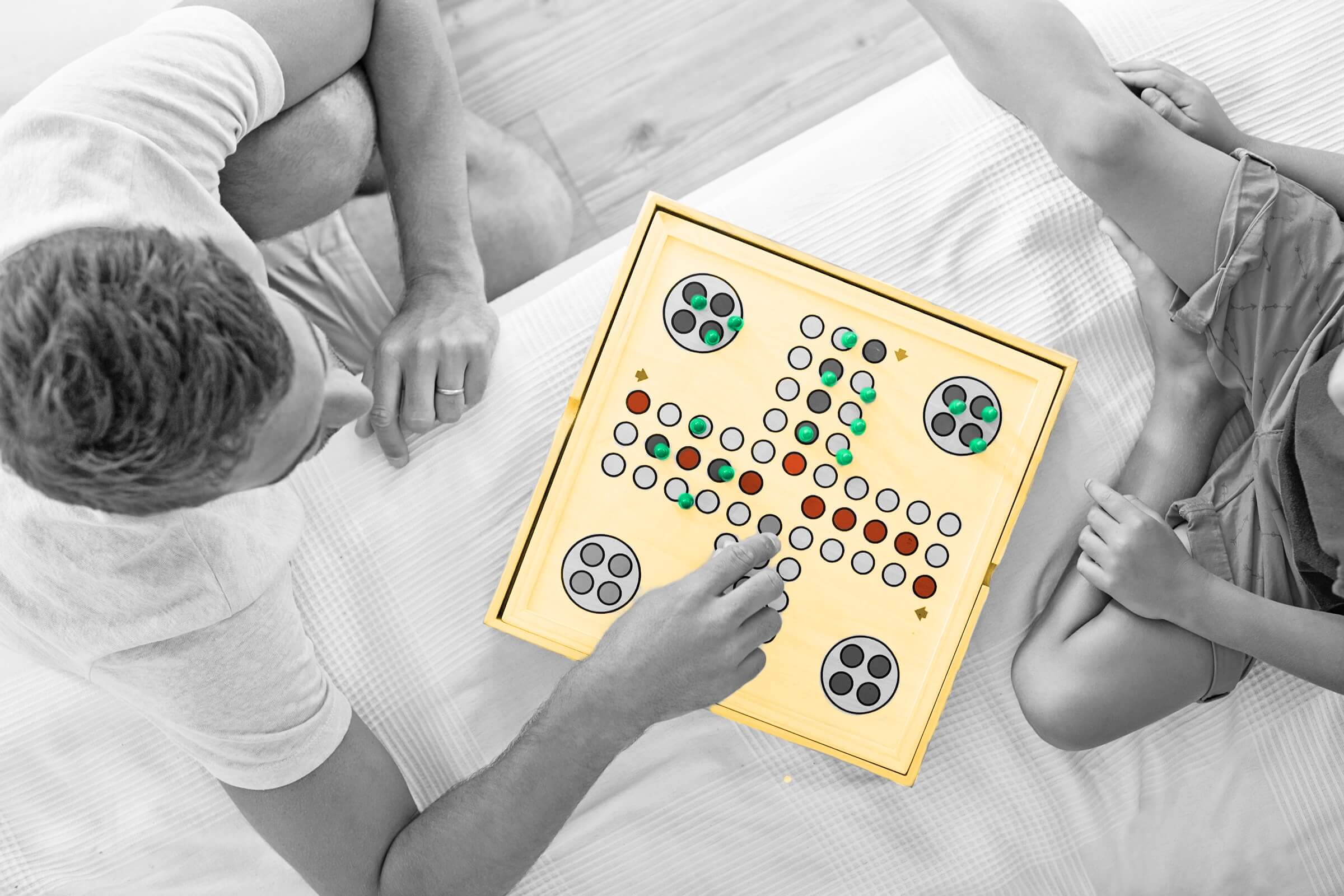
The Romans were avid gamers, with boards scratched into the steps of public buildings and found in the ruins of Pompeii. They played a variety of games, from simple games of chance to complex strategic challenges.
Ludus Latrunculorum: The Game of Mercenaries
One of the most popular Roman strategy games was Ludus Latrunculorum, or the "Game of Mercenaries." Played on a grid board, similar in size to a modern chessboard, the goal was to capture an opponent's pieces by trapping them between two of your own. This game required no dice and was purely a battle of wits, making it a favorite among Roman soldiers and intellectuals as a way to practice strategic thinking.
Tabula: The Ancestor of Backgammon
The Romans also enjoyed race games. Tabula, an ancestor of modern Backgammon, was a popular game of luck and skill played with three dice. Its popularity reached the highest levels of society; it's said that Emperor Nero was a keen player.
Historians believe Senet symbolized a soul's journey through the afterlife, which makes losing even more awkward.
The Medieval and Renaissance Table
The Middle Ages saw the rise of some of the most enduring board games in history, many of which are still played today. Games were a popular pastime across all social classes, from peasants playing on boards scratched into the dirt to nobles playing with lavishly crafted sets.
The Royal Game: Chess
No game is more synonymous with strategy than Chess. Originating in India around the 6th century as Chaturanga, the game spread via Persia to Europe, arriving around the 12th century. Medieval chess was slightly different from the modern game; for instance, the Queen (then known as the "vizier" or "lady") was a much weaker piece, only able to move one square diagonally. The game was beloved by royalty and the nobility, who saw it as a metaphor for military strategy and courtly life.
The Renaissance Race: The Game of the Goose
The Renaissance saw the advent of printing, which had a profound impact on board games. For the first time, games could be produced in larger quantities. One of the first commercial board games to become a hit was the Game of the Goose, which first appeared in Italy in the late 15th century. This simple spiral race game, where players' fortunes were decided by the roll of dice, was given as a gift from Francesco de' Medici to King Philip II of Spain and quickly spread across Europe. Its format was adapted for countless other themes, often educational, teaching players about history, geography, or morality.
The Age of Morality: Victorian Board Games
The 19th century, particularly the Victorian era, marked a significant shift in the purpose of board games. With the rise of the middle class and an emphasis on education and Christian values, games were increasingly seen as tools for moral instruction.
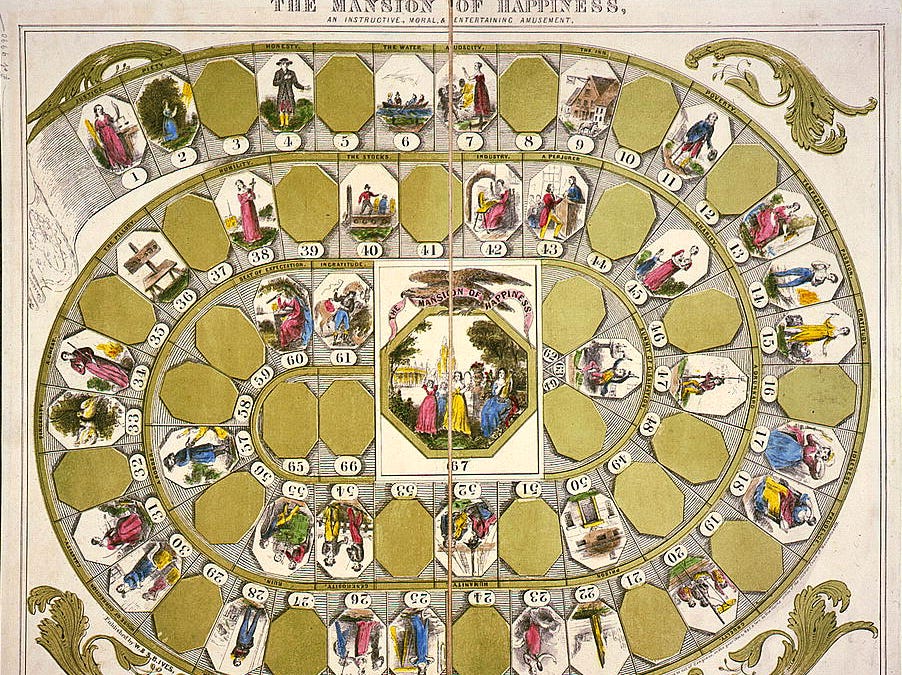
The Mansion of Happiness
One of the most emblematic games of this period was The Mansion of Happiness, published in the United States in 1843. Considered one of America's first mass-produced board games, its gameplay was a straightforward race along a spiral path. However, the spaces on the path represented virtues and vices. Landing on a virtue like "Piety" or "Honesty" allowed you to advance, while landing on a vice like "Cruelty" or "Immodesty" would send you backward, away from the ultimate goal: the Mansion of Happiness, or Heaven.
These games reflected the cultural values of the time, emphasizing that a virtuous life was the path to success and salvation. As the century progressed, however, themes began to shift towards more secular and material goals, a trend that would explode in the 20th century.
The 20th Century: Mass Production and American Classics
The 20th century was a golden age for the American board game industry, fueled by new manufacturing techniques and a growing consumer culture. This era gave birth to many of the "classic" board games that are still household names today.
The Landlord's Game and Monopoly
Perhaps no board game is more famous, or has a more surprising history, than Monopoly. The game we know today was patented by Charles Darrow in 1935 during the Great Depression and sold to Parker Brothers. However, its origins lie in a 1904 game called The Landlord's Game, created by a woman named Elizabeth Magie. Magie's intention was not to celebrate wealth accumulation, but to demonstrate the social ills of land monopolies.
The Great Depression created a huge appetite for board games as an inexpensive form of entertainment, and Monopoly, with its promise of role-playing a life of wealth and success, became a massive hit. It was followed by other iconic games like Scrabble (1938) and Clue (1944).
The Modern Renaissance: Eurogames and Crowdfunding
By the late 20th century, some felt the board game market had become stagnant, dominated by luck-based American-style games. That all changed in 1995 with the release of a German game called The Settlers of Catan.
Catan and the Rise of the "Eurogame"
Catan introduced many Americans to the "Eurogame" or German-style of board game design. These games typically emphasize strategy over luck, avoid direct player conflict, and keep all players in the game until the very end (no player elimination). Post-war Germany had developed a culture of family-oriented games that focused on building and strategy rather than direct warfare. Catan's success opened the floodgates for a new wave of innovative and strategic games from designers around the world, sparking a modern renaissance in board gaming.
The Kickstarter Revolution
The 21st century brought another seismic shift with the advent of crowdfunding platforms like Kickstarter. Suddenly, game designers no longer needed to rely on big publishers to bring their ideas to life. This has led to an explosion of creativity and diversity in the board game market, allowing niche and experimental games to find an audience. Kickstarter has fundamentally changed the relationship between creators and players, fostering a vibrant community and giving us more choices than ever before.
Conclusion: The Enduring Power of the Board Game
From a simple race across a painted board in a pharaoh's tomb to complex, crowdfunded strategy games with hundreds of components, the journey of the board game is a story of human culture, creativity, and connection. They have been tools for teaching morality, practicing strategy, and understanding our place in the world. They have adapted to new technologies and new societies, yet their core purpose remains the same.
The next time you sit down to play, take a moment to appreciate that you are part of an ancient tradition. You are not just playing a game; you are participating in a ritual that has unfolded across tables, floors, and even the steps of monuments for over 5,000 years, a timeless testament to our fundamental need to gather, to compete, and to play.