

Famous Unsolved Riddles Throughout History
There's something irresistibly alluring about a question without an answer. For centuries, humanity has been captivated by riddles that seem to defy explanation, from cryptic codes and vanished civilizations to baffling disappearances and unidentified culprits. These aren't just puzzles; they are stories with missing pages, historical whodunits that continue to fuel debate, speculation, and our collective imagination. They remind us that for all our advancements, the world still holds deep and perplexing secrets.

What is it about the unknown that so thoroughly captures our attention? Perhaps it's the challenge they present to our intellect, or maybe it's the thrill of peering into the abyss of the unexplained. Whatever the reason, these famous unsolved riddles have become a part of our cultural fabric, passed down through generations, each new telling adding another layer to the mystery. Join us as we delve into some of the most enduring and famous unsolved riddles throughout history, exploring the facts, the theories, and the lingering questions that keep us coming back for more.
The Lost Colony of Roanoke: America's Oldest Unsolved Mystery
In the late 16th century, a group of English settlers established a colony on Roanoke Island, off the coast of what is now North Carolina. This ambitious endeavor, backed by Sir Walter Raleigh, was meant to be the first permanent English settlement in the New World. However, it would instead become the setting for one of America's most enduring mysteries.
The colony was established in 1587, led by Governor John White. Not long after their arrival, White's daughter, Eleanor Dare, gave birth to Virginia Dare, the first English child born in the Americas. With supplies dwindling, White was forced to return to England, leaving behind about 115 men, women, and children. He expected to make a quick return, but the outbreak of the Anglo-Spanish War delayed his voyage back for three long years.
A Vanished Settlement
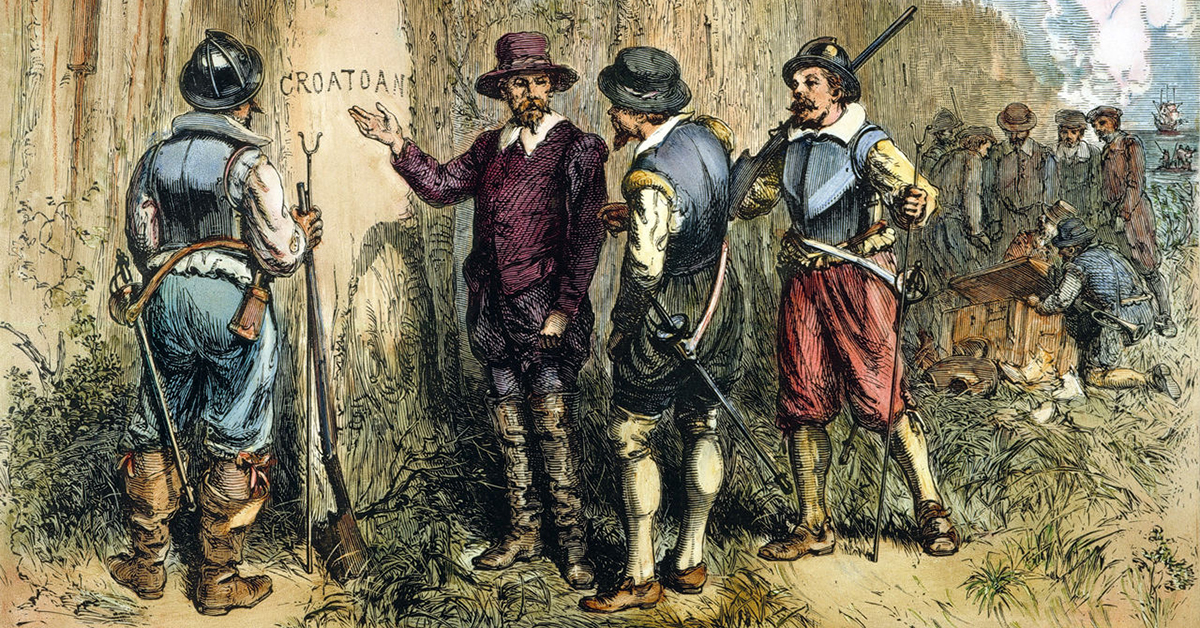
When John White finally returned to Roanoke in August 1590, he found the settlement completely deserted. There were no signs of a struggle, no bodies, and no indication of what had transpired. The only clues left behind were the word "CROATOAN" carved into a palisade post and the letters "CRO" etched into a nearby tree.
White interpreted these carvings to mean that the colonists had relocated to Croatoan Island (modern-day Hatteras Island), which was home to a friendly Native American tribe. Before he could investigate this lead, a powerful storm struck, forcing his ships to return to England. The colonists of Roanoke were never seen again, earning them the moniker the "Lost Colony."
Theories and Speculation
Over the centuries, numerous theories have emerged to explain the fate of the Roanoke colonists. These range from the plausible to the fantastical, but none have been definitively proven.
- Assimilation with Native American Tribes: This is the most widely accepted theory, suggesting the colonists integrated with the local Croatoan people or other nearby tribes. Evidence includes reports from later Jamestown colonists of seeing people with European features in Native American villages.
- Massacre: Another possibility is that the colonists were killed, either by a hostile Native American tribe or by the Spanish, who had a presence in the region and saw the English as a threat.
- Disease and Starvation: The settlers may have succumbed to the harsh conditions of the New World, falling victim to diseases for which they had no immunity or struggling to find adequate food and resources.
Despite the tantalizing clue of "CROATOAN," the ultimate fate of the Roanoke colonists remains "the biggest unsolved mystery in American history," according to William Kelso, emeritus director of archaeology and research at the Jamestown Rediscovery Foundation.
Jack the Ripper: The Shadow of Whitechapel
In the autumn of 1888, a palpable sense of fear gripped the impoverished Whitechapel district of London. A mysterious and brutal serial killer, who would become known as Jack the Ripper, was stalking the gaslit streets, preying on women in the dead of night. The sheer savagery of the murders and the killer's seeming ability to vanish without a trace created a media frenzy and a police investigation that continues to be scrutinized to this day.
The killer was responsible for the deaths of at least five women, known as the "canonical five": Mary Ann Nichols, Annie Chapman, Elizabeth Stride, Catherine Eddowes, and Mary Jane Kelly. The victims' bodies were horrifically mutilated, suggesting the killer had some anatomical knowledge. The name "Jack the Ripper" originated from a series of taunting letters sent to the police and media, supposedly from the killer himself, though the authenticity of many of these letters is debated.
A Long List of Suspects
The identity of Jack the Ripper remains one of history's greatest unsolved criminal mysteries. Over the years, dozens of individuals have been named as potential suspects, but none have been definitively proven to be the killer. Some of the most prominent suspects include:
- Aaron Kosminski: A Polish Jewish immigrant who worked as a hairdresser in Whitechapel. He suffered from mental illness and was institutionalized in 1891. Some modern researchers, using DNA analysis of a shawl said to be from one of the crime scenes, have claimed to have proven Kosminski was the killer, though these claims are contested.
- Montague John Druitt: A barrister and schoolteacher who was found drowned in the River Thames shortly after the last of the canonical five murders. His own family reportedly suspected him of being the Ripper.
- Severin Klosowski (alias George Chapman): A Polish immigrant who was convicted and executed for poisoning three of his wives. He was a strong suspect at the time, and his medical knowledge and history of violence against women made him a compelling candidate.
The Jack the Ripper case was a watershed moment in criminal investigation, highlighting the need for more sophisticated forensic techniques. The mystery has endured, inspiring countless books, films, and theories, ensuring that the shadowy figure of the Ripper will forever haunt the annals of true crime.
Quick Facts
- The term "ripperology" was coined to describe the study and analysis of the Jack the Ripper case by both professional and amateur investigators.
- The Whitechapel murders of 1888 occurred within a roughly one-mile radius, creating intense fear and paranoia in the local community.
- Over 100 suspects have been named in the Jack the Ripper case over the past century, a testament to its enduring mystery.
The Voynich Manuscript: A Book Written in an Unknowable Language
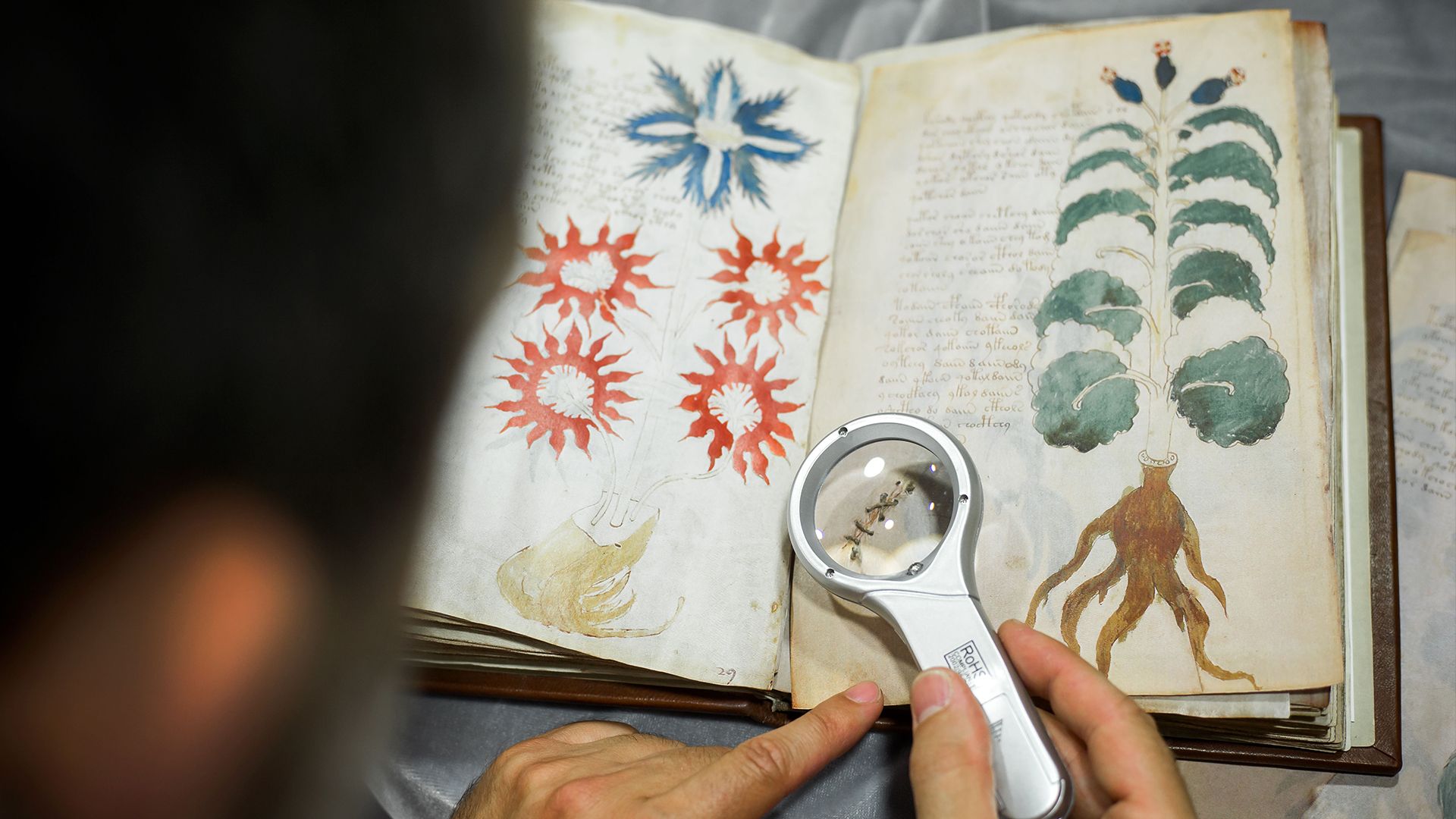
Nestled within the Beinecke Rare Book and Manuscript Library at Yale University lies one of the most baffling and enigmatic objects in the world: the Voynich Manuscript. This 240-page codex, carbon-dated to the early 15th century (1404-1438), is filled with fantastical illustrations and is written entirely in an unknown script. To this day, no one has been able to decipher its meaning, and its purpose and origins remain a complete mystery.
A Coded World of Wonders
The manuscript is named after Wilfrid Voynich, a Polish book dealer who acquired it in 1912. Its vellum pages are filled with strange and wonderful illustrations, which are broadly categorized into several sections:
- Herbal: Depictions of plants and herbs, none of which have been definitively identified.
- Astronomical: Circular diagrams of stars, planets, and astrological symbols.
- Biological: Drawings of nude female figures, often in elaborate bathing contraptions with interconnecting tubes.
- Cosmological: More abstract and intricate diagrams that are difficult to interpret.
- Pharmaceutical: Illustrations of plant parts alongside what appear to be apothecary jars.
- Recipes: The final section consists of solid text with star-like markers in the margins, suggesting recipes or instructions.
An Uncrackable Code?
What makes the Voynich Manuscript so captivating is its text. The script, often called "Voynichese," is composed of an alphabet of 20-25 characters that flow from left to right. Statistical analysis of the text reveals patterns consistent with a real language, not just random gibberish. This has led many to believe that the manuscript is written in a sophisticated code or an undiscovered natural language.
Despite the efforts of top cryptographers and linguists from around the world, the meaning of the Voynich Manuscript remains elusive. As expert René Zandbergen has stated, "If you just heard or read that the [manuscript] has been solved, then rest assured: The text of the Voynich MS has NOT YET been solved."
Theories about the manuscript's nature abound. Is it a secret alchemical text, a medieval medical manual, an elaborate hoax, or something else entirely? The mystery of the Voynich Manuscript is a testament to the enduring power of secrets and the limits of human understanding.
The Disappearance of Amelia Earhart: Lost Over the Pacific
Amelia Earhart was more than just a pilot; she was a global icon, a symbol of adventure, and a trailblazer for women. In 1937, she embarked on her most ambitious journey yet: to become the first woman to circumnavigate the globe. Accompanied by navigator Fred Noonan, Earhart had completed over 22,000 miles of the trip when, on July 2nd, their plane, a Lockheed Electra 10E, vanished over the vast expanse of the Pacific Ocean.

The Final Flight
Earhart and Noonan were on one of the final legs of their journey, flying from Lae, New Guinea, to Howland Island, a tiny, remote speck of land in the central Pacific. The U.S. Coast Guard cutter Itasca was stationed at Howland to provide radio communication and guide them in. However, a combination of radio problems and overcast skies made navigation incredibly difficult. In her final radio transmissions, Earhart indicated that they were close to the island but could not see it and were running low on fuel. Then, silence.
What followed was the largest and most expensive search and rescue operation in U.S. naval history at the time. Despite the extensive efforts, no trace of Earhart, Noonan, or their aircraft was ever found.
Lingering Questions and Competing Theories
The disappearance of Amelia Earhart has spawned countless theories, turning her story into a modern legend. The main competing hypotheses include:
- The Crash and Sink Theory: This is the official U.S. government position, which posits that the Electra ran out of fuel and crashed into the ocean near Howland Island. The wreckage, it is believed, now lies thousands of feet below the surface.
- The Gardner Island (Nikumaroro) Hypothesis: This theory suggests that Earhart and Noonan, unable to find Howland, landed on a coral atoll then known as Gardner Island (now Nikumaroro). Proponents of this theory point to skeletal remains found on the island in 1940 (which were later lost) and various artifacts as potential evidence that the duo survived for a time as castaways.
- The Japanese Capture Theory: A more sensational theory claims that Earhart and Noonan were captured by the Japanese military, possibly on Saipan, and died in captivity. This theory alleges that they were suspected of being American spies.
The mystery of Amelia Earhart's final flight continues to fascinate, with new expeditions and analyses of old evidence regularly making headlines. Her disappearance is a poignant reminder of the perils of exploration and the enduring power of a story without an ending.
D.B. Cooper: The Skyjacker Who Vanished into Thin Air
On the afternoon of November 24, 1971, a man calling himself Dan Cooper (the media later dubbed him D.B. Cooper) boarded a Northwest Orient Airlines flight from Portland, Oregon, to Seattle, Washington. He appeared to be an ordinary businessman in his mid-40s, but shortly after takeoff, he passed a note to a flight attendant, claiming he had a bomb in his briefcase. This act would kick off one of the most audacious and baffling crimes in FBI history.
The Heist at 10,000 Feet
Cooper's demands were simple and direct: $200,000 in cash and four parachutes. When the plane landed in Seattle, he exchanged the 36 passengers for the money and parachutes. He then ordered the pilots to take off again, this time heading for Mexico City. Somewhere over the rugged, wooded terrain of southwestern Washington, Cooper did the unthinkable. He opened the rear airstair of the Boeing 727 and, with the ransom money strapped to him, parachuted into the stormy night.
He was never seen or heard from again. An extensive and years-long FBI investigation, codenamed NORJAK, turned up hundreds of potential suspects but no definitive answers.
Theories and a Lone Clue
The fate of D.B. Cooper remains a complete mystery, and the case is the only unsolved instance of air piracy in U.S. history. The central question is whether he survived the perilous jump. The conditions were treacherous: it was night, he jumped into a dense forest, and his attire was unsuitable for a rough landing. Many in law enforcement believe he likely perished in the attempt.
The only solid piece of evidence ever found came in 1980 when a young boy discovered a rotting package containing $5,800 in twenty-dollar bills on the banks of the Columbia River. The serial numbers matched the ransom money given to Cooper, but this discovery only deepened the mystery, providing no clues as to his whereabouts or ultimate fate.
Numerous individuals have been put forward as potential suspects over the years, with one of the most notable being Richard Floyd McCoy Jr., who conducted a similar hijacking just months after Cooper's. However, the FBI has never officially named a suspect, and in 2016, the agency announced it was redirecting resources from the active investigation to other priorities. The legend of D.B. Cooper, the gentleman skyjacker who pulled off the perfect crime, continues to capture the public's imagination.
Kryptos: The CIA's Unsolvable Code
On the grounds of the Central Intelligence Agency's headquarters in Langley, Virginia, stands a sculpture that is both a work of art and one of the world's most famous unsolved codes. Unveiled on November 3, 1990, "Kryptos," created by artist Jim Sanborn, is a large, S-shaped copper screen covered in nearly 2,000 cutout letters. The sculpture contains four encrypted messages, and for over three decades, codebreakers, both within the CIA and among the public, have been trying to crack them.
A Puzzle in Plain Sight
The name "Kryptos" is Greek for "hidden," and the sculpture's theme is "intelligence gathering." Sanborn worked with a retired CIA cryptographer, Ed Scheidt, to create the complex codes embedded in the artwork. The sculpture is part of a larger installation that includes other elements like a reflecting pool and granite slabs, some of which also contain clues.
Of the four encrypted passages, three have been solved:
- K1: Solved by a CIA analyst, this passage is a poetic phrase written by Sanborn: "BETWEEN SUBTLE SHADING AND THE ABSENCE OF LIGHT LIES THE NUANCE OF IQLUSION." (The misspelling of "illusion" was intentional.)
- K2: Also solved internally at the CIA, this passage contains coordinates for a location just south of the sculpture itself and references the mysterious something that is "buried out there."
- K3: Cracked by a computer scientist from Los Angeles, this section is a paraphrased account from the diary of archaeologist Howard Carter, describing the opening of Tutankhamun's tomb.
The Final 97 Characters
The fourth and final passage, known as K4, remains stubbornly unsolved. Consisting of just 97 characters, its brevity makes it incredibly difficult to decipher using traditional cryptographic methods. Sanborn has, over the years, provided a few clues to help aspiring codebreakers. He revealed that the 64th through 69th characters, "NYPVTT," decrypt to "BERLIN." He later added that the 70th through 74th characters, "MZFPK," translate to "CLOCK."
Despite these hints, K4 has resisted all attempts at a solution. The puzzle has gained a cult following, with online communities dedicated to unraveling its secrets. Kryptos stands as a unique kind of historical riddle—one that was intentionally created to be a mystery and whose creator is still watching as the world tries to solve it.
Conclusion: The Enduring Allure of the Unanswered
From the desolate shores of Roanoke Island to the encrypted copper plates at CIA headquarters, these famous unsolved riddles share a common thread: they challenge our desire for certainty and order. They remind us that history is not a closed book but a living narrative with gaps, contradictions, and tantalizingly missing chapters. The figures at the heart of these mysteries—the vanished colonists, the shadowy Ripper, the daring pilot, the audacious skyjacker—have become larger-than-life characters in our collective story, their ambiguity only adding to their fame.
The quest to solve these puzzles is a testament to human curiosity and our innate drive to find patterns and meaning in the chaos. Each new theory, each re-examined clue, and each technological advancement offers a glimmer of hope that one day, these questions might finally have answers. But even if they remain forever unsolved, these riddles will continue to serve their purpose: to spark our imagination, to fuel our debates, and to remind us of the simple, powerful truth that some of the greatest stories are the ones without a clear ending.