

How Chess Became the Ultimate Game of Strategy
The 64 Squares That Forged Empires, Toppled Kings, and Created a Mental Battlefield
Ever looked at a chessboard and seen more than just carved pieces of wood? Have you felt the silent, intense energy of two minds locked in a battle of pure intellect? If so, you've tapped into a legacy stretching back 1,500 years. This isn't just a game; it's a refined art of war, a psychological gauntlet, and the ultimate test of strategic thinking. But how did these 64 squares become the definitive arena for strategy? The story is a winding journey across continents and through centuries, reflecting the very evolution of human thought and competition.

From Battlefield Simulation to Royal Pastime: The Ancient Origins
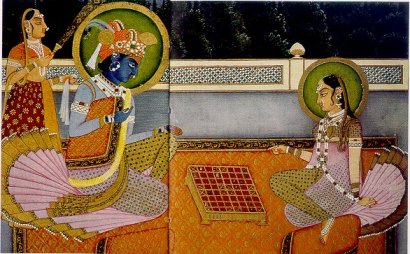
The story of chess begins in India around the 6th century during the Gupta Empire. It wasn't called chess back then, but Chaturanga, a Sanskrit name meaning "four divisions of the military." This ancient precursor was a direct simulation of war, featuring pieces that represented infantry, cavalry, elephants, and chariots—the foundational elements of an Indian army. Unlike games of chance, Chaturanga was a game of pure strategy, designed to teach tactical thinking and foresight to warriors and royalty.

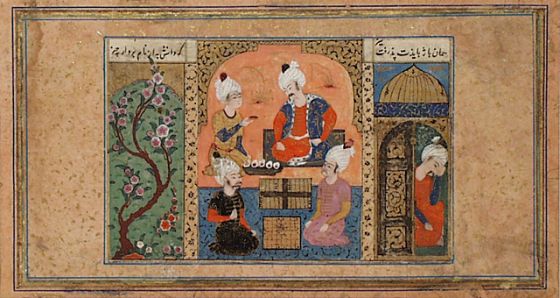
As traders and armies moved along the Silk Road, Chaturanga traveled with them. It found a new home in Persia, where it evolved into Shatranj. The Persians embraced it, making it a staple of courtly education for the nobility. It was here that key phrases we still use today emerged. The warning "Shāh!" (Persian for "King!") was called out when the king was under attack, and "Shāh Māt!"—"the king is helpless"—became the decisive declaration of victory we now know as "checkmate."
Following the Arab conquest of Persia in the 7th century, the game, now called Shatranj, was enthusiastically adopted by the Muslim world. Its popularity soared during the Islamic Golden Age, where it was not just a game but an intellectual pursuit, studied and written about by scholars who appreciated its depth and complexity. From North Africa and the Byzantine Empire, Shatranj finally entered Europe through Moorish Spain and Italy around the 10th century, ready for its next great transformation.
Did You Know?
- The earliest known ancestor of chess, Chaturanga, was played on an 8x8 grid, just like the modern board.
- For centuries in medieval Europe, the queen was one of the weakest pieces, only able to move one square diagonally.
- The first official World Chess Championship wasn't held until 1886, marking the game's transition from a pastime to a competitive sport.
- The longest chess match theoretically possible is over 5,000 moves, though most games are decided in far fewer.
Medieval Europe and the Renaissance: A Game of Kings and Queens
As chess spread across Christian Europe, it began to mirror the continent's feudal society. The abstract pieces of Shatranj were reimagined into figures representing the medieval social order. The elephants became bishops, symbolizing the power of the Church, while chariots transformed into rooks, representing castles. The game became a microcosm of the medieval world, a structured battlefield where king, queen, nobles, and clergy commanded their peasant pawns.
For centuries, the rules remained largely unchanged. But as the Renaissance dawned in the late 15th century, so did a revolution on the chessboard. In a dramatic shift, the queen—previously a minor piece—was transformed into the most powerful unit on the board, combining the moves of the rook and the bishop. This single change, sometimes attributed to the rising influence of powerful female rulers like Isabella I of Castile, radically altered the game's pace and strategic possibilities. This new, faster version was dubbed "queen's chess," and it quickly became the standard, laying the final foundation for the modern game we play today.
The Birth of Modern Strategy: From Romanticism to Positional Play
The Dashing "Romantic Era"
The 18th and 19th centuries were dominated by what is now called the "Romantic" style of chess. This era prioritized bold, swashbuckling attacks and brilliant sacrifices. Winning wasn't enough; one had to win with style. Players like Adolf Anderssen and Paul Morphy were the rock stars of their day, celebrated for their dazzling combinations and daring gambits. Declining a gambit was even considered unsportsmanlike.
The "Immortal Game," played between Anderssen and Lionel Kieseritzky in 1851, is a perfect example of Romantic chess. Anderssen sacrificed both rooks, a bishop, and finally his queen to checkmate his opponent with just three minor pieces.
This all-out attacking style, however, often neglected long-term strategic planning and solid defense. It was thrilling, but a new way of thinking was about to emerge that would change the game forever.
Wilhelm Steinitz and the Scientific Approach
The man who ended the Romantic era was Wilhelm Steinitz, the first official World Chess Champion. In the 1870s, Steinitz introduced a revolutionary "positional" style of play. He argued that attacks should only be launched after accumulating small, lasting advantages—like superior pawn structure, control of space, or better-placed pieces.
At first, his methodical, scientific approach was criticized as "cowardly" by those accustomed to the Romantic flair. But Steinitz proved its superiority by dominating his contemporaries for decades. He codified the principles of strategy, teaching that the game was not just about brilliant tactics but about the slow, careful accumulation of advantages. This laid the groundwork for all modern chess theory.
Chess as a Cold War Battleground
In the 20th century, chess ascended from a competitive sport to a potent symbol of intellectual and ideological supremacy during the Cold War. The Soviet Union poured immense state resources into the game, viewing chess mastery as proof of the superiority of the communist system. They established a formidable "Soviet School of Chess," which emphasized rigorous training and a deep, scientific approach to the game, producing a long line of world champions like Mikhail Botvinnik, Tigran Petrosian, and Boris Spassky.
For decades, Soviet grandmasters were virtually unbeatable. Then came Bobby Fischer. The 1972 World Chess Championship match in Reykjavík, Iceland, between the American prodigy Bobby Fischer and the reigning champion Boris Spassky became a global spectacle. Dubbed the "Match of the Century," it was framed as a direct confrontation between the individualistic West and the collectivist East. Fischer's victory was a monumental moment, breaking the Soviet Union's stranglehold on the world title and demonstrating that a lone genius could defeat an entire state-sponsored machine. Chess was no longer just a game; it was a front in the Cold War.
The Mind of a Chess Player: The Psychological Arena
Beyond the pieces and the moves, chess is a profound psychological battle. It's a duel of wills where focus, confidence, and mental resilience are just as important as strategic knowledge. Great players don't just play the board; they play the opponent.

Key Psychological Elements:
- Concentration: The ability to maintain intense focus for hours, shutting out all distractions, is paramount. A single lapse can lead to a devastating blunder.
- Emotional Control: Panic, frustration, or overconfidence can cloud judgment. Mastering one's emotions under pressure is a critical skill that separates the good from the great.
- Psychological Warfare: At the highest levels, players employ subtle tactics to unsettle their opponents. This can range from making unexpected moves to create uncertainty to playing with unnerving speed to induce time pressure.
- Adaptability: Every opponent has a different style. The ability to adapt your strategy—playing aggressively against a passive player or defensively against an attacker—is a powerful psychological tool.
This mental dimension is what makes chess so endlessly fascinating. It's a mirror of the mind, reflecting a player's courage, patience, and creativity under fire.
The Digital Age: Man vs. Machine
For centuries, chess was the exclusive domain of human intellect. That all changed in the late 20th century with the rise of powerful chess-playing computers. The ultimate showdown came in 1997, when the IBM supercomputer Deep Blue defeated the reigning world champion, Garry Kasparov, in a six-game match. This was a landmark moment in the history of artificial intelligence, proving that a machine could defeat the best human mind in the world's most strategic game.
Kasparov's defeat sent shockwaves through the chess world. Some feared it was the end of human creativity in the game. But instead of killing chess, computers revolutionized it. Today's grandmasters use powerful chess engines as indispensable training partners, analyzing positions to a depth previously unimaginable and uncovering new strategic ideas.
Modern AI, like AlphaZero, has taken this even further. By teaching itself the game from scratch, it has developed unconventional strategies that have challenged and expanded the very foundations of human chess theory. The machine has become not an adversary, but a collaborator, pushing the boundaries of strategic understanding ever further.
Conclusion: The Enduring Power of 64 Squares
From its origins as a war game in ancient India to its role as a Cold War proxy and its partnership with artificial intelligence, chess has continually evolved. It has been a reflection of the societies that played it—mirroring feudal hierarchies, embodying Romantic ideals, and serving as a tool of ideological conflict. Yet, at its core, the game remains unchanged: a pure test of strategic foresight, mental fortitude, and intellectual creativity.
The journey of chess is the story of our own quest to master the art of thinking. It teaches us to plan, to adapt, to anticipate, and to see the world not as a series of isolated events, but as an interconnected web of cause and effect. That is why, 1,500 years after its creation, we are still captivated by those 64 black and white squares—the ultimate game, and the ultimate battlefield of the mind.