

How Food Shaped Human History and Civilization
Have you ever stopped to think about the story behind the food on your plate? It’s more than just fuel; it’s a direct link to our shared human saga. From the moment our earliest ancestors first harnessed fire to cook a meal, food has been the silent architect of our societies, the catalyst for innovation, and the driver of empires. It's a story of survival, power, and connection that has shaped our world in ways you might never have imagined.

The Spark of Civilization: Cooking and the Human Brain
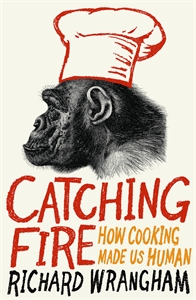
Long before the first cities rose, a revolutionary act took place that forever altered the course of human evolution: cooking. Anthropologists like Richard Wrangham argue that the invention of cooking was a pivotal factor in our species' success. By applying heat to food, our ancestors unlocked a treasure trove of benefits. Cooked food is easier to chew and digest, which meant early humans could extract more energy with less effort.
This simple act had profound consequences. As our digestive tracts became smaller and more efficient, the surplus energy was redirected to fuel a rapidly growing brain. This brainpower allowed for the development of complex tools, social networks, and eventually, agriculture. Cooking not only provided warmth and protection from predators but also freed up time once spent endlessly chewing tough, raw foods, paving the way for more productive pursuits.
“Cooking is the signature feature of the human diet, and indeed, of human life — but we have no idea why.” - Richard Wrangham
The control of fire and the practice of cooking were arguably the first steps toward outsourcing our digestion, a uniquely human trait that gave us a significant evolutionary advantage. It transformed food both physically and chemically, making essential macronutrients like carbohydrates, proteins, and fats more accessible to our bodies.
The Agricultural Revolution: Planting the Seeds of Society
For millennia, humans lived as nomadic hunter-gatherers. But around 10,000 BCE, a monumental shift occurred: the dawn of agriculture. This transition from foraging to farming was so transformative it's often called the Neolithic Revolution. By domesticating plants like wheat, barley, and rice, and animals like sheep and cattle, humans gained a more stable and predictable food source.

This newfound food security had a ripple effect across all aspects of life. For the first time, people could settle in one place, leading to the formation of permanent villages, which then grew into towns and eventually bustling cities. Abundant food supplies supported denser populations, and with survival less of a daily struggle, people could specialize in crafts, governance, and religion.
Foundational Crops of Empires
- Wheat: First cultivated in the Fertile Crescent around 10,000 years ago, wheat became the cornerstone of Western civilization. Its adaptability allowed it to spread across Europe, Asia, and North Africa, feeding burgeoning empires.
- Rice: Originating along the Yangtze River in China over 9,000 years ago, rice became the staple for vast populations in Asia. The intensive labor required for rice cultivation is thought to have shaped the collectivist cultures of many Eastern societies.
However, this revolution also introduced new social structures. The concept of land ownership emerged, leading to social hierarchies and the unequal distribution of wealth—a departure from the more communal nature of hunter-gatherer societies.
Preservation: Conquering Time and Distance
With the ability to produce surplus food came a new challenge: how to store it. Food preservation was the key that unlocked long-term survival and expansion. Ancient cultures developed ingenious methods based on their environment; in frozen climates, they froze meat on the ice, while in the tropics, they dried food in the sun.
These early techniques were revolutionary. Preservation allowed communities to survive lean times, store food for winter, and travel longer distances. It enabled the formation of armies and the undertaking of long sea voyages, as food could be stockpiled for the journey. Methods like salting, smoking, pickling, and fermenting became essential skills passed down through generations.
The history of preservation is a timeline of innovation:
- Drying: The oldest method, with evidence dating back to 12,000 B.C. in the Middle East, used the sun and wind to remove moisture and prevent bacterial growth.
- Salting: Widely popular by the 1700s, salt was used to cure meats like beef and fish, drawing out moisture and keeping them edible for years.
- Canning: In the 1790s, Frenchman Nicolas Appert discovered that heating food in sealed glass bottles prevented spoilage, a breakthrough spurred by a prize from Napoleon to find a way to preserve food for his army.
- Freezing: While people in cold climates had always used ice, Clarence Birdseye perfected quick-freezing in the late 1800s, revolutionizing the taste and texture of frozen foods.
These advancements, from the simple act of drying fruit to the scientific process of canning, were fundamental to the stability and growth of civilizations.
Quick Facts
- The word "salary" comes from the Latin word "sal" for salt, as Roman soldiers were sometimes paid in this precious commodity.
- In the 17th century, the Dutch traded the island of Manhattan to the British for the rights to a nutmeg-producing island.
- Marie Antoinette was known to wear potato blossoms in her hair to promote the strange new vegetable to the French public.
- Ketchup was originally an oriental fish brine that made its way to Europe via the spice routes.
Spices, Sugar, and Salt: The Engines of Exploration and Empire
Some foods didn't just build civilizations; they launched them across oceans. The pursuit of certain flavors—salty, sweet, and spicy—rewrote the maps of the world, created vast fortunes, and led to immense suffering.
The Allure of Spice
In the ancient and medieval worlds, spices like pepper, cinnamon, cloves, and nutmeg were worth more than their weight in gold. Used for flavoring, medicine, and religious rituals, their mystique was enhanced by fantastical stories about their origins. The lucrative spice trade, initially dominated by Arab traders, fueled the desire of European nations to find direct sea routes to the East.
This quest led to the Age of Discovery. Explorers like Vasco da Gama and Christopher Columbus embarked on perilous journeys, not just for glory, but for direct access to the spice markets of Asia. Their voyages connected continents, established global trade networks, and unfortunately, set the stage for colonialism.
The Power of Salt
Long before refrigeration, salt was the key to food preservation. This simple mineral was a strategic commodity, essential for sustaining armies and civilian populations alike. Entire cities, like Salzburg, Austria (literally "Salt Castle"), grew around the salt trade. Control over salt sources meant political and economic power. In France, the hated salt tax, or "gabelle," was a major grievance that helped spark the French Revolution.
The Dark History of Sugar
Originally a luxury item used for medicine and by the wealthy, the European appetite for sugar became insatiable with the rise of coffee, tea, and chocolate. To meet this demand, European powers established vast sugarcane plantations in the Americas and the Caribbean.
The brutal economics of sugar production fueled one of the most horrific chapters in human history: the transatlantic slave trade. Millions of Africans were forcibly taken to the New World to toil under horrific conditions on these plantations, which merchants referred to as "white gold." The average lifespan for an enslaved person on a sugar plantation was a mere eight years.
The Columbian Exchange: A New World of Food
When Columbus made landfall in 1492, it initiated a monumental transfer of plants, animals, and diseases between the Old World (Europe, Asia, Africa) and the New World (the Americas). Known as the Columbian Exchange, it permanently altered the global food landscape.
To ecologists, the Columbian Exchange is arguably the most important event since the death of the dinosaurs." - Charles C. Mann, author of 1493
Before the exchange, there were no tomatoes in Italy, no potatoes in Ireland, no chili peppers in India, and no chocolate in Switzerland. The Americas introduced calorically rich staple crops like potatoes, maize (corn), and cassava to the rest of the world. These crops could often grow in soils unsuitable for Old World staples, complementing existing agriculture and leading to a population explosion in Europe and beyond.
The Humble Potato's Mighty Impact
Perhaps no single crop had a greater impact than the potato. Originally cultivated in the Andes, it was easy to grow, thrived in temperate climates, and yielded about three times the calories per acre of grain. Its adoption in Northern Europe is credited with ending the cycle of famine that had plagued the continent for centuries. By feeding rapidly growing populations, the potato fueled the rise of the West and helped power the Industrial Revolution.
However, this reliance also had a dark side. In Ireland, where the population became almost entirely dependent on a single variety of potato, the arrival of potato blight in 1845 caused the Great Famine. This catastrophic event led to the deaths of over a million people and forced millions more to emigrate.
Food as a Weapon and a Tool of Industry
Throughout history, the control of food has been a powerful weapon. As Napoleon reportedly said, "An army marches on its stomach." The outcome of countless conflicts, from the American Revolution to the World Wars of the 20th century, often hinged on which side had the more secure food supply. Starvation has been used as a tactic of war far more effectively than any sword or gun.

The need to feed large armies and growing urban populations during the Industrial Revolution spurred further innovation. The development of canning and, later, refrigeration made it possible to transport food over vast distances without spoilage. This allowed cities to swell far beyond the capacity of their local agricultural lands and created the global food system we know today.
Conclusion: The Unbroken Chain
From the first cooked meal that fueled our growing brains to the global exchange of crops that reshaped continents, the story of humanity is inextricably linked to the story of food. It has pushed us to innovate, to explore, and to build complex societies. It has been a source of immense power and a catalyst for conflict, a symbol of cultural identity and a driver of global connection.
The next time you sit down to eat, take a moment to consider the incredible journey your food has taken—not just from the farm to your table, but through thousands of years of human history. Every grain of rice, every slice of bread, every pinch of spice is a link in an unbroken chain connecting you to the ancestors who first cultivated it, the explorers who risked everything for it, and the innovators who found new ways to grow and preserve it. Our history is, in every sense, an edible one.