

How Myths and Legends Shaped Modern Science
Have you ever wondered why we call the planet Mars by that name, or why a particularly powerful scientific theory is sometimes referred to as a "paradigm shift"? The answer, surprisingly often, lies not in a sterile laboratory or a dense scientific textbook, but in the vibrant, imaginative world of myths and legends. For millennia, before the advent of the scientific method, humanity sought to understand the world through stories. These tales, filled with gods, monsters, and heroes, were our first attempts at explaining natural phenomena, from the rising of the sun to the rumble of an earthquake. While it's easy to dismiss these as primitive superstitions, the truth is far more fascinating. These ancient narratives didn't just fade away with the rise of science; in many ways, they helped to shape it, providing a fertile ground of curiosity, a language of symbolism, and even a framework for our understanding of the universe and ourselves.
From Cosmic Eggs to the Big Bang: Myths as Proto-Theories
Long before telescopes peered into the distant universe, cultures around the world developed elaborate creation myths to explain our origins. The ancient Egyptians believed the world emerged from a lifeless sea of chaos, while Hindu texts describe the universe hatching from a cosmic egg. The Greeks told of a primordial being, Chaos, from which everything else emerged. While these stories may seem fantastical, they represent humanity's earliest attempts at cosmological thinking. They grappled with fundamental questions that scientists still ponder today: Where did everything come from? What existed before the beginning? These myths, in their own way, were proto-scientific theories, offering explanations for the world based on the available knowledge and cultural understanding of the time. They established a crucial precedent: the idea that the universe had an origin that could be understood and narrated.
The Celestial Theater: Naming the Heavens
The night sky was a source of both wonder and practical information for ancient civilizations. They observed the movements of the stars and planets, using them for navigation, agriculture, and timekeeping. To make sense of the celestial patterns, they populated the heavens with figures from their mythologies. Constellations were named after heroes like Orion and Perseus, and planets were named after powerful deities like Jupiter, Mars, and Venus. This practice of naming celestial bodies after mythological figures continues to this day, a constant reminder of the deep-rooted connection between our stories and our exploration of the cosmos. Even modern space missions, like the Apollo and Artemis programs, draw their names from Greek mythology, tapping into a long tradition of associating human endeavor and discovery with these powerful ancient symbols.
Alchemy's Legacy: The Magical Roots of Chemistry
The image of the alchemist, shrouded in mystery and surrounded by bubbling potions, is a familiar one. For centuries, these proto-chemists toiled in their laboratories, driven by two primary goals: to discover the philosopher's stone, a substance that could turn base metals into gold, and to create an elixir of life that would grant immortality. While their pursuits were steeped in mysticism and esoteric beliefs, the alchemists' experimental approach laid the groundwork for modern chemistry.
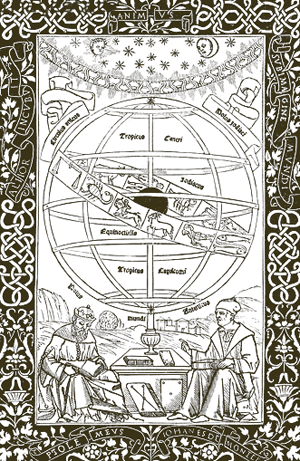
In their quest for transformation, alchemists developed many of the techniques and apparatus that are still fundamental to chemistry today, such as distillation, sublimation, and crystallization. They were meticulous experimenters, carefully documenting their processes and observations. Though they never succeeded in creating gold from lead, their work led to the discovery and isolation of many new elements and compounds. Figures like Robert Boyle, often called the "father of modern chemistry," were themselves influenced by alchemical traditions, demonstrating the direct lineage from this ancient art to a rigorous scientific discipline.
Did You Know?
- Many of the names for the elements on the periodic table have mythological origins. For example, Thorium is named after the Norse god of thunder, Thor, and Promethium is named after the Greek Titan who stole fire from the gods.
- The symbol for medicine, the Rod of Asclepius, which features a snake wrapped around a staff, comes from the Greek god of healing and medicine.
- The term "lunatic" is derived from the Latin word "luna," meaning moon, reflecting the ancient belief that the phases of the moon could influence mental health.
Mythical Beasts and the Birth of Biology
The tales of our ancestors are filled with a menagerie of fantastical creatures: dragons, unicorns, griffins, and sea serpents. While these beings may seem to be purely the product of imagination, many may have been inspired by real-world animals or the discovery of fossilized remains. The legend of the griffin, a creature with the body of a lion and the head and wings of an eagle, may have originated from the discovery of Protoceratops fossils in the gold mines of the Scythians. Similarly, the discovery of large, unfamiliar bones could have given rise to stories of giants.
These myths, in turn, fueled a sense of curiosity about the natural world and the diversity of life. Early naturalists and explorers were often motivated by the desire to find and document these legendary creatures. While they may not have found fire-breathing dragons, their expeditions led to the discovery and classification of countless new species. The line between myth and reality was often blurry, and the stories of mythical creatures served as a catalyst for the systematic study of the animal kingdom. Even today, the naming of newly discovered species sometimes draws on mythological references, a nod to this long history of intertwining fact and folklore.
From Sea Monsters to Manatees
One of the most enduring mythical creatures is the mermaid, a being with the upper body of a human and the tail of a fish. For centuries, sailors reported sightings of these enigmatic creatures. It is now widely believed that many of these "mermaid" sightings were actually encounters with manatees or dugongs. These large, slow-moving marine mammals have certain human-like features, such as the ability to turn their heads and finger-like bones in their flippers, which could have been misinterpreted from a distance, especially by weary sailors. This is a classic example of how a real animal, viewed through the lens of folklore and expectation, can give rise to a powerful and lasting myth.
The Inner Cosmos: Mythology and the Human Mind
The influence of myth extends beyond the physical sciences and into the realm of psychology. The tales of gods, goddesses, and heroes often explore universal human experiences: love, loss, betrayal, and the struggle for meaning. Psychoanalysts like Sigmund Freud and Carl Jung recognized the profound psychological truths contained within these ancient stories.

Freud, for instance, famously drew upon the Greek myth of Oedipus to develop his theory of the Oedipus complex. Jung went even further, proposing the concept of a "collective unconscious," a shared reservoir of innate ideas and images that manifest in myths, dreams, and religious beliefs across cultures. He identified recurring "archetypes"—such as the hero, the wise old man, the trickster, and the great mother—that appear in mythologies around the world and represent fundamental aspects of the human psyche. These archetypes, Jung believed, provide a framework for understanding our own psychological development and the stories we tell about our lives.
The Hero's Journey as a Psychological Map
One of the most powerful and enduring mythological patterns is the "hero's journey," a narrative structure identified by scholar Joseph Campbell. This pattern, found in countless myths and modern stories from Star Wars to Harry Potter, describes a hero who goes on an adventure, faces a decisive crisis, and returns home transformed. Psychologically, the hero's journey can be seen as a metaphor for the process of personal growth and self-discovery. It provides a template for navigating life's challenges, overcoming obstacles, and integrating new experiences into a more complete sense of self. The enduring popularity of this narrative structure speaks to its deep resonance with our own psychological journeys.
Astrology and Astronomy: A Tale of Two Star-Gazers
For much of human history, astronomy and astrology were considered one and the same. The ancient Babylonians, meticulous observers of the night sky, developed complex systems of astrology, believing that the positions of the planets and stars influenced the fates of kings and nations. This belief, which spread throughout the ancient world, provided a powerful motivation for the careful observation and recording of celestial events.
Early astronomers were often also astrologers, and their desire to create accurate horoscopes drove them to develop more precise methods for tracking planetary movements. This led to significant advances in mathematics and the development of sophisticated astronomical instruments. While astronomy eventually diverged from astrology, embracing the scientific method and rejecting the idea of celestial influence on human affairs, it is undeniable that astrology's long history of sky-watching laid an important foundation for the scientific study of the cosmos.
"The cosmos is within us. We are made of star-stuff. We are a way for the universe to know itself." - Carl Sagan
Conclusion: The Enduring Power of Story
The journey from myth to science is not a simple story of reason triumphing over superstition. Rather, it is a complex and interwoven narrative in which one has consistently informed and inspired the other. The myths and legends of our ancestors were not merely fanciful tales; they were the first stirrings of the scientific impulse, the initial attempts to observe, explain, and understand the world around us. They provided a language for talking about the unknown, a framework for organizing our observations, and a wellspring of curiosity that has driven scientific inquiry for centuries. Just as we once looked to the stars and saw heroes and gods, we now look to those same stars and see the building blocks of life and the origins of our universe. The tools and the terminology have changed, but the fundamental human desire to understand our place in the cosmos—a desire first expressed in the enduring power of myth—remains the same.
