

How Numbers and Math Hide in Everyday Life
Ever get that feeling that you’re being watched? That there’s a hidden order to the universe, a secret language that governs everything from the swirl of a galaxy to the arrangement of seeds in a sunflower? You’re not wrong. That hidden language is mathematics, and its numbers, patterns, and principles are woven into the very fabric of our daily lives, often in the most unexpected and beautiful ways.
We tend to think of math as something confined to textbooks and classrooms—a rigid world of abstract problems and head-spinning equations. But what if we told you that you engage with complex mathematical concepts every time you cook a meal, listen to your favorite song, or even scroll through your social media feed? It’s true. Math is the silent architect of our world, the invisible hand guiding everything from nature's designs to our digital interactions.
This article pulls back the curtain on the secret world of numbers. We'll explore the surprising places where math hides in plain sight, revealing a universe that is more interconnected, more orderly, and infinitely more fascinating than you might have ever imagined. Get ready to see your world in a whole new way.
The Universal Blueprint: Nature's Numbers
Nature is, without a doubt, the greatest mathematician of all. Without calculators or chalkboards, it has produced designs of breathtaking complexity and efficiency. Many of these designs are governed by a few simple, recurring mathematical principles.
The Fibonacci Sequence: A Spiral of Life
You might remember the Fibonacci sequence from school: 0, 1, 1, 2, 3, 5, 8, 13, 21, and so on, where each number is the sum of the two preceding ones. First introduced to the Western world by Leonardo of Pisa (Fibonacci) in his 1202 book Liber Abaci, this sequence was initially described in the context of rabbit population growth. Little did he know, he was describing a fundamental pattern of the natural world.
Look closely at a sunflower head. The seeds are arranged in spirals, and if you count them, you'll almost always find a pair of consecutive Fibonacci numbers. This isn't a coincidence. This arrangement, known as phyllotaxis, is the most efficient way to pack seeds, ensuring each one gets maximum exposure to sunlight and air.
This sequence appears everywhere:
- Flower Petals: Lilies have 3 petals, buttercups have 5, and wild roses often have 5—all Fibonacci numbers.
- Pinecones and Pineapples: The scales on a pinecone and the eyes on a pineapple form spirals that align with Fibonacci numbers.
- Tree Branches: The way trees branch often follows the sequence, starting with a single trunk that splits into branches in a Fibonacci pattern.
The Golden Ratio: Nature's Perfect Proportion
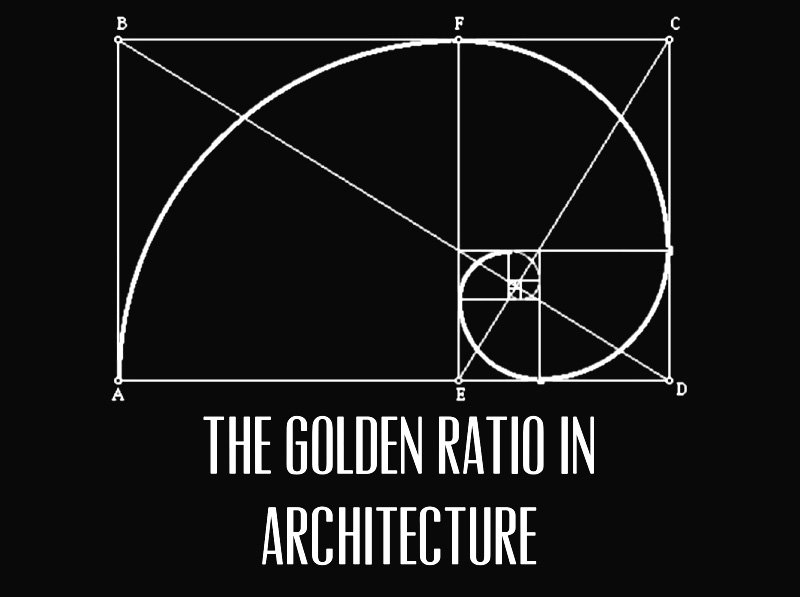
Closely related to the Fibonacci sequence is the Golden Ratio, a special number approximately equal to 1.618. If you divide any number in the Fibonacci sequence by the one before it, the result gets closer and closer to the Golden Ratio. This proportion, often denoted by the Greek letter phi (Φ), is considered aesthetically pleasing and appears in art, architecture, and the natural world.
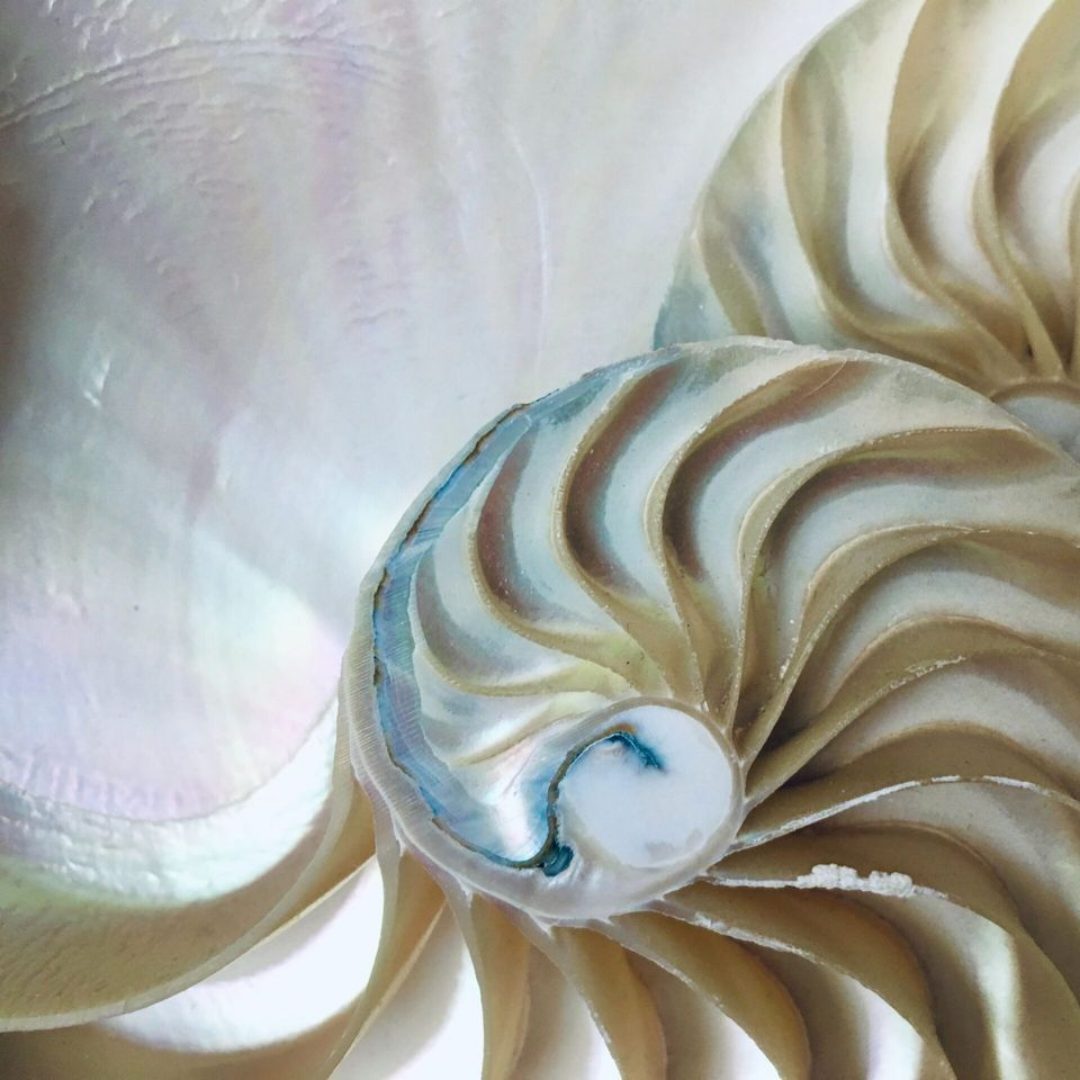
From the spiral of a nautilus shell to the proportions of the human body, the Golden Ratio is nature's signature of beauty and efficiency. Architects and artists have used this "divine proportion" for centuries to create structures and artworks with a sense of harmony and balance.
The Rhythm of Life: Mathematics in Music and Art
The connection between math and the arts isn't just about abstract beauty; it's deeply structural. The harmony you feel in a piece of music and the balance you see in a painting are often the result of underlying mathematical principles.
The Sound of Numbers: Music's Mathematical Core
At its most basic level, music is math you can hear. Sound itself is a physical wave with a specific frequency. The notes in a musical scale are not random; they are systems of pitch built from mathematical rules.
For instance, the relationship between notes, known as an interval, corresponds to a specific frequency ratio. An octave has a 2:1 ratio, while a perfect fifth has a ratio of approximately 3:2. These simple integer ratios are what make certain combinations of notes sound harmonious to our ears. Even the structure of a song, with its repeating choruses and verses, is a form of pattern recognition—a fundamentally mathematical concept.
"Pure mathematics is, in its way, the poetry of logical ideas." - Albert Einstein
The Geometry of Beauty: Art, Design, and Architecture
Artists and architects have long understood the power of proportion. The Golden Ratio has been a cornerstone of design for millennia. Its presence is debated in many ancient structures, but its influence is undeniable.
- The Great Pyramid of Giza: Built around 2560 BC, the ratio of its base length to its height is remarkably close to the Golden Ratio.
- The Parthenon: This ancient Greek temple in Athens is often cited as a prime example of the Golden Rectangle in architecture, creating a sense of classical balance.
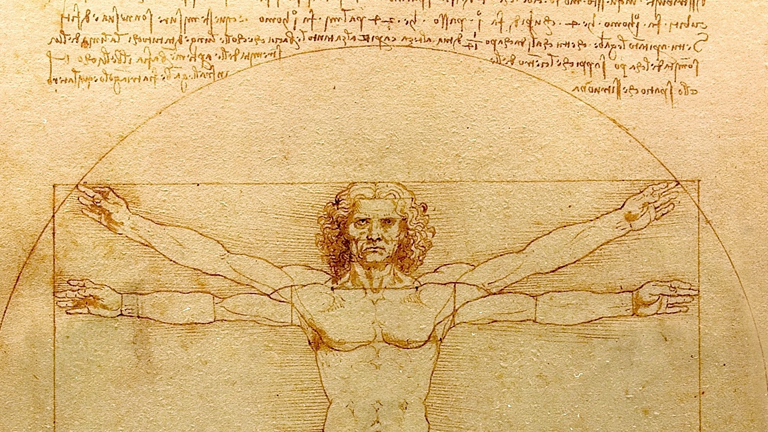
- Renaissance Art: Artists like Leonardo da Vinci used principles of linear perspective, a geometric technique, to create the illusion of three-dimensional depth on a two-dimensional canvas. His "Vitruvian Man" is a famous exploration of the proportions of the human body, reflecting the Golden Ratio.
Modern designers continue to use these principles in everything from logo design (the Apple and Twitter logos are thought to incorporate the Golden Ratio) to user interface (UI) design, creating layouts that are naturally pleasing to the human eye.
Did You Know?
- The modern world's digital infrastructure, including the internet, was built on mathematical principles. The World Wide Web, invented in 1991, relies on algorithms to function.
- The first helicopter was designed by Theodore von Kármán, a math prodigy and aeronautics professor, showcasing the critical role of math in invention.
- Even something as simple as a recipe is a type of algorithm—a step-by-step set of instructions designed to produce a consistent outcome.
The Unseen Engine: Algorithms in Our Digital World
If math is the hidden language of the natural world, then algorithms are the hidden language of our modern, digital world. An algorithm is simply a step-by-step procedure for solving a problem or completing a task. You use them all the time, even when you don't realize it.
From Your Commute to Your Social Feed
Every time you use a navigation app like Google Maps or Waze, you're relying on complex algorithms. These apps calculate the fastest route by analyzing real-time traffic data, road closures, and speed limits, constantly solving a complex optimization problem.
Social media platforms and streaming services use recommendation algorithms to curate the content you see. They analyze your past behavior—what you've liked, watched, and shared—to predict what you'll find engaging, creating a personalized experience. These algorithms are the reason Netflix knows your love for documentaries and Spotify can create a playlist you'll adore.
The Math of Security and Communication
Even the security of your online information is based on math. Cryptography, the science of secure communication, uses number theory to create encryption algorithms. When you see a padlock icon in your browser, it means your data is being protected by complex mathematical problems that are incredibly difficult for computers to solve without the correct key.
The Practical Mathematician: Math in the Kitchen, on the Field, and at the Store
Beyond the grand designs of nature and the complexities of the digital age, math is a practical tool we use in our most routine activities. It’s so ingrained that we often don't even notice it.
The Culinary Calculator: Cooking by Numbers
Cooking and baking are delicious experiments in applied mathematics. Every recipe is a series of mathematical steps.
- Measurement and Fractions: Doubling a recipe or cutting it in half requires a solid understanding of fractions and ratios. Using 3/4 of a cup instead of 1/2 can be the difference between a perfect cake and a kitchen disaster.
- Ratios: Classic culinary combinations, like the 3:2:1 ratio for pie crust (flour to fat to water), are all about mathematical consistency.
- Time and Temperature: Calculating cooking time based on weight (e.g., 15 minutes per pound for a roast) and converting temperatures from Celsius to Fahrenheit are everyday math problems in the kitchen.
The Geometry of the Game: Math in Sports
Sports are a dynamic display of physics and geometry in motion. From the arc of a basketball shot to the angle of a soccer pass, athletes are constantly making intuitive mathematical calculations.
The rise of sports analytics has made this connection explicit. Teams now employ mathematicians and statisticians to analyze vast amounts of data, looking for competitive advantages. They use descriptive statistics, probability, and regression analysis to evaluate player performance, predict game outcomes, and develop winning strategies.
The Art of the Deal: Shopping and Budgeting
Managing your finances is one of the most direct ways you use math every day. From creating a budget to shopping for groceries, you're constantly performing calculations.
When you're at the store, you might be comparing unit prices to find the best deal, calculating a 20% discount, or estimating the total cost of your cart. These quick mental calculations help you make informed decisions and manage your money effectively.
The Odds of Life: Probability and Decision-Making
Life is full of uncertainty, and we use the principles of probability to navigate it every day. Probability is the branch of mathematics that deals with the likelihood of events occurring.
Whether you're playing a board game, making a business decision, or just deciding whether to bring an umbrella, you're assessing probabilities. In games of chance, like rolling dice or drawing cards, probability governs the outcome. Understanding the odds can help players make more strategic decisions.
But it extends beyond games. Meteorologists use statistical models to forecast the weather, giving us the probability of rain. Insurance companies use probability to assess risk and set premiums. In all these cases, math provides a framework for making informed decisions in the face of uncertainty.
Conclusion: The World Is a Numbers Game
Remember that feeling of a hidden order, a secret language? As we've seen, it's not a feeling; it's a reality. From the elegant spirals in a seashell to the algorithms that power your smartphone, mathematics is the universal language that describes the world around us and within us.
It is the silent partner in our creativity, the unseen architect of our technology, and the practical guide in our daily chores. Math is not just a subject in a textbook; it is a fundamental part of the human experience. The next time you admire a flower, listen to a song, or even bake a loaf of bread, take a moment to appreciate the hidden numbers at play. You'll find that the world is, indeed, a masterpiece of mathematical design.