

The History of Puzzles From Jigsaw to Sudoku
There’s a unique, quiet satisfaction in the click of a final jigsaw piece sliding into place, or the “Aha!” moment when a Sudoku grid suddenly makes sense. Puzzles are more than just a way to pass the time; they are a fundamental part of human leisure and learning, challenging our minds and rewarding our persistence. But have you ever wondered where these captivating challenges came from? The journey from the first hand-cut wooden maps to the globally recognized 9x9 number grid is a fascinating story of innovation, education, and pure, simple fun. It’s a history that reflects changes in technology, society, and even how we view the world.

The Birth of the Jigsaw: A Lesson in Geography
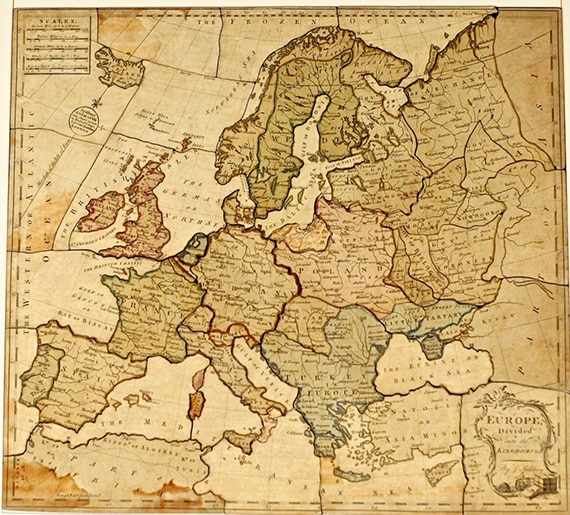
Our story begins not as a game, but as a novel teaching tool in 18th-century London. The credit for the invention of the jigsaw puzzle goes to John Spilsbury, a British cartographer and engraver. Around 1766, Spilsbury had a clever idea to make geography more interactive for children. He mounted a map of Europe onto a thin sheet of mahogany wood and carefully cut along the national borders. By asking students to reassemble the countries, he transformed a rote memorization task into an engaging, hands-on activity.
These first puzzles were called “dissected maps,” and they were an immediate success, particularly among the wealthy elite who could afford such handcrafted educational toys. Spilsbury soon created a range of dissected maps covering the world, its continents, and individual countries like England and Ireland. Though he died young at the age of 30, his invention had laid the foundation for a global pastime.
From Classroom to Living Room
For over a century, these "dissected puzzles" remained primarily educational, covering subjects from history to botany. It wasn't until the late 1800s that puzzles began to shift from being purely for children's lessons to adult entertainment. This evolution was driven by several key technological advancements:
- Lithographic Printing: This technique allowed for high-quality, colorful images to be affordably printed and adhered to wood, moving beyond simple maps to vibrant artwork and scenes.
- Plywood: The invention of plywood created a cheaper, lighter, and easier-to-cut alternative to solid hardwood.
- The Jigsaw: Ironically, the "jigsaw" puzzle predates the invention of the jigsaw itself. Early puzzles were cut with a fine-bladed handsaw. The invention of the treadle-powered jigsaw (also known as a fretsaw or scroll saw) in the 1880s allowed for more intricate and interlocking pieces to be cut quickly, giving the puzzle its modern name.
The Great Depression in the 1930s marked a major turning point. With money tight, families sought cheap, reusable forms of entertainment. Jigsaw puzzles, now mass-produced on cardboard using die-cutting techniques, became an affordable escape, offering a sense of accomplishment during difficult times. Companies even began using them for advertising, further cementing their place in popular culture.
Did You Know?
- The first jigsaw puzzles were called "dissected maps." The name "jigsaw puzzle" only became common around 1880, after the invention of the saw used to make them.
- During the Great Depression, some libraries would lend out jigsaw puzzles, just like books, to provide entertainment for families.
- The world's first jigsaw puzzle, created by John Spilsbury in 1766, was a map of Europe titled "Europe Divided into its Kingdoms."
The Rise of the Word Grid: The Crossword Craze
As jigsaw puzzles were settling into homes, a new type of challenge was brewing in the pages of newspapers. While word games and squares had existed for centuries—some even dating back to ancient Pompeii—the modern crossword puzzle was born on December 21, 1913.
Arthur Wynne, a British-born journalist working for the New York World, was tasked with creating a new game for the "Fun" section of the holiday edition. Drawing inspiration from a childhood game called "Magic Squares," he developed a diamond-shaped grid with a hollow center and numbered clues. He called it a "Word-Cross Puzzle."
From Novelty to National Obsession
Wynne's "Word-Cross" was an instant hit. Readers were captivated by this new mental test. A few weeks after its debut, a typesetting error accidentally transposed the name to "Cross-Word," and the new name stuck.
Within a decade, crossword puzzles were featured in almost all American newspapers, transitioning from a simple pastime to a serious adult hobby.
The real explosion in popularity came in 1924, when two young publishers, Richard Simon and M. Lincoln Schuster, decided to publish a book of these puzzles at the urging of Simon's aunt. Initially skeptical, they released the first-ever crossword puzzle book with a small print run and an included pencil. It was a runaway success, selling over 100,000 copies and launching a full-blown national craze. The 1920s saw crossword-themed songs, musicals, and even clothing. Librarians complained that puzzlers were overwhelming their reference sections in search of answers.
Despite the craze, some institutions were slow to adopt the puzzle. The New York Times famously dismissed them as "a primitive sort of mental exercise" and a passing fad. They held out until 1942, finally adding a puzzle to give readers a distraction during the bleak hours of World War II.
The Logic Puzzle Renaissance: The Story of Sudoku
Our final chapter brings us to the world of numbers and pure logic. The puzzle we know as Sudoku has a surprisingly complex and international history. Its conceptual roots lie in the 18th century with a creation by Swiss mathematician Leonhard Euler called "Latin Squares," a grid where each symbol appears only once in each row and column.
However, the modern Sudoku puzzle was invented not in ancient China or Japan, but in the United States. In 1979, a 74-year-old retired architect and freelance puzzle constructor from Indiana named Howard Garns created a puzzle he called "Number Place." Published in Dell Pencil Puzzles and Word Games magazine, it featured a 9x9 grid with the added constraint of 3x3 sub-grids, the key feature that defines Sudoku today. Sadly, Garns passed away in 1989, never knowing his creation would become a global phenomenon.
The Journey to Japan and Back Again
So how did "Number Place" become "Sudoku"? The puzzle made its way to Japan in 1984, when it was published by the puzzle company Nikoli. The president of Nikoli, Maki Kaji, gave it the much catchier name "Sūji wa dokushin ni kagiru," which translates to "the digits must be single." This was later abbreviated to the simple and elegant name we know today: Sudoku (数独), which combines the characters for "number" and "single."
Nikoli refined the puzzle, introducing symmetrical patterns for the given numbers to make them more aesthetically pleasing. Sudoku became incredibly popular in Japan, a country where the language structure makes creating crossword puzzles difficult.
The puzzle's journey came full circle thanks to a New Zealand judge named Wayne Gould. While on vacation in Tokyo in 1997, he discovered a Sudoku book and was instantly hooked. Over the next six years, he developed a computer program that could generate unique puzzles. In 2004, he successfully convinced The Times of London to publish them, and from there, Sudoku's popularity exploded across the Western world, appearing in newspapers and websites globally.
Conclusion: The Enduring Power of a Good Puzzle
From a wooden map cut along country borders to a grid of numbers born from pure logic, the history of puzzles is a story of human ingenuity. What started as Spilsbury's tool for teaching geography evolved into a beloved pastime that brought families together during the Depression. What began as Wynne's "Word-Cross" to fill a holiday newspaper section became a daily ritual for millions. And what started as Garns' obscure "Number Place" was transformed by Japanese publishers and a New Zealand judge into a global symbol of logical deduction.

Each of these puzzles, in its own way, fulfills a deep human need: to create order out of chaos, to see a pattern emerge from randomness, and to achieve that deeply satisfying click, whether it's a physical piece or a mental connection. They challenge us, soothe us, and connect us, proving that the simple act of solving a puzzle is a timeless and universal pleasure.