

The Most Bizarre True Facts That Sound Completely Made Up
Have you ever heard a story so outlandish, so utterly bonkers, that you were sure it had to be a joke? We live in a world overflowing with fiction, from epic fantasy novels to blockbuster superhero movies. Yet, sometimes, the truest stories are the ones that stretch our credulity to its breaking point. These are the historical oddities and scientific quirks that prove the old adage: truth is, without a doubt, often much stranger than fiction.
Prepare to have your perception of reality thoroughly warped. We're diving deep into a collection of historical events and bizarre facts so peculiar they sound like they were dreamed up in a fever. But rest assured, every single one is certifiably, verifiably true. Let's begin, shall we?
The Great Emu War: When Australia Declared War on Birds (And Lost)
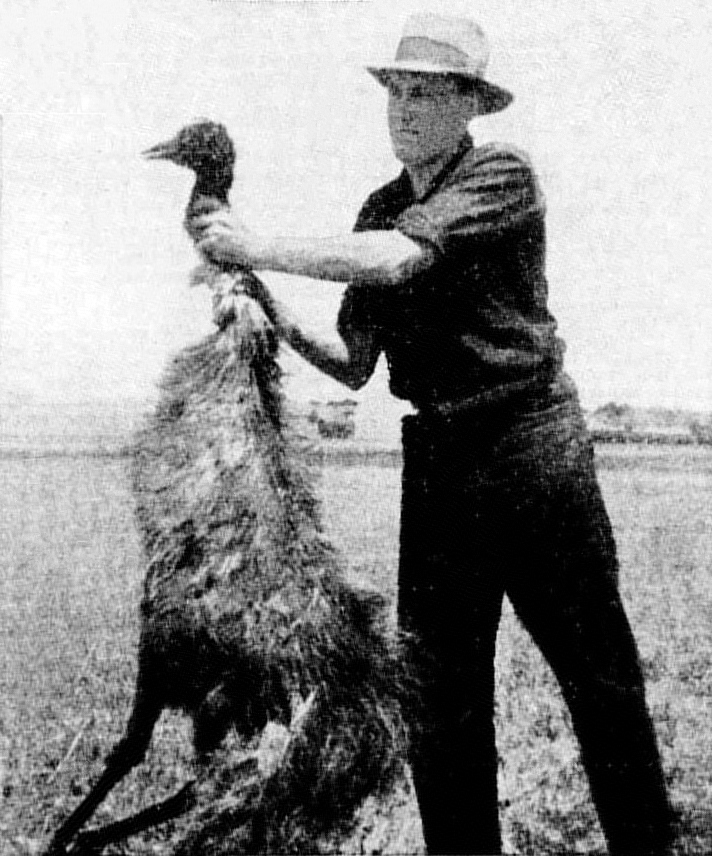
It sounds like the setup for a cartoon: a national army, complete with machine guns, going to war against a flock of large, flightless birds. But in 1932, this was the reality in Western Australia. The country officially declared war on its emu population, and the outcome was, to put it mildly, embarrassing for the humans involved.
A Feathered Menace
The story begins after World War I, when the Australian government settled many ex-soldiers in the marginal wheat-farming lands of Western Australia. The Great Depression was hitting hard, and these farmers were already struggling. Their problems were massively compounded when a horde of some 20,000 emus, migrating after their breeding season, descended upon the Campion district. The emus, finding the cultivated lands a delightful buffet, began to devastate the wheat crops.
Desperate, the farmers appealed to the government for help. Their request? The deployment of machine guns. A delegation of ex-soldiers, familiar with the weapons, argued that they could effectively cull the birds. Minister of Defence, Sir George Pearce, agreed, and what would be bizarrely dubbed "The Great Emu War" was set in motion.
The "Military" Operation
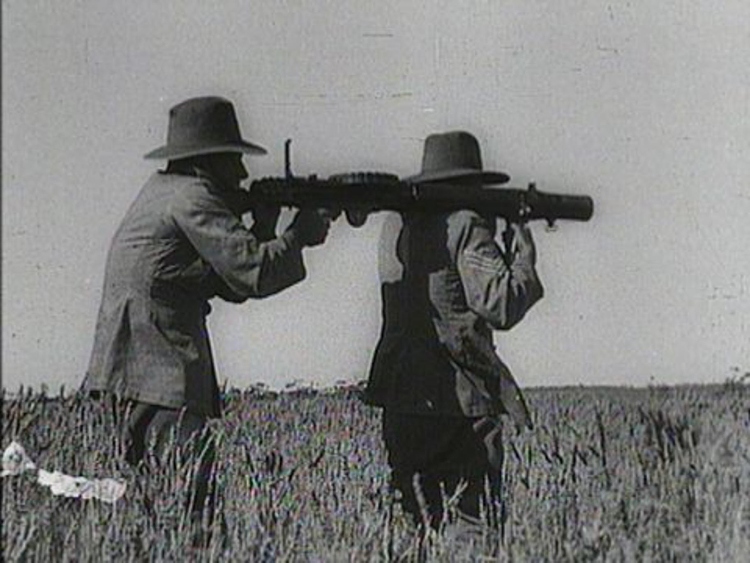
In November 1932, Major G.P.W. Meredith of the Royal Australian Artillery was dispatched to the combat zone. He was accompanied by two soldiers, Sergeant S. McMurray and Gunner J. O'Halloran, armed with two Lewis light machine guns and 10,000 rounds of ammunition.
The first engagement, on November 2nd, was a fiasco. The soldiers encountered about 50 emus, but the birds were too far out of range. Locals tried to herd the emus into an ambush, but the birds proved to be brilliant guerrilla tacticians. They split into small groups and scattered, making them incredibly difficult targets. The first volley of shots was completely ineffective.
An ornithologist of the day, D.L. Serventy, commented on the emus' tactics: "The machine-gunners' dreams of point-blank fire into serried masses of Emus were soon dissipated. The Emu command had evidently ordered guerrilla tactics, and its unwieldy army soon split up into innumerable small units that made use of the military equipment uneconomic."
A couple of days later, on November 4th, Major Meredith set up another ambush near a local dam, where over 1,000 emus were spotted. This time, the gunners waited until the birds were at point-blank range. Just as they opened fire, however, the Lewis gun jammed after killing only a dozen birds. The rest of the flock vanished before the gun could be repaired. The military had been outsmarted again.
After nearly a week of this comical failure, the operation was called off. Major Meredith's official report claimed 986 kills with 9,860 rounds of ammunition—a rate of exactly 10 bullets per confirmed kill. However, he also claimed another 2,500 wounded birds died from their injuries, a figure that is highly disputed. The emus, for their part, continued to raid the farms. The so-called war was a decisive victory for the birds.
Quick Facts
- The shortest war in history was between Britain and Zanzibar on August 27, 1896. Zanzibar surrendered after just 38 minutes.
- In 1977, France was still using the guillotine for executions, the same year the first Star Wars movie was released.
- Woolly Mammoths were still alive while the Great Pyramids of Giza were being built. A small population survived on Wrangel Island until about 1650 BC.
- Nintendo, the video game company, was founded in 1889 as a playing card company. That's the same year the Eiffel Tower was completed and Jack the Ripper was making headlines.
The Double Atomic Bomb Survivor: Tsutomu Yamaguchi
The atomic bombings of Hiroshima and Nagasaki are among the most devastating events in human history. To survive one is a miracle; to survive both is almost beyond belief. Yet, that is the incredible story of Tsutomu Yamaguchi, the only person officially recognized by the Japanese government as having survived both nuclear attacks.
A Fateful Business Trip
In the summer of 1945, 29-year-old Tsutomu Yamaguchi, a marine engineer for Mitsubishi Heavy Industries, was on a three-month business trip in Hiroshima. On August 6, 1945, he was preparing to leave the city. At around 8:15 AM, as he was walking to the shipyard, he saw a lone American B-29 bomber, the Enola Gay, fly overhead and drop a small object.
Suddenly, a blinding flash of light, which he later described as a "great flash in the sky," filled his vision. He was less than two miles from the hypocenter. The blast ruptured his eardrums, temporarily blinded him, and inflicted severe burns on the left side of his body. He was thrown into a nearby potato patch by the shockwave. Dazed and wounded, he managed to make his way to an air-raid shelter where he spent the night before heading back to his hometown.
An Unbelievable Déjà Vu
Against all odds, Yamaguchi made the arduous journey back to his home in Nagasaki, arriving on August 8th. Despite his horrific injuries—wrapped in bandages and deaf in one ear—he reported for work on August 9th.
He was in his office, describing the unbelievable destruction of Hiroshima to his disbelieving supervisor. He recounted how a single bomb had obliterated the city. His boss thought he was crazy. It was at that very moment, at 11:02 AM, that the sky outside the window erupted in another white flash. The "Fat Man" bomb had detonated over Nagasaki, just under two miles from his workplace.
"I thought the mushroom cloud had followed me from Hiroshima," he later told a newspaper.
Miraculously, Yamaguchi survived this second blast with relatively minor injuries. He spent the next week in a bomb shelter, suffering from a high fever. For decades, he kept his story quiet. In 1957, he was officially recognized as a *hibakusha* (explosion-affected person) of the Nagasaki bombing. It wasn't until March 2009 that the Japanese government officially recognized him as a survivor of the Hiroshima bombing as well.
Tsutomu Yamaguchi lived to the age of 93, passing away from stomach cancer in 2010. In his later years, he became a vocal advocate for nuclear disarmament, believing it was his destiny to share the horrifying history he had witnessed.
The Dancing Plague of 1518: A Real-Life Dance-Off to the Death
Imagine a town where people are suddenly seized by an uncontrollable urge to dance. They don't stop for hours, or even days. They dance until they collapse from exhaustion, and some even dance until they die. This isn't a fairy tale or a horror movie; it was a real and terrifying event that struck the city of Strasbourg, Alsace, in the summer of 1518.
The Feverish First Dancer
The bizarre episode began in July 1518 when a woman known as Frau Troffea stepped into a narrow street and began to dance fervently. There was no music. She simply twisted, twirled, and shook for what seemed like an eternity. She continued for nearly a week.
Within days, others began to join her. By the end of the week, three dozen people were caught in the grip of this "dancing mania." And it didn't stop there. By August, the number of dancers had swelled to an astonishing 400 people.
A Misguided Cure
The city's authorities were baffled. With no explanation for the phenomenon, local physicians ruled out astrological and supernatural causes, instead diagnosing it as a case of "hot blood." Their prescribed cure? More dancing. They believed the victims would only recover if they danced the fever out of their systems, day and night.
To facilitate this, they cleared open-air markets, erected a large wooden stage, and even hired professional dancers and musicians to keep the afflicted moving. This, however, proved to be a catastrophic mistake. The public spectacle only encouraged more people to join the mania.
The consequences were grim. As the weeks wore on, the marathon took its toll. Many dancers collapsed from sheer exhaustion, dehydration, and starvation. Some suffered strokes and heart attacks, and contemporary sources claim that at its peak, the plague killed around fifteen people per day. The macabre dance party only ceased in September when the surviving dancers were taken to a shrine to pray for absolution.
Modern historians and scientists are still not entirely certain what caused the Dancing Plague. The leading theories include stress-induced mass hysteria (mass psychogenic illness), possibly triggered by the severe famine and disease ravaging the region at the time. Another popular theory is poisoning from ergot, a toxic mold that grows on rye and can cause spasms and hallucinations. Whatever the cause, it remains one of history's most baffling and terrifying mass events.
Wojtek the Soldier Bear: From Mascot to Corporal
During the chaos of World War II, soldiers often adopted animal mascots to boost morale. But few mascots have a story as incredible as Wojtek, a Syrian brown bear who was not only adopted by the Polish II Corps but was also officially enlisted as a private and later promoted to corporal.

A Cub in Need
In 1942, Polish soldiers, who had been released from Soviet labor camps, were making their way through Iran. Near Hamadan, they encountered a young Iranian boy who had found an orphaned bear cub. The soldiers bought the cub, who was so young he still needed to be fed with milk from an old vodka bottle. They named him Wojtek (pronounced Voy-tek), which means "Joyful Warrior."
Wojtek quickly became the beloved mascot of the 22nd Artillery Supply Company. He grew up alongside the soldiers, sharing their tents, food, and even their beer, which became his favorite drink. He was also known to smoke (or rather, eat) cigarettes and enjoyed wrestling with the men.
An Enlisted Hero
As the Polish forces prepared to move from Egypt to fight in the Italian campaign, a problem arose. The British transport ship would not allow any pets or mascots on board. The Polish soldiers came up with a brilliant solution: they officially enlisted Wojtek into the Polish Army.
He was given the rank of Private, a service number, and a paybook. As a soldier, he was now legally allowed to travel with his unit. During the fierce Battle of Monte Cassino in 1944, Wojtek's story took a legendary turn. Seeing his fellow soldiers struggling to carry heavy crates of artillery shells, he reportedly stood on his hind legs and mimicked their actions.
He began picking up the 100-pound (45 kg) crates, which normally required four men to lift, and carried them from the supply trucks to the artillery positions. He never dropped a single one. In recognition of his bravery and service, he was promoted to the rank of Corporal. The 22nd Company even changed its official emblem to an image of a bear carrying an artillery shell.
After the war, Wojtek was demobilized and lived out the rest of his days at the Edinburgh Zoo in Scotland, where he was a popular attraction, often visited by his former Polish comrades. His story remains an extraordinary testament to the bond between humans and animals in the most trying of times.
When the Streets Ran with... Beer and Molasses?
Industrial accidents are often tragic, but some are so unusual they defy belief. In the 19th and early 20th centuries, two major cities experienced fatal floods of substances far thicker and stickier than water: one of beer, the other of molasses.
The London Beer Flood of 1814
On October 17, 1814, a disaster of a most peculiar nature struck the London parish of St. Giles. At the Meux & Co's Horse Shoe Brewery, a massive 22-foot-high wooden vat containing over 135,000 imperial gallons of fermenting porter burst.
The force of the explosion caused a domino effect, rupturing other vats in the brewery. In total, a tsunami of over 320,000 gallons of beer erupted from the building, creating a 15-foot-high wave. The flood crashed through the brewery's back wall and poured into the surrounding streets, an area known as the St. Giles Rookery, a densely populated slum.
The wave of beer destroyed two homes and killed eight people, mostly women and children. One of the most tragic scenes occurred in a cellar where a wake was being held for a two-year-old boy; five of the mourners, including the boy's mother, were killed by the deluge. The brewery was taken to court, but the disaster was ruled an "Act of God," and no one was held responsible.
The Great Molasses Flood of 1919
Over a century later, a similar, but even deadlier, tragedy occurred in Boston. On January 15, 1919, a massive storage tank in the city's North End, containing 2.3 million gallons of molasses, exploded. The tank, owned by the Purity Distilling Company, was known to be leaky; the company had simply painted it brown to hide the drips.
The blast sent a wave of molasses, estimated to be up to 40 feet high, surging through the streets at 35 miles per hour. The immense, sticky wave was powerful enough to buckle the steel girders of an elevated railway, knock buildings off their foundations, and sweep away vehicles.
The flood killed 21 people and injured another 150. Rescuers struggled through the thick, gooey mess that was waist-deep in some areas. The cleanup took weeks, and residents claimed the sweet smell of molasses lingered in the neighborhood for decades afterward. The company initially tried to blame the explosion on anarchists, but a lengthy investigation ultimately found the company liable due to the tank's poor construction.
From military defeats at the hands of birds to men who survived the unthinkable, these stories remind us that the world's history is far more peculiar and unpredictable than we often imagine. They challenge our assumptions and invite us to look at the past not just as a series of dates and names, but as a rich tapestry of human (and sometimes animal) experiences that are as strange as they are true. The next time you hear a tale that sounds too wild to be real, remember Wojtek the bear, the dancing plague, and the great emu war. You might just be hearing another unbelievable, but entirely factual, chapter from our planet's bizarre history.