

The Psychology Behind Conspiracy Theories
Of Secret Plots and Hidden Truths: Why Our Brains Are Wired to Believe
Ever found yourself scrolling late at night, tumbling down a rabbit hole of theories about who really built the pyramids or what’s actually going on at Area 51? You're not alone. From the assassination of JFK to the moon landing, conspiracy theories are a magnetic and enduring part of our culture. They are compelling, intricate, and, for many, they offer a tantalizing alternative to the often messy and unsatisfying "official story."
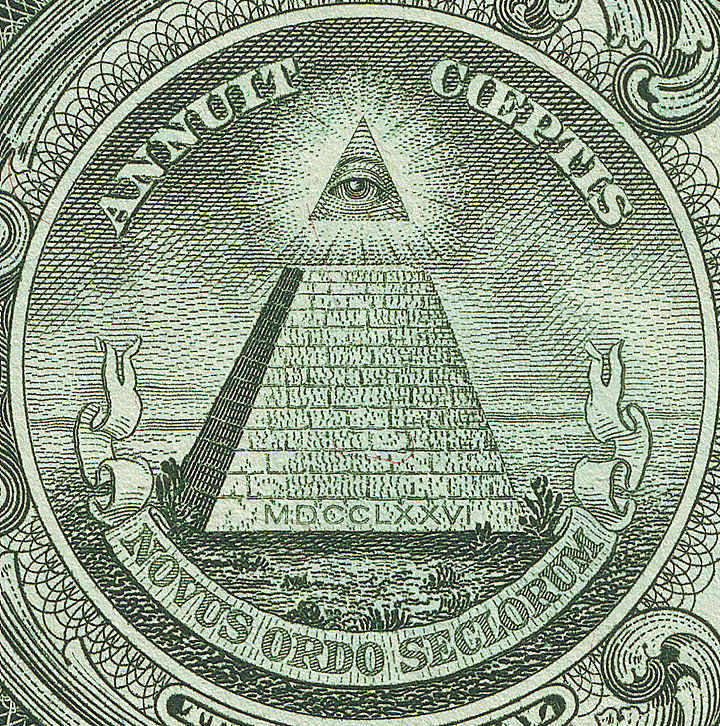
But what if the appeal of these theories has less to do with the evidence and more to do with the fundamental wiring of our brains? What if believing that a secret cabal is running the world isn't a sign of irrationality, but rather a predictable outcome of our mind's relentless quest for order, control, and belonging? It turns out that the psychology behind conspiracy theories is a fascinating journey into the very core of what makes us human.
The Brain's Shortcuts: Cognitive Biases at Play
Our brains are incredibly efficient machines, but to navigate a complex world, they rely on mental shortcuts. Sometimes, these shortcuts can lead us down some very interesting, and not always factual, paths. Several of these cognitive biases make us particularly susceptible to the allure of a good conspiracy theory.
Proportionality Bias: Big Events Demand Big Causes
Think about a major, world-changing event like the death of a beloved public figure or a devastating terrorist attack. Our intuition screams that such a significant event can't be the result of something small, random, or mundane. This is proportionality bias in action: the assumption that big events must have equally big causes.
The idea that a lone, disturbed individual could alter the course of history, as is the official explanation for the JFK assassination, feels disproportionate to the immense impact of the event. A secret, multi-layered plot by powerful forces feels, to many, like a more fitting explanation.
Intentionality and Patternicity: Nothing Happens by Accident
Humans are pattern-seeking creatures. We see faces in clouds and find meaning in random sequences of numbers. This tendency, sometimes called patternicity, is a survival mechanism that helps us make sense of the world. Coupled with this is our intentionality bias, the tendency to assume that events are the product of someone's intention, not just chance.
Conspiracy theories thrive on these biases. They take a series of unrelated or coincidental events and weave them into a coherent, intentional narrative. A dropped call during a crucial moment isn't just a technical glitch; it's evidence of a wiretap. A strangely worded official statement isn't a poorly written press release; it's a coded message. For the believer, there are no coincidences.
Confirmation Bias: Seeking and You Shall Find
Perhaps the most powerful bias of all is confirmation bias. This is our natural tendency to seek out, interpret, and remember information that confirms our pre-existing beliefs, while simultaneously dismissing evidence that contradicts them. Once a seed of suspicion is planted, confirmation bias ensures it gets watered.
The internet has supercharged this effect, creating vast "echo chambers" where believers can find a constant stream of "evidence" that supports their theory, reinforcing their convictions and making it harder for alternative viewpoints to penetrate.
More Than Just a Hunch: Fulfilling Deep-Seated Needs
Belief in conspiracy theories isn't just a cognitive quirk; it's often rooted in a desire to satisfy fundamental psychological needs. Research suggests these motives can be broken down into three main categories: epistemic, existential, and social.
Quick Facts
- Over half of Americans believe that Lee Harvey Oswald did not act alone in assassinating President John F. Kennedy.
- Studies have shown that belief in one conspiracy theory makes you more likely to believe in others, even if they are unrelated.
- The term "conspiracy theory" saw a significant rise in usage and negative connotation following investigations into the JFK assassination.
- Some research suggests belief in conspiracy theories is not on the rise, despite a common perception that it is.
The Epistemic Need: The Desire to Know
We all have a drive to understand the world around us and reduce uncertainty. When official explanations for major events are confusing, incomplete, or untrustworthy, conspiracy theories can rush in to fill the void. They offer a clear, comprehensive, and internally consistent narrative that, for some, provides a satisfying sense of understanding and certainty.
The Existential Need: The Desire for Control and Safety
The world can feel like a random and dangerous place. Believing that major events are controlled by a secret, powerful group—even a malevolent one—can be strangely comforting. It imposes a sense of order on chaos and suggests that someone, somewhere, is in control.
This is particularly true for people who feel powerless or anxious in their own lives. A perceived lack of control can fuel the belief that external forces are pulling the strings.
The Social Need: The Desire to Belong
Believing in a conspiracy theory can also fulfill social needs. It provides access to a community of like-minded individuals who share the same worldview, creating a strong sense of belonging and shared identity. This community validates one's beliefs and can provide a positive self-image.
For some, being privy to "secret knowledge" that the masses don't possess can also boost self-esteem and create a feeling of uniqueness or superiority. It positions the believer as an enlightened insider in a world of clueless outsiders.
The Modern Fuel: Social Media and the Information Age
While conspiracy theories are as old as time—rumors and secret plots were a feature of medieval politics too—the internet and social media have fundamentally changed the game. Once confined to the fringes, conspiratorial ideas can now spread across the globe in an instant.
Social media algorithms, designed to maximize engagement, can inadvertently create a pipeline to extremist or conspiratorial content. These platforms can trap users in echo chambers and filter bubbles, where their beliefs are constantly reinforced and rarely challenged. The decline of traditional media gatekeepers and the rise of user-generated content means that misinformation can circulate just as easily—if not more easily—than factual reporting.
A 2020 study on COVID-19 conspiracy theories found that stories reinforcing these theories had a higher "virality" on social media than neutral or debunking stories, demonstrating how the architecture of these platforms can aid their spread.
Who Believes and Why?
It's tempting to paint conspiracy believers with a broad, stereotypical brush, but the reality is more complex. While some studies show correlations between conspiracy belief and factors like lower levels of education or analytical thinking, it's not a simple equation. People from all walks of life, educational backgrounds, and socioeconomic statuses can be drawn to these theories.
Certain personality traits may play a role. For instance, research has linked conspiratorial thinking with traits like higher levels of paranoia, impulsivity, and a general distrust of authority. People who feel socially marginalized or believe their group is disadvantaged may also be more likely to endorse theories that blame a secret, powerful "other."
However, it's crucial to remember that context is key. During times of crisis, uncertainty, and social upheaval—like a pandemic or a period of intense political polarization—people are more likely to seek out simple explanations for their fear and anxiety, making them more susceptible to conspiratorial narratives.
The Real-World Consequences
It might be easy to dismiss conspiracy theories as harmless entertainment, but they can have severe real-world consequences. Distrust in scientific and medical authorities, fueled by conspiracy theories, can lead to reduced vaccination rates and non-adherence to public health guidelines, as seen during the COVID-19 pandemic.

Politically, these theories can erode trust in democratic institutions, sow social division, and, in extreme cases, inspire violence. They can create a society where shared facts are no longer a common ground for debate, making it incredibly difficult to address pressing collective problems.
Conclusion: Understanding, Not Dismissing
From the grassy knoll in Dallas to the infinite scroll of our social media feeds, the allure of the conspiracy theory remains potent. It's a phenomenon born not from a single flaw, but from a complex interplay of our cognitive architecture, our deepest psychological needs, and the information environment we inhabit.
To simply label believers as foolish or irrational is to miss the point and ignore the very human drivers at play. Understanding the psychology behind conspiracy theories doesn't mean accepting them as truth. Instead, it offers a crucial insight into our own minds and highlights the profound need for critical thinking, empathy, and a shared commitment to factual discourse in an age where the line between information and misinformation has never been blurrier.