

The Science of Optical Illusions
Have you ever stared at a completely still image and sworn it was moving? Or looked at two lines of identical length and been convinced one was longer? If so, you've been tricked by an optical illusion, a fascinating phenomenon where what you see doesn't quite match up with reality. These are not mere "gotcha" moments for your brain; they are profound windows into the complex, and sometimes fallible, processes of human perception.
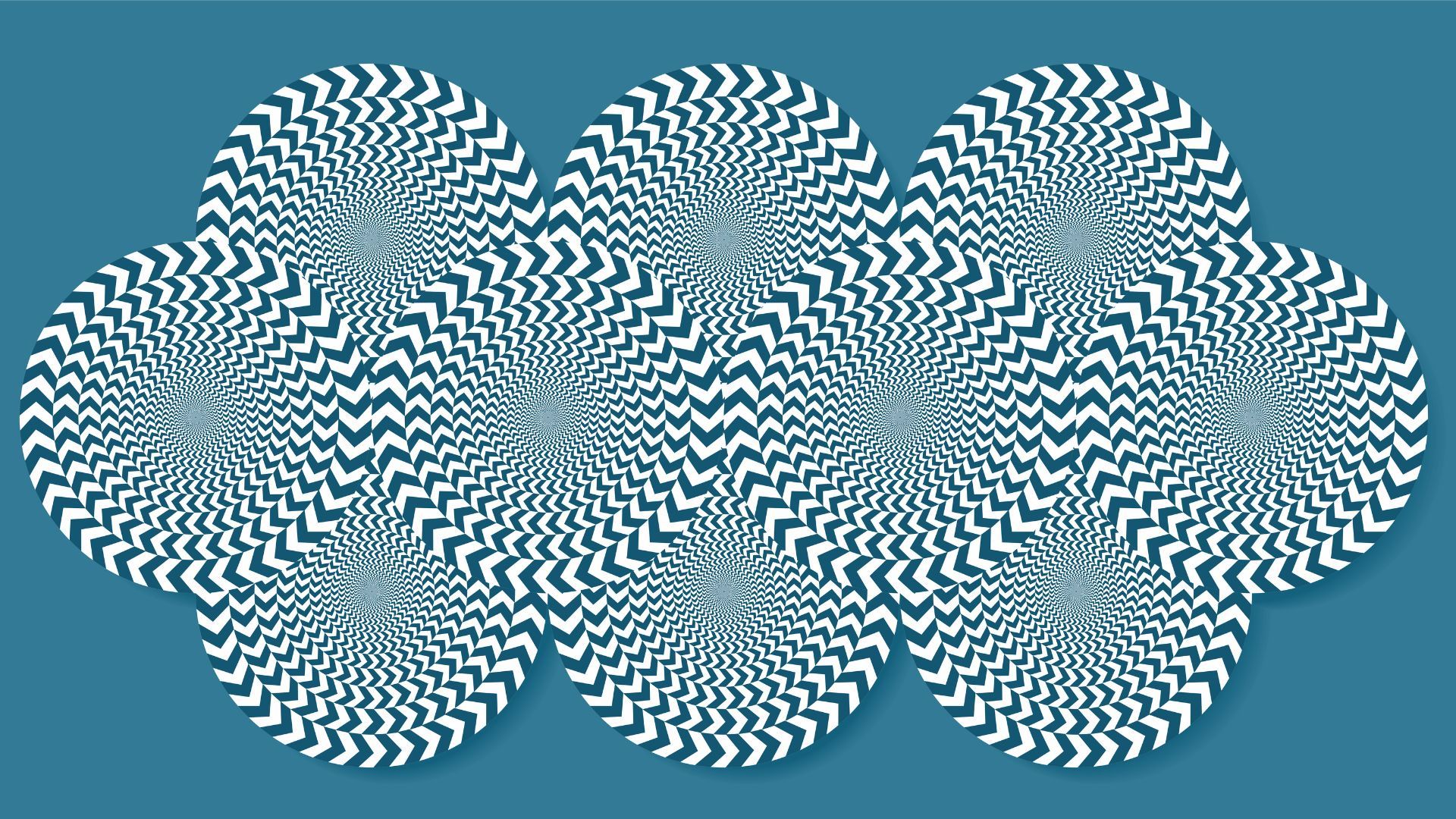
Optical illusions are more than just amusing novelties. They are valuable tools for scientists and researchers, helping to unravel the intricate ways our visual system and brain work together to construct our sense of reality. They reveal that our perception isn't a simple recording of the world like a camera, but an active, interpretive process, constantly making assumptions and filling in the blanks based on past experiences.
A Brief History of Bending Reality
Our fascination with visual trickery is anything but new. The seeds of optical illusions can be traced back thousands of years. The ancient Greeks, masters of architecture, understood the quirks of human perception. They designed the columns of the Parthenon to be slightly curved, correcting for the visual distortion that would make straight columns appear to bow outwards from a distance.
During the Renaissance, artists like Leonardo da Vinci became masters of perspective, creating the illusion of three-dimensional depth on a two-dimensional canvas. Later, in the 19th century, the study of illusions took a more scientific turn. Scientists and psychologists began to systematically create and study what became known as "geometrical-optical illusions." Figures like Franz Carl Müller-Lyer and Hermann Ebbinghaus developed illusions that are still studied today, revealing how our brains can be misled by simple lines and shapes.
Quick Facts
- The ancient Greeks used architectural techniques to counteract optical illusions in buildings like the Parthenon.
- The term "Op Art" was popularized in a 1964 issue of Time Magazine.
- Some of the earliest documented illusions date back to the 5th century BCE with tales of Greek painters creating hyper-realistic art.
- Psychologist Edgar Rubin introduced his famous two-faced vase illusion in 1915.
- The 1965 exhibition "The Responsive Eye" at the Museum of Modern Art was a pivotal moment for the Op Art movement.
How Do Optical Illusions Work? The Brain's Best Guess
At its core, an optical illusion occurs when there's a disconnect between what your eyes see and what your brain interprets. Your eyes capture light, and the retina converts it into electrical signals that travel to the brain. But this is where the real magic happens. Your brain acts like a detective, piecing together this information, often incomplete or ambiguous, to construct a coherent picture of the world.
To do this efficiently, your brain relies on a set of assumptions and shortcuts learned from a lifetime of experience. It knows that objects in the distance appear smaller, that shadows suggest depth, and that lines that appear to converge are likely receding. Optical illusions cleverly exploit these assumptions, feeding the brain information that leads it to make an incorrect "best guess."
The Role of Context and Expectation
Context is everything in perception. How we perceive an object's color, size, or shape is heavily influenced by its surroundings. For example, the famous Checker Shadow Illusion by Edward H. Adelson shows two squares that appear to be different shades of gray but are, in fact, the exact same color. Your brain automatically compensates for the "shadow" cast by a cylinder, assuming the square in the shadow must be lighter than it appears.
Our expectations also play a significant role. If you are shown the famous "duck-rabbit" ambiguous image around Easter, you are more likely to see a rabbit first. This demonstrates that our perception is not a passive process but is actively shaped by our thoughts and experiences.
Categorizing the Mind-Benders: Types of Illusions
Scientists generally classify optical illusions into three main categories, each highlighting a different aspect of the disconnect between our eyes and our brain.
Literal Illusions
Literal illusions are perhaps the most straightforward. They involve images that are composed of multiple, distinct objects, but our brain perceives them as a single, fluid picture. A classic example is "My Wife and My Mother-in-Law," an ambiguous image created in the late 19th century where the viewer can see either a young woman or an older woman, but not both at the same time.
Another famous literal illusion is Rubin's Vase, developed by Danish psychologist Edgar Rubin around 1915. In this image, the brain must decide whether to interpret the central black shape as a vase (the "figure") or the surrounding white space as two faces in profile (the "ground"). This rapid switching between interpretations is a key characteristic of ambiguous illusions.
Physiological Illusions
Physiological illusions arise from the over-stimulation of the eyes and brain's visual pathways. When you stare at a bright light, a moving pattern, or a high-contrast image for an extended period, the light-sensitive cells in your retina can become fatigued. This can lead to afterimages or the perception of movement in a static image.
The Hermann Grid illusion is a prime example. When you look at a grid of black squares on a white background, you may see faint gray dots at the intersections, which disappear when you try to look directly at them. This is thought to be caused by the way retinal ganglion cells respond to the high contrast between the black and white areas.
Cognitive Illusions
Cognitive illusions are the most complex and have received the most attention from scientists. They occur because of the inferences and assumptions our brains make about the world. These illusions reveal the "rules" our brains use to interpret visual information.
Cognitive illusions can be further broken down into several sub-types:
- Ambiguous Illusions: As mentioned with Rubin's Vase, these are images that can be perceived in more than one way.
- Distorting Illusions: These illusions make us misjudge the size, length, or curvature of an object. The Müller-Lyer illusion, where two identical lines appear to be different lengths due to the orientation of arrowheads at their ends, is a classic example.
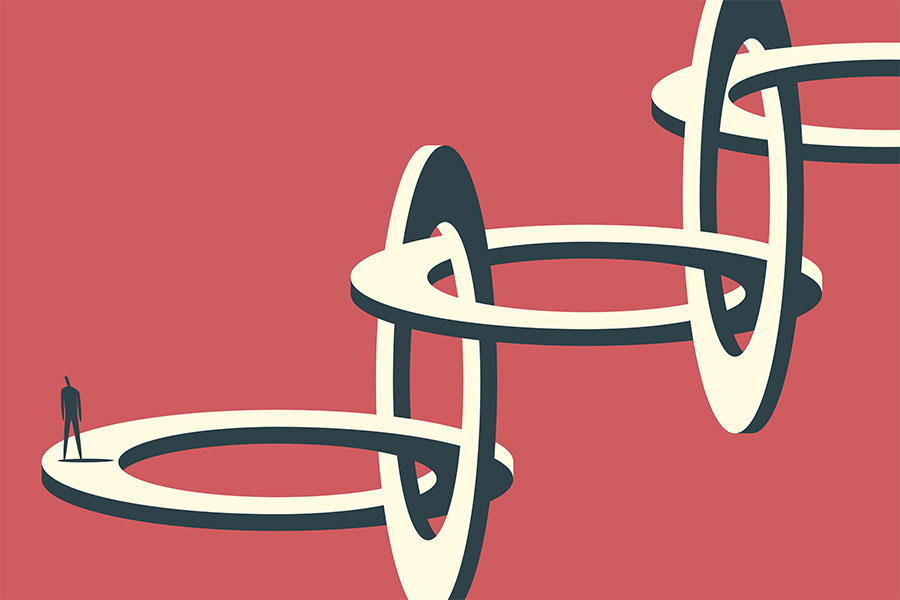
- Paradox Illusions: These are images of objects that would be impossible to create in the real world, such as the Penrose Triangle. They defy our understanding of geometry and perspective.
- Fiction Illusions: These occur when we perceive something that isn't actually there, like the illusory contours of the Kanizsa Triangle. Here, the brain creates the perception of a complete triangle from incomplete shapes.
Optical Illusions in Art and Culture
The power of optical illusions has not been lost on artists. Throughout history, artists have intentionally used these principles to create compelling and thought-provoking works. In the mid-20th century, this fascination culminated in the Op Art (Optical Art) movement.
Pioneers of this movement, such as Victor Vasarely and Bridget Riley, used precise geometric patterns and stark color contrasts to create artworks that seem to vibrate, swell, and move. Vasarely is often considered one of the forefathers of Op Art, creating complex patterns that convey a sense of kinetic energy. Bridget Riley became famous for her dazzling black and white paintings that distort the viewer's vision the longer they look.
"I learned from Seurat this important thing about colour and light, that 'a light' can be built from colour. I learned a great deal about interaction, that 'a blue' in different parts (the same blue) will play all sorts of different roles." - Bridget Riley
The Op Art movement peaked in popularity with the 1965 exhibition "The Responsive Eye" at New York's Museum of Modern Art, showcasing how art and science could intersect to explore the mysteries of perception.
Real-World Implications and Applications
Beyond art galleries and psychology labs, the principles of optical illusions have practical applications in our everyday lives. For example, understanding illusions can help in traffic planning. Some cities have painted markings on roads that create the illusion of being narrower, encouraging drivers to slow down.
In the world of design and marketing, illusions are used to attract attention and create memorable logos. The principles of figure-ground relationships, seen in Rubin's Vase, are a common tool in graphic design. Even in the culinary world, the Delboeuf illusion shows that people tend to put less food on a smaller plate, as the same portion size looks larger relative to the plate's rim—a trick that could be used to manage portion control.
Conclusion: The Beautiful Deception
From the subtle curves of ancient temples to the vibrating canvases of the 1960s, optical illusions have long captivated and confounded us. They are a powerful reminder that our perception of reality is not a direct reflection of the world, but rather a complex and creative construction of the mind. Far from being simple tricks, they are a testament to the brain's incredible efficiency and its constant effort to make sense of a visually noisy world. So the next time you see a static image that seems to dance or a straight line that appears to bend, take a moment to appreciate the beautiful deception. You're not just being fooled; you're getting a glimpse into the remarkable inner workings of your own brain.
