

Why Friday the 13th Is Considered Unlucky
An Unlucky Day for a Date: Deconstructing the Friday the 13th Superstition
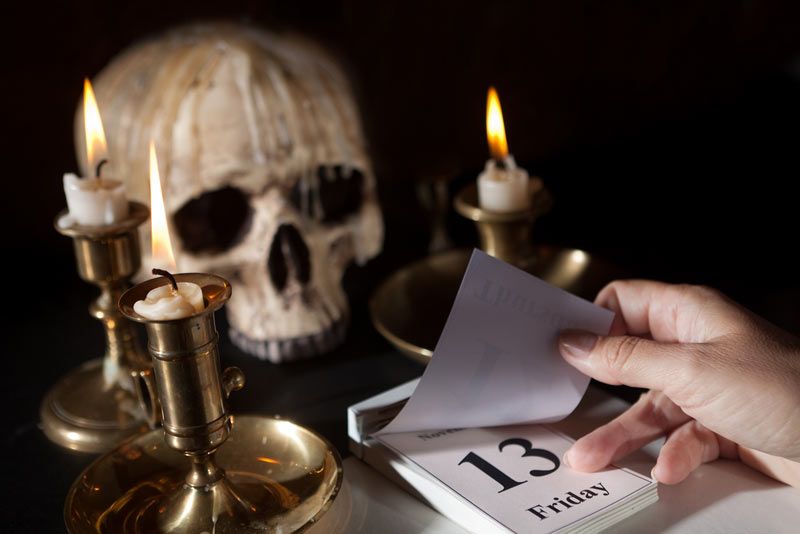
Does the calendar showing "Friday the 13th" send a tiny shiver down your spine? Do you find yourself being a little extra cautious, avoiding black cats and sidewalk cracks? You're not alone. For centuries, this particular date has been steeped in a potent brew of fear, folklore, and fascination. But where did this widespread belief that Friday the 13th is a day of exceptional misfortune actually come from? The answer isn't a single, straightforward story but rather a tangled web of ancient myths, religious traditions, and pivotal historical events that have converged over time.

This enduring superstition is more than just a quirky cultural footnote; it's a fascinating look into human psychology and our timeless quest to find order and meaning in a world that often feels chaotic. So, let's pull back the curtain on this unlucky day and explore the deep-seated roots of why so many of us still feel a flicker of unease when Friday and the number 13 join forces.
The Double Whammy: Separate Superstitions Collide
Before Friday the 13th became a singular, dreaded entity, both the day "Friday" and the number "13" had their own independent, and rather unfortunate, reputations in many Western cultures. It was the eventual fusion of these two separate streams of superstitious thought that created the perfect storm of bad luck we recognize today.
The Problem with Thirteen
The anxiety surrounding the number 13, a fear so prevalent it has its own name—triskaidekaphobia—is ancient and multifaceted. Many theories point to the number's position after 12, which is often seen as a number of completeness and perfection. Think about it: we have 12 months in a year, 12 hours on a clock, 12 signs of the zodiac, and 12 apostles of Jesus. The number 13, by contrast, is seen as irregular and disruptive to this natural harmony.
This fear is deeply embedded in some of our most foundational stories:
- Norse Mythology: One of the oldest tales involves a grand dinner party in Valhalla for 12 gods. The trickster god, Loki, arrived uninvited as the 13th guest, instigating a series of events that led to the death of the beloved god Balder. This story is often cited as a primary source for the superstition that having 13 guests at a table is a bad omen.
- Christian Tradition: The Last Supper is perhaps the most famous example of an ill-fated gathering of 13. Jesus and his 12 apostles were present, with the 13th individual, Judas Iscariot, being the one who would betray him. This cemented the number's association with betrayal and impending doom in the Christian world.
Friday's Freboding Reputation
Friday, too, carried its own baggage long before it was paired with the number 13. Within Christian tradition, Friday is a day of somber significance. It is widely believed to be the day Jesus was crucified, now commemorated as Good Friday. Some biblical scholars have also suggested that other unfortunate events, such as Adam and Eve eating the forbidden fruit and the beginning of the Great Flood, occurred on a Friday.
This association was not confined to religious texts. As far back as the 14th century, Geoffrey Chaucer, in his famous work The Canterbury Tales, referred to Friday as an unlucky day to begin a journey or a new project. This shows that by the Middle Ages, the idea of Friday as an inauspicious day was already part of the popular consciousness.
Quick Facts
- The specific fear of Friday the 13th is called paraskevidekatriaphobia.
- A month will have a Friday the 13th if the first day of that month is a Sunday.
- A single calendar year can have up to three Friday the 13ths. The year 2026 will be one such year, with occurrences in February, March, and November.
- Many tall buildings famously "skip" the 13th floor, going directly from 12 to 14, and some airlines omit a 13th row to cater to superstitious passengers.
The Knights Templar: A Fateful Friday in History
While the individual superstitions about Friday and the number 13 are ancient, many historians point to a specific, dramatic event that may have permanently fused them together in the Western psyche: the downfall of the Knights Templar.
The Arrest That Shocked Christendom
The Knights Templar was a powerful, wealthy, and secretive military order of devout Christians founded to protect pilgrims in the Holy Land. However, their power and influence eventually made them a target. King Philip IV of France, who was deeply in debt to the order, conspired with Pope Clement V to bring them down.
On the morning of Friday, October 13, 1307, King Philip IV ordered the simultaneous arrest of all Knights Templar throughout France. Thousands of knights, including the Grand Master Jacques de Molay, were captured in dawn raids.
The knights were charged with numerous heresies, subjected to brutal torture, and forced to make false confessions. Many were later burned at the stake. The sudden and brutal annihilation of such a powerful and respected order on this specific date is believed by many to be the true genesis of the Friday the 13th superstition as a singular, unlucky day.
From Folklore to Pop Culture Phenomenon
Despite the dramatic events of 1307, the superstition didn't become widespread overnight. For centuries, it remained a piece of folklore, with the first concrete written references to the combined "evil luck of Friday the 13th" not appearing until the 19th and early 20th centuries.

The Novel That Cemented the Fear
A key moment in popularizing the superstition came in 1907 with the publication of Thomas W. Lawson's novel, Friday, the Thirteenth. The story is about a ruthless stockbroker who deliberately engineers a stock market crash on Friday the 13th to profit from the ensuing panic.
The novel was a massive success, selling tens of thousands of copies and bringing the idea of Friday the 13th as a day of financial ruin and general calamity into the mainstream. It effectively codified the superstition for a modern audience, transforming it from a vague folk belief into a well-known cultural concept.
The Slasher on the Silver Screen
Of course, no discussion of Friday the 13th is complete without mentioning its most famous cultural touchstone: the horror film franchise. The release of the movie Friday the 13th in 1980 introduced the world to the iconic, hockey-mask-wearing villain, Jason Voorhees.
This film and its numerous sequels solidified the date's association with terror, dread, and sudden, violent misfortune for generations of moviegoers. The franchise turned a superstition into a brand, forever linking Friday the 13th in the popular imagination with summer camps, creepy woods, and a relentless, machete-wielding killer.
The Psychology and Economic Impact of a Superstition
It's easy to dismiss Friday the 13th as a silly superstition, but its effects are surprisingly real. The fear it inspires has a measurable impact on people's behavior and, consequently, on the economy.
Why Do We Believe?
Psychologists suggest that superstitions like this one are born from our brain's desire to find patterns and exert control over a random world. When something bad happens on a day already labeled as "unlucky," it creates a powerful confirmation bias. We remember the hits and forget the misses, reinforcing the belief.
This behavior is a way of trying to manage anxiety in the face of uncertainty. By avoiding certain actions on Friday the 13th, people feel they are doing something to protect themselves, even if the threat is only perceived.
The Cost of Fear
This collective anxiety has a tangible economic cost. Studies and estimates have suggested that hundreds of millions of dollars are lost in business on each Friday the 13th. This loss is attributed to people avoiding travel, postponing major purchases, and even staying home from work. Some reports estimate that between 17 and 21 million Americans are affected by a fear of this day.
However, some industries have cleverly turned the superstition to their advantage. Tattoo parlors famously offer discounted "$13 tattoos" on the date, drawing huge crowds. Similarly, retailers may run "lucky 13" sales, transforming a day of fear into an opportunity for commerce.
Is 13 Unlucky Everywhere?
It's important to remember that this superstition is primarily a Western phenomenon. In many other cultures, the number 13 is not seen as unlucky at all—in fact, it can be quite the opposite.
- In Italy: The number 13 is often considered a lucky number. The Italian expression "fare tredici" means "to hit the jackpot." Their unlucky day is typically Friday the 17th.
- In China: The number 13 is considered lucky because its pronunciation sounds similar to the phrase for "definitely alive" or "assured growth."
- In Judaism: Thirteen is a significant and positive number. It is the age at which a boy has his Bar Mitzvah, marking his transition into adulthood.
- In Hinduism: The number 13 holds powerful religious significance and is associated with the deity Lord Shiva.
In Spanish-speaking countries and Greece, it's not Friday the 13th that is feared, but Tuesday the 13th.
Conclusion: A Day of Our Own Making
So, is Friday the 13th truly an unlucky day? The evidence points not to a mystical curse, but to a powerful cultural creation. It's a superstition woven from disparate threads: a Norse myth about a party-crashing god, a Christian narrative of betrayal, the brutal medieval persecution of knights, and a sensational early 20th-century novel. These stories, amplified by modern horror movies and our own psychological quirks, have given the day its ominous power.
The story of Friday the 13th is a testament to the enduring power of storytelling to shape our perception of the world. Whether you choose to stay in bed or boldly make it your lucky day, you're participating in a tradition centuries in the making. The tiny shiver you feel when you see that date on the calendar is a faint echo of ancient gods, fallen knights, and the timeless human need to make sense of the unknown.