

Why Kids Are Better at Learning Facts Than Adults
The Sponge-Like Brains of a Child: Why Kids Absorb Facts More Easily Than Adults
Ever tried to learn a new language as an adult and felt like you were hitting a brick wall, while a toddler in the same class effortlessly chatters away in the new tongue within months? Or perhaps you've watched a child memorize the names of dozens of dinosaurs with an ease that seems almost superhuman. This phenomenon isn't just a figment of our imagination; it's a well-documented reality that children often have a remarkable advantage over adults when it comes to learning and retaining factual information.

But what is it about the developing brain that makes it such a fertile ground for knowledge? Is it simply a matter of having fewer preconceived notions, or are there deeper, biological reasons at play? The answer, it turns out, is a fascinating mix of neurobiology, psychology, and the sheer, unadulterated joy of discovery that is so characteristic of childhood.
The Plastic, Ever-Changing Young Brain
The key to understanding a child's learning prowess lies in the concept of neuroplasticity. This refers to the brain's incredible ability to reorganize itself by forming new neural connections throughout life. While adults retain some level of brain plasticity, it is at its absolute peak during childhood. A young child's brain is a whirlwind of activity, with neurons forming connections at an astonishing rate. In fact, a toddler's brain has trillions more synapses (the connections between neurons) than an adult's.
Synaptic Pruning: Trimming for Efficiency
As we grow and learn, a crucial process called synaptic pruning takes place. Think of it like a gardener trimming a rose bush to encourage stronger, healthier blooms. The brain eliminates weaker or less-used synaptic connections, while strengthening those that are frequently used. This makes the adult brain more efficient and specialized for the tasks it performs regularly. However, this efficiency comes at the cost of some of the raw, unbridled learning potential of a child's brain. The sheer density of connections in a young brain means it is more open and adaptable to new information.
Did You Know?
- By the time a child reaches adulthood, the number of synaptic connections in their brain is reduced by about half through pruning.
- The prefrontal cortex, responsible for higher-level cognitive functions, doesn't fully mature until the mid to late twenties.
- Intervention and learning are most effective in early childhood when there are 50 percent more connections between neurons than in the adult brain.
The Role of Key Brain Structures
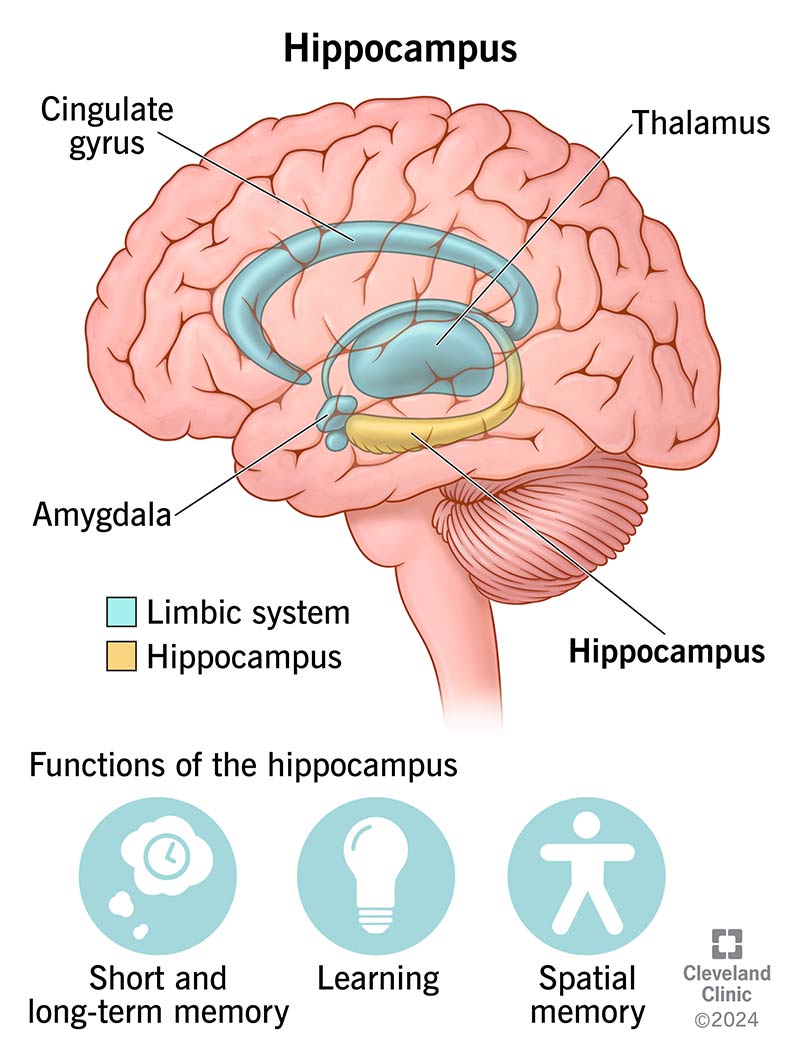
Several brain regions play a starring role in this developmental drama of learning and memory. One of the most important is the hippocampus, a structure crucial for forming, organizing, and storing memories. Research has shown that the hippocampus is particularly active and developing throughout childhood, playing a pivotal role in the transition from procedural-based problem solving (like counting on fingers) to memory-based retrieval.
Studies have found that as children mature, the hippocampus becomes more specialized, which contributes to the development of long-term episodic memory. This ongoing development and specialization of the hippocampus during childhood provides a powerful mechanism for absorbing and retaining new facts.
The GABA Factor: A Surprising Twist
Recent research has uncovered another fascinating piece of the puzzle: a neurotransmitter called gamma-aminobutyric acid, or GABA. GABA is an inhibitory neurotransmitter, meaning it helps to calm the brain and stabilize neural networks. In adults, after learning something new, there's a "cooling-off" period where the new information is fragile. If you try to learn something else too quickly, the new information can be overwritten—a phenomenon known as retrograde interference. GABA helps to stabilize the learned information and protect it from this interference.
Interestingly, children naturally have lower levels of GABA than adults. This might seem counterintuitive, but a 2022 study from Brown University revealed a surprising mechanism. While children start with less GABA, their brains show a rapid increase in GABA during learning sessions. This allows them to quickly stabilize new information and be ready to learn more, essentially enabling them to "learn and learn and learn" without the same need for a long consolidation period as adults.
The Psychology of Learning: A Tale of Two Mindsets
Beyond the biological differences, there are significant psychological factors that give children a learning edge.

Prior Knowledge: A Double-Edged Sword
Adults come to any learning situation with a wealth of prior knowledge and experience. While this can be an advantage, allowing us to connect new information to existing mental frameworks, it can also be a hindrance. Pre-existing beliefs and established neural pathways can make it harder to accept and integrate information that contradicts what we already "know." Children, with their more limited prior knowledge, approach new facts with a more open mind, unburdened by years of accumulated assumptions.
“The four-year-olds were better than the adults at grasping this unusual causal structure. The adults seemed to rely more on their prior knowledge that things usually do not work that way, even though the evidence implied otherwise for the machine in front of them.”
Motivation and Learning Orientation
The reasons why children and adults learn are often fundamentally different. Children are typically driven by intrinsic motivation and a natural curiosity to understand the world around them. Their learning is often a form of play and exploration. As psychologist Alison Gopnik puts it, children are like the "R&D division of the human species," constantly experimenting and gathering data.
Adult learning, on the other hand, is often more goal-oriented and driven by extrinsic factors. Adults need to know why they are learning something and how it will be immediately applicable to their lives or careers. This problem-centered approach can be efficient, but it can also narrow the scope of what an adult is willing to learn, filtering out facts that don't seem immediately relevant.
- Child Learners: Motivated by curiosity and exploration.
- Adult Learners: Motivated by specific, practical goals.
The Power of Unfettered Curiosity
Perhaps the most significant, yet hardest to quantify, advantage that children possess is their boundless curiosity. Neurological studies have shown that curiosity prepares the brain for learning by increasing activity in the hippocampus and the brain's reward circuits. This not only makes learning more effective but also more enjoyable.
While trait curiosity can decline with age, studies show that state curiosity—the interest in learning specific new things—can actually increase later in life. However, the sheer volume and breadth of a child's curiosity are unmatched. They are not yet concerned with the practical application of knowing the difference between a Stegosaurus and a Triceratops; the knowledge is a reward in itself.
Embracing a Childlike Approach to Learning
So, are adults doomed to a life of slower, more laborious learning? Not at all. While we may not be able to replicate the neurobiological conditions of our youth, we can adopt some of the psychological approaches that make children such adept learners. By fostering our own curiosity, questioning our assumptions, and finding the joy in learning for its own sake, we can tap back into that powerful, sponge-like capacity for knowledge that we all once possessed.
The next time you see a child effortlessly rattling off facts, don't just be amazed—be inspired. Their remarkable ability to learn is a testament to the incredible potential of the human brain in its most open and exploratory state. It's a reminder that deep within our more structured, efficient adult minds, the potential for wide-eyed wonder and rapid learning still exists, just waiting to be rediscovered.