

The Untold History of Coffee and How It Changed the World
That morning cup you cherish, the one that pulls you from the depths of sleep and prepares you for the day, has a story—a wild, sprawling epic that crosses continents, fuels empires, and sparks revolutions. It’s a tale of dancing goats, clandestine trade, and intellectual firestorms. This is the untold history of coffee, and it’s far more potent than the strongest espresso.

The Accidental Discovery: A Legend of Dancing Goats
Our story begins not in a bustling cafe, but on the high plateaus of Ethiopia, sometime around the 9th century. Legend has it that a goat herder named Kaldi noticed his flock becoming unusually energetic, almost dancing, after nibbling on the bright red berries of a particular shrub. Curious, Kaldi tried the berries himself and experienced a similar exhilarating effect.
He shared his discovery with a local monastery, where the monks, initially skeptical, eventually found that a beverage made from these berries helped them stay awake during long hours of prayer. While this tale of Kaldi and his dancing goats is likely apocryphal—not appearing in writing until the 17th century—it captures the essence of coffee's origins in the Ethiopian region of Kaffa. Wild coffee plants are indeed native to this area.
From Ethiopia to the Arabian Peninsula
The journey of coffee as a beverage truly begins when it crossed the Red Sea into Yemen in the 15th century. It was here that coffee was first systematically cultivated on farms. Sufi mystics in Yemen embraced the drink, using its stimulating properties to aid in their late-night religious devotions. They brewed the roasted beans into a powerful, dark drink they called qahwa.
Yemeni traders, recognizing the beverage's potential, began to cultivate it extensively, particularly in the mountainous regions. The port city of Mocha became the world's primary hub for the coffee trade, so much so that its name became synonymous with the drink itself. For nearly two centuries, Yemen held a strict monopoly, jealously guarding its precious crop by ensuring all exported beans were either roasted or boiled to prevent germination.
The Rise of the Coffeehouse: "Schools of the Wise"
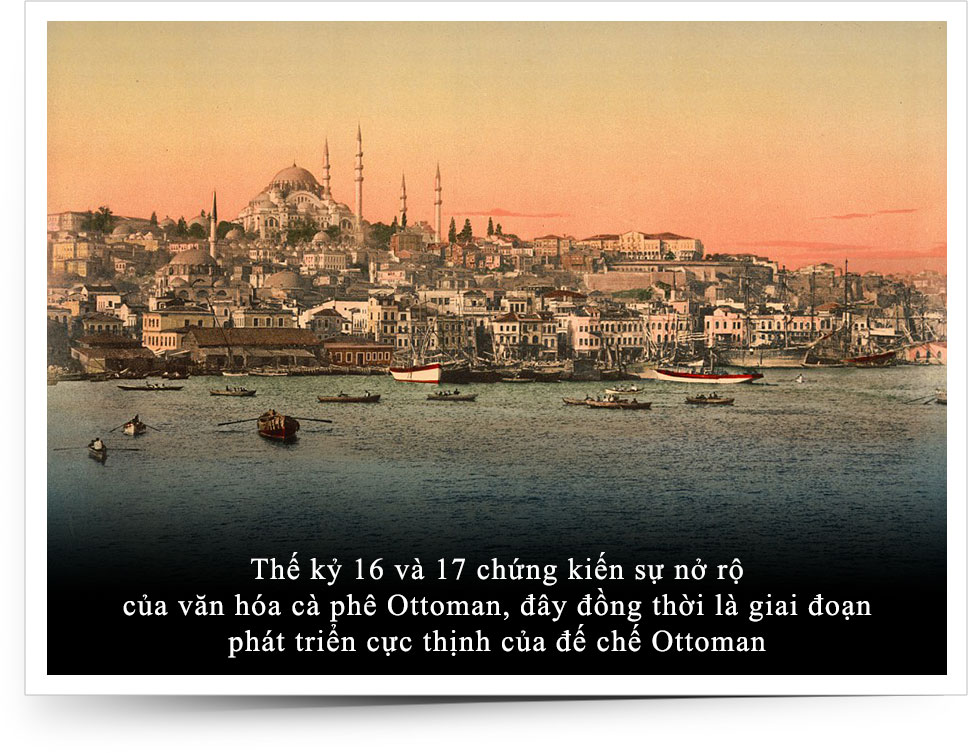
As coffee's popularity surged across the Arabian Peninsula, it gave birth to a revolutionary new social institution: the coffeehouse. The first of these, known as qahveh khaneh, appeared in Mecca and then spread rapidly. In 1555, the first coffeehouse opened in Istanbul, the heart of the Ottoman Empire, and the concept took the city by storm.

These establishments were more than just places to drink coffee; they were vibrant centers of social and intellectual life. Patrons from all walks of life gathered to play chess, listen to music, exchange news, and engage in spirited discussions about politics, literature, and philosophy. They became known as "Schools of the Wise," democratic spaces where public opinion was formed and ideas could circulate freely.
The authorities, however, were often suspicious of these hubs of free thought. Coffeehouses were seen as potential nests of sedition and were periodically banned by sultans who feared the political discourse brewing within their walls. But the public's demand was too strong, and these prohibitions were always short-lived.
Quick Facts
- The word "coffee" entered the English language in 1582, via the Dutch koffie, which came from the Ottoman Turkish kahve, derived from the Arabic qahwa.
- Brazil has been the world's largest producer of coffee for more than 150 years.
- In the Ottoman Empire, a woman could legally divorce her husband if he failed to provide her with a daily quota of coffee.
- The first coffeehouse in England, The Angel, was opened in Oxford in 1650.
Coffee Conquers Europe: From "Satan's Brew" to Penny Universities
Thanks to the bustling trade routes of the Ottoman Empire and Venetian merchants, coffee made its way to Europe in the 17th century. It was initially met with suspicion. In Venice, some clergy condemned the dark, stimulating beverage, calling it the "bitter invention of Satan." The controversy was so great that Pope Clement VIII was asked to intervene. He decided to taste the drink for himself and, finding it delicious, gave it his papal approval.
With the Pope's blessing, coffeehouses began to spring up across Europe, from Italy to France, England, and beyond. The first European coffeehouse opened in Venice around 1645. London's first coffeehouse followed in 1652, and by 1675, there were over 3,000 coffeehouses throughout England.
The Hubs of Commerce and Revolution
Much like their Ottoman predecessors, European coffeehouses became vital centers for commerce, intellectual exchange, and political debate. In London, they earned the nickname "penny universities" because for the price of a cup of coffee (one penny), a person could gain access to newspapers, conversation, and the latest ideas.
These were not idle chat rooms. The seeds of modern capitalism were sown in these establishments.
Lloyd's of London, the world's leading insurance market, began as a coffeehouse where merchants and ship-owners gathered to do business. The London Stock Exchange also has its roots in a coffeehouse.
But the impact wasn't just economic. Coffeehouses fueled the Age of Enlightenment, providing a space where thinkers like Voltaire and Isaac Newton could debate the ideas that would shape modern Western thought. They were also hotbeds of revolutionary fervor. In colonial America, the Green Dragon Tavern and Coffee House in Boston was a meeting place for the Sons of Liberty, where plans for the Boston Tea Party were likely hatched.
A Bitter Brew: Coffee, Colonialism, and Slavery
As European demand for coffee exploded, the continent's colonial powers were determined to break the Arab monopoly on cultivation. The Dutch were the first to succeed, smuggling seedlings out of Yemen in the late 17th century and establishing vast plantations in their colonies, particularly on the island of Java in present-day Indonesia.

The French followed suit, with a naval officer named Gabriel de Clieu undertaking a perilous journey in the 1720s to transport a single coffee plant to the Caribbean island of Martinique. That one plant is said to be the progenitor of most of the coffee later grown in the Caribbean and Central and South America. Soon, European empires had established a global network of coffee plantations, from Indonesia to Latin America.
The Human Cost of a Global Commodity
This global expansion came at an immense human cost. The labor-intensive work of cultivating, harvesting, and processing coffee was performed by enslaved people. The insatiable European appetite for coffee directly fueled the transatlantic slave trade, leading to the forced transportation of millions of Africans to the Americas to toil in brutal conditions on coffee and sugar plantations. By 1788, the French colony of Saint-Domingue (modern-day Haiti) supplied half of the world's coffee, all of it produced by enslaved labor.
The wealth generated by this system built European empires and funded their wars, but it was built on a foundation of profound exploitation and inequality. Brazil, which became the world's coffee-producing giant, was the last country in the Western Hemisphere to abolish slavery in 1888. The connection was so deep that a Brazilian politician opposing abolition declared, "Brazil is coffee, and coffee is the negro."
Fueling the Modern World: Coffee and the Industrial Revolution
Back in Europe, coffee was playing a different but equally transformative role. As the Industrial Revolution gained momentum in the 18th and 19th centuries, coffee became the essential fuel for the new working class. Before coffee's widespread adoption, the common breakfast drink for many was beer or ale.
The shift from a mild depressant to a powerful stimulant had a profound effect on productivity. Factory owners encouraged coffee consumption to keep their workers alert and focused during long, grueling shifts. Coffee enabled the transition from the natural, sun-driven rhythms of agricultural life to the rigid, clock-driven schedule of the factory floor. It helped standardize the 9-to-5 workday and institutionalized the "coffee break" as a way to maintain output.
As historian Mark Pendergrast wrote, "The drink of the aristocracy had become the necessary drug of the masses, and morning coffee replaced beer soup for breakfast."
The stimulating beverage didn't just power laborers; it also fueled the minds of inventors, engineers, and entrepreneurs. The same coffeehouses that had birthed political revolutions now served as informal offices and brainstorming hubs where the economic and technological breakthroughs of the industrial age were conceived.
Conclusion: The Legacy in Your Cup
From a goat herder's accidental discovery on an Ethiopian plateau to the second most traded commodity in the world, coffee's journey is a microcosm of human history. It has been a catalyst for intellectual awakenings, a driver of brutal colonial expansion, and the fuel for industrial might. It has built fortunes, toppled empires, and fundamentally altered the way we work, think, and socialize.
So the next time you hold that warm mug, take a moment to consider the centuries of history swirling within it. That simple beverage connects you to Sufi mystics and Ottoman sultans, to Enlightenment philosophers and colonial slaves, to industrial workers and revolutionaries. The story of coffee is the story of the modern world—a complex, often contradictory, and powerful brew that continues to shape our lives every single day.