
24
Learn More
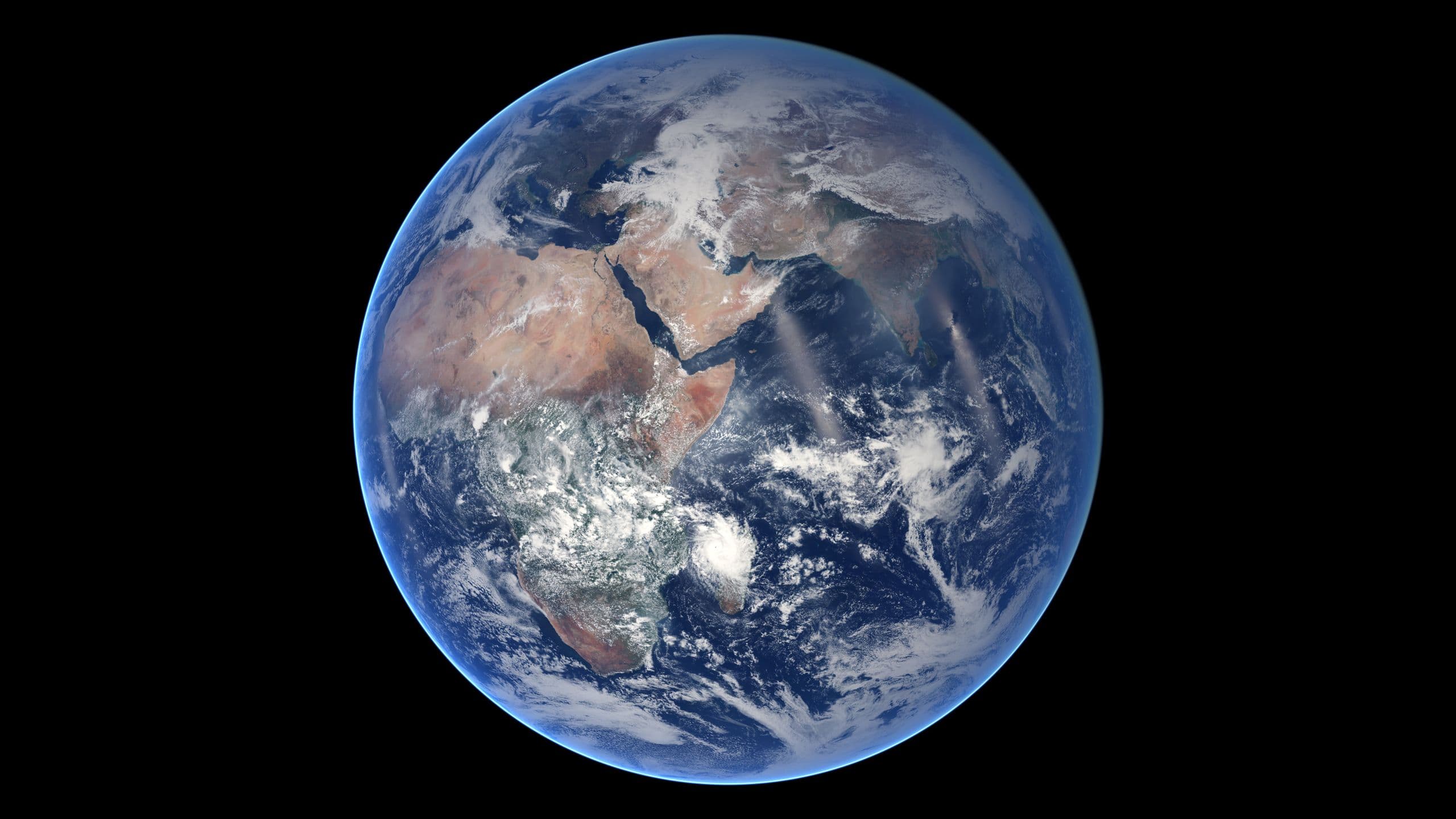
The idea that our home planet is unique in its geological activity is a deeply ingrained concept, largely because Earth exhibits the most prominent and impactful form of plate tectonics in our solar system. The constant movement of Earth's crustal plates, responsible for phenomena like earthquakes, volcanoes, and mountain formation, is readily observable and has shaped our world dramatically over billions of years. For a long time, Earth was the only celestial body confirmed to possess active, global plate tectonics, leading to the common belief that this dynamic process was exclusive to our planet. This uniqueness is often attributed to Earth's abundance of internal heat and the lubricating effect of liquid water in its interior, factors not commonly found together on other rocky planets.
However, scientific evidence suggests that Earth may not be entirely alone in its tectonic history or in exhibiting some form of tectonic activity. Mars, for instance, shows compelling signs of past plate tectonics. Data from spacecraft has revealed striped patterns of magnetic fields in the Martian crust, similar to those found on Earth's ocean floors, which are indicative of crustal spreading and a shifting magnetic field in the planet's early history. Additionally, features like the Valles Marineris canyon system exhibit characteristics resembling large strike-slip fault zones on Earth, further supporting the notion of ancient tectonic forces. While Mars' smaller size led to a faster cooling and rigidification of its lithosphere, effectively shutting down active plate tectonics, these past events indicate that the process is not solely an Earth phenomenon.
Beyond rocky planets, our understanding of tectonics is expanding to include icy moons. Jupiter's moon Europa, for example, is believed to have a form of "ice tectonics" in its thick ice shell. Evidence points to areas where new icy crust forms, akin to mid-ocean ridges on Earth, and other regions where ice plates may be subducting, or sliding beneath one another, into Europa's warmer interior. This suggests that while Earth's active, rock-based plate tectonics are indeed distinctive in our solar system, the fundamental processes of crustal movement and deformation can manifest in diverse ways on other celestial bodies, making the initial claim of Earth's sole uniqueness plausible but incomplete.
Related Myths
84
84
83
83
83
81