
9
Learn More
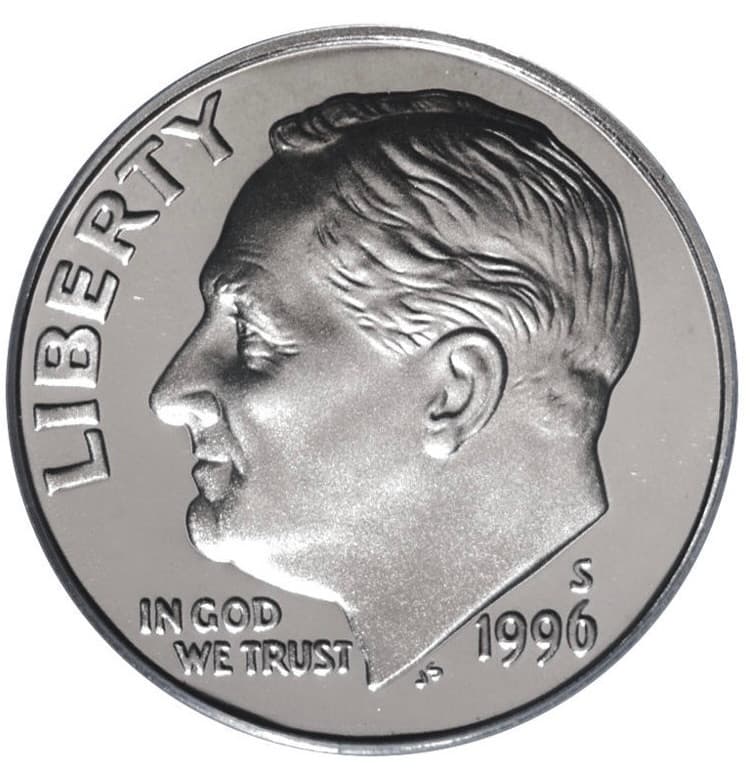
The familiar image appearing on the US 10-cent piece, commonly known as the dime, is that of Franklin D. Roosevelt. He was the 32nd President of the United States, serving an unprecedented four terms from 1933 until his death in 1945. His portrait was placed on the coin as a lasting tribute to his leadership during the Great Depression and World War II, recognizing his immense impact on American history.
Roosevelt's connection to the dime runs deeper than just his presidential legacy. He contracted polio in 1921, which left him partially paralyzed. This personal experience led him to establish the National Foundation for Infantile Paralysis in 1938, an organization better known today as the March of Dimes. The foundation specifically encouraged people to donate dimes to fund research and find a cure for polio, making the coin a symbolic part of his fight against the disease.
The Roosevelt dime was first issued in 1946, just one year after his passing, quickly replacing the Winged Liberty Head design, often called the "Mercury dime." This swift change underscored the nation's desire to honor a leader who had guided the country through some of its most challenging periods. Today, his profile remains a constant reminder of his enduring influence and his humanitarian efforts.
More People Trivia Questions
20
Queen Elizabeth's only daughter was born in 1950. What's her name?
20Can you name the twin sisters whose rival advice columns ran in hundreds of newspapers throughout the English speaking world?
20After the San Francisco earthquake and fire of 1906, architect Julia Morgan was called upon to rebuild the interior of which San Francisco hotel?
20Who was Madonna married to from 1985-1989?
20What are the first names of thumbs-up movie critics Siskel and Ebert?
20Which game is played on a marked board divided into two halves, each side containing 12 alternately colored points?